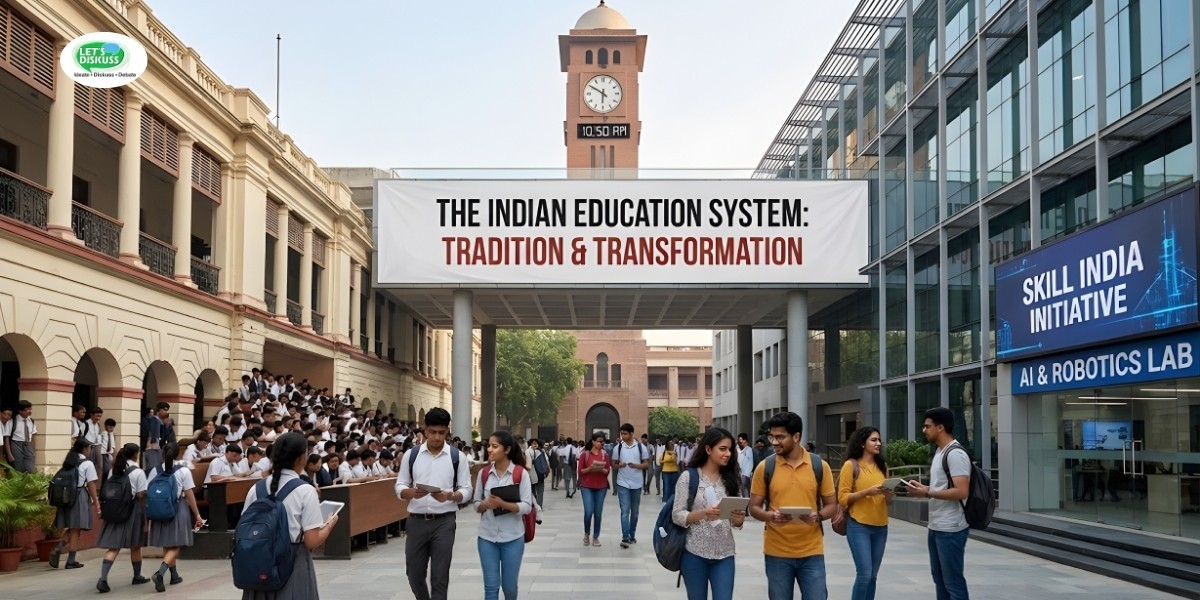

The Illusion of the Perfect Score
Imagine a high school student waking up at 5:00 AM, attending school until 2:00 PM, heading straight to a coaching center, and finally returning home at 8:00 PM only to stay up past midnight completing homework. This grueling routine goes on for years. The ultimate goal? Securing a 99% score on a board exam or cracking a highly competitive entrance test. For decades, this has been the accepted standard of academic success.
However, beneath the surface of top-tier grades and prestigious college admissions lies a fractured foundation. The core problems with indian education system are becoming impossible to ignore, especially as the global job market evolves at breakneck speed. We are pushing millions of bright, capable young minds through an academic assembly line that rewards memory over mastery. When these students finally step out of their college gates, holding degrees they spent years working toward, they face a harsh awakening. The real world does not operate on multiple-choice questions, and companies are no longer impressed by marks alone.
If you want a deeper dive into the data and future projections of this crisis, checking out this comprehensive breakdown on the Indian Education System 2026: Reality, Problems & Reforms provides incredible context. But for now, let's unpack exactly what is failing our students and how we can turn the tide.
The Massive Gap Between Degrees and Employability
One of the most alarming drawbacks of indian education system is the glaring disconnect between what is taught in classrooms and what is required in the workplace. Recent industry reports suggest that nearly three-quarters of engineering and management graduates in the country are not immediately employable.
How does a student spend four years studying a highly technical subject and still fail to land an entry-level job?
The answer lies in an academic structure that is severely misaligned with modern corporate needs. Universities are still relying on curricula that were designed a decade ago. Students spend hours memorizing the theoretical definitions of business management, software development, or financial accounting, but they are rarely put in scenarios where they have to apply these concepts to solve unpredictable, real-world problems.
A graduate might know the exact historical timeline of corporate tax laws but freeze when asked to actually file a basic tax return using modern software. This lack of practical application means companies have to spend months training fresh hires from scratch. Employers are becoming frustrated, and students are left feeling cheated by a system that promised them a career in exchange for good grades.
Inside the Classroom: Rote Memorization Over Innovation
To understand why indian education system is outdated, you have to look at the primary method of evaluation: the annual high-stakes exam.
When a student’s entire future hinges on a single three-hour paper, the goal of teaching shifts from "understanding the subject" to "hacking the exam." Teachers, bound by strict syllabus completion deadlines, do not have the luxury to pause and let students debate a historical event or experiment with a different way to solve a math problem.
Suppression of Curiosity: If a student asks a question outside the syllabus, they are often told to sit down because "it won't come in the exam." This effectively kills natural curiosity.
The Fear of Failure: Making mistakes is a crucial part of learning. But in our classrooms, a mistake results in lost marks, lower ranks, and public shaming. Students learn to play it safe rather than think outside the box.
Zero Critical Thinking: Students are taught what to think, but rarely how to think. When faced with a workplace challenge that doesn't have a textbook solution, they struggle to adapt.
This environment turns schools into information-storage facilities rather than hubs of innovation.
The Heavy Psychological Toll on Students
We cannot talk about the indian education system reality without addressing the severe mental health crisis it has spawned. The pressure to succeed is immense, and it often comes from multiple directions: parents, teachers, peers, and society at large.
The rise of the "coaching factory" culture in towns known for engineering and medical prep has created high-anxiety environments. Teenagers are isolated from their families, living in cramped hostels, and subjected to daily rankings that dictate their self-worth. Studies show an alarming rate of burnout, depression, and anxiety among students aged 14 to 18.
Furthermore, this pressure forces students into career paths they have no genuine interest in. The societal obsession with STEM (Science, Technology, Engineering, and Mathematics) means that creative arts, humanities, and vocational skills are looked down upon. Millions of students become engineers simply because it is expected of them, leading to a massive workforce of unhappy, unmotivated professionals who end up switching careers in their late twenties.
The Global Brain Drain
Because of these ongoing problems with indian education system, those who can afford it are looking elsewhere. The migration of Indian students to foreign universities is happening at an unprecedented scale.
It is not just about the prestige of an international degree anymore; it is about finding an educational environment that makes sense. Foreign universities tend to offer:
Modular Learning: Students can mix and match subjects. A computer science major can take a minor in psychology, fostering a multidisciplinary thought process.
Research and Projects: Instead of writing lengthy final exams, students are evaluated on continuous projects, internships, and research papers.
Industry Integration: Many global programs require students to spend a semester working in a real company, ensuring they graduate with a resume, not just a transcript.
Students are calculating the Return on Investment (ROI). They realize that paying a premium for an education that directly translates to a high-paying, fulfilling career is better than spending years in a rigid system that might leave them unemployable.
The Tech and AI Deficit
We are currently living through one of the most significant technological shifts in human history with the rise of Generative AI. Yet, our school systems are treating these advancements as a distant novelty rather than an immediate reality.
Digital literacy can no longer be limited to teaching students how to use a word processor. The modern workforce requires a deep understanding of AI tools, data analytics, and digital ethics. However, a major hurdle is the lack of trained faculty. We have an acute shortage of educators who understand these emerging technologies well enough to teach them. Equipping a rural school with tablets and a 5G connection is useless if the teacher only knows how to use the device as a digital whiteboard for the same old textbook lectures.
What Needs to Change? Moving Toward a Skills-First Reality
Fixing the problems with indian education system is a monumental task, but it is not impossible. The National Education Policy (NEP) is a step in the right direction, aiming to dismantle the rigid walls between science, commerce, and arts. However, policy on paper must translate into action in the classroom.
Here is what a modernized, effective education framework must include:
A Shift to Continuous Assessment: We need to abolish the "do-or-die" final exams. Students should be graded on portfolios, presentations, teamwork, and practical problem-solving throughout the year.
Mandatory Vocational Training: Carpentry, coding, plumbing, and graphic design should be treated with the same respect as physics and history. Hands-on skills provide immediate pathways to entrepreneurship.
Teacher Upskilling Programs: We need massive investments in retraining our educators. Teachers must transition from being "lecturers" who broadcast information to "facilitators" who guide students through projects and digital discovery.
Robust Career Counseling: Schools must employ dedicated career counselors who can identify a child's natural aptitude early on, saving them from the heartbreak of pursuing the wrong degree.
Focus on Emotional Intelligence: AI will soon automate routine technical tasks. The uniquely human skills—empathy, leadership, adaptability, and complex communication—will be the most valuable assets in the job market. Schools must actively teach these soft skills.
A Decisive Reset
The indian education system reality is complex. It is easy to criticize, but we must also acknowledge that this same rigorous system has produced some of the most resilient and successful corporate leaders globally. The "grind" builds a certain undeniable toughness.
However, toughness alone is no longer enough to thrive in the modern economy. We can no longer afford to waste the potential of millions of students by forcing them to memorize outdated facts. Resolving the problems with indian education system requires a collective effort from policymakers, educators, parents, and the corporate sector. We must demand an education system that values what a student can do over what a student can remember. Only then can we transform our massive youth population from an impending crisis into our greatest global advantage.