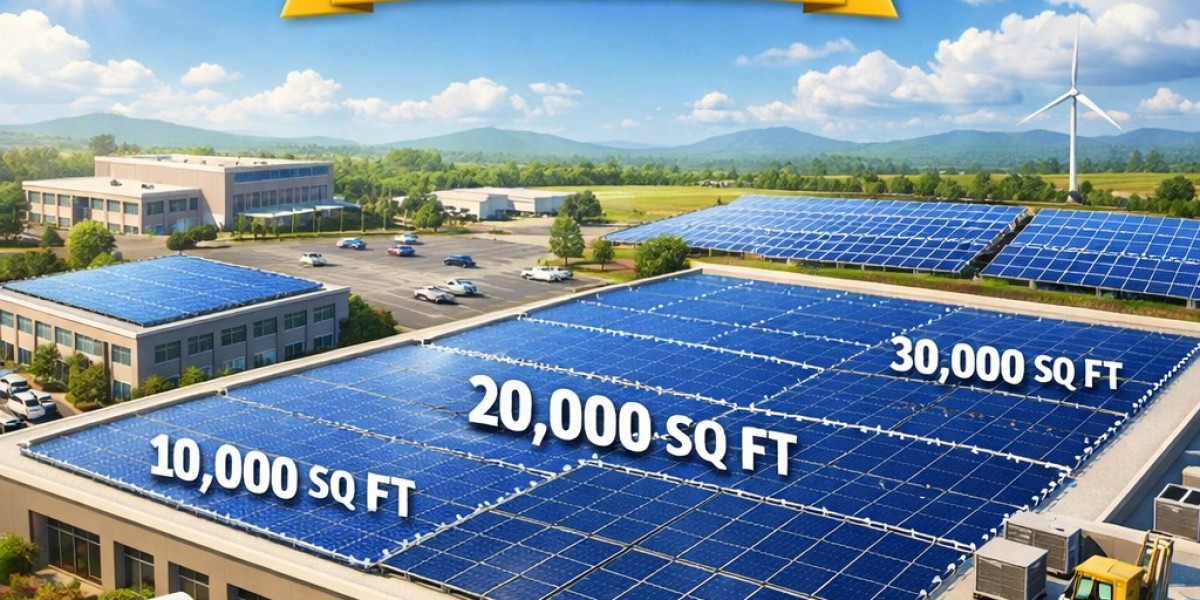

The requirement of the Commercial Solar rooftop space depends on several factors, such as available space, daily energy needs, and electrical equipment loads. Generally, you will need 100-200 square feet for a 1 Kw solar system.
For a 1 kw soar system, you will need roughly 3 solar panels. Before installing a Commercial Solar system at your factory or industrial space, you should schedule a site visit from a reputable company like Koshish Solar.
While if you need to install a 100 KW, commercial solar rooftop area requirement will be approx 8,500 to 10,000 square feet.
They analyse your daily energy needs, electrical loads, and more that run your daily business operation without any interruption.
Is my building roof large enough for the required solar capacity?
Yes, you must have enough commercial solar rooftop space for setting up a solar system that meets your daily energy needs and environmental goals.
With enough or extra space, you can also expand your solar system efficiency in the future as per your energy needs.
Does panel type affect the total roof area needed?
The type of solar panels affects the Industrial rooftop solar space. The higher panel efficiency, such as Monocrystalline, requires a large commercial solar rooftop area requirement, while lower efficiency panels like Polycrystalline require a less warehouse rooftop solar area as compared to higher panel efficiency.
Monocrystalline panels provide 22-25% or more efficiency because it convert sunlight into electricity per square foot.
While Polycrystalline offers 15-18% efficiency. It produces the same amount of electricity as Monocrystalline panels.
Can partial rooftop space be used for a commercial solar installation?
Yes, partial commercial solar rooftop space can be used for commercial solar installation. It is not mandatory to use the complete rooftop space. The commercial solar rooftop area requirement depends on your solar system size.
If you have extra space, so you can expand your system efficiency to meet your future energy needs. The installers focused on setting up a solar system where sunlight is available 7-8 hours, that produce more electricity.
Does roof layout and shading affect usable solar area?
If you place a solar system in shadow areas, which affect your solar system's performance. The commercial solar rooftop space must be shadow free that helps to produce more electricity. With proper installation, you can run your business operations hassle-free.
If the shadow falls on your solar system for 1 hour, it directly impacts your system performance. So it is essential to set up a commercial solar system in sunlight area.
Why Choose Koshish Solar for Rooftop Commercial Solar Solution?
If you are looking for a trusted & reliable solar solution for your industry, choose Koshish Solar. We provide complete solar solutions for major sectors, such as residential, commercial, utility and industrial.
Apart from this, we also manage complete paperwork and approvals, which makes the solar installation process easy. So, contact Koshish Solar today and take the stepo towards clean and green environment.
Wrapping Up
Commercial solar system sizing of the rooftop requirement for your industry's electricity demands and solar system size. With the help of a site visit, you can easily identify your required commercial solar rooftop space and the best solar system.
Nowadays, solar system palys an key role in reducing the electricity bills and support the clean environment. So, it is essential to choose the best solar system with the right commercial solar system sizing that runs your business operation smooth without any interruption. Koshishsolar,Commercial,Residential,Industrial