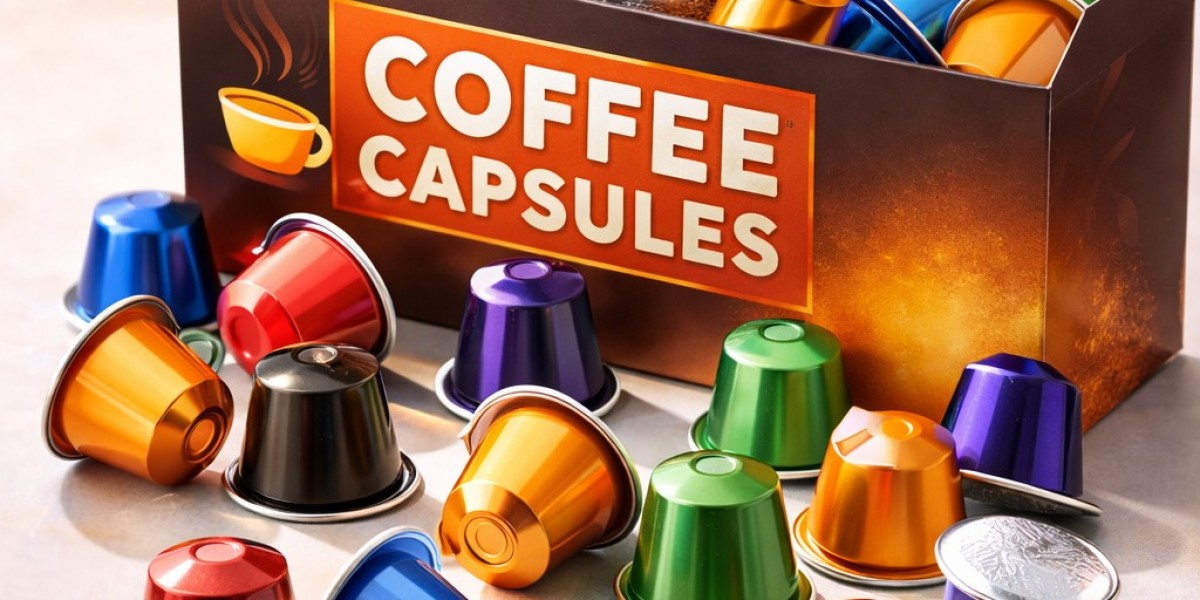

The coffee capsule industry has experienced strong growth driven by rising demand for convenient, premium, and at-home café-style coffee experiences, particularly in urban households and office settings. Single-serve systems offer portion control, consistent quality, and a wide variety of flavors and intensities, appealing to consumers seeking speed without sacrificing taste. Market leaders such as Nestlé (through Nespresso and Nescafé Dolce Gusto) and Keurig Dr Pepper (via Keurig) dominate the competitive landscape with proprietary machines and extensive capsule portfolios. The industry is increasingly shaped by sustainability concerns surrounding aluminum and plastic waste, prompting innovation in recyclable and compostable capsules, while premiumization, specialty blends, and expansion into emerging markets continue to support long-term growth.
The global coffee capsule market has witnessed steady expansion, driven by evolving consumer lifestyles, rising health awareness, and rapid innovation in brewing technologies. coffee capsule market is Valued at US$ 8,327.19 million in 2019, the market is projected to reach US$ 14,062.20 million by 2027, registering a CAGR of 7.0% during the forecast period. Coffee capsules, which consist of single serve vacuum packed coffee enclosed in plastic or aluminum pods, are designed for compatibility with specific brewing systems. Their precision, freshness retention, and convenience have transformed at home and commercial coffee consumption patterns worldwide.
One of the primary drivers of market growth is increasing consumer awareness of coffee’s health benefits. Studies suggest that moderate coffee consumption, typically three to five cups per day, may lower the risk of neurodegenerative conditions such as Alzheimer’s and Parkinson’s disease. Coffee is also rich in antioxidants that combat free radicals and support immune health. Furthermore, research indicates that regular coffee intake may reduce the risk of type II diabetes and certain cancers, including liver and oral cancers. Caffeine enhances metabolism and fatty acid oxidation, contributing to improved athletic performance. These health associations have strengthened coffee’s image among health conscious consumers, thereby supporting demand for premium formats such as capsules.
Regional Insights
Europe is expected to hold the largest share of the global coffee capsule market during the forecast period. Countries such as Germany, France, Italy, and the United Kingdom demonstrate strong coffee cultures and high per capita consumption. Rising disposable income, premiumization trends, and a shift from instant coffee to fresh ground variants have accelerated capsule adoption. The growing popularity of specialty cafés and increased spending on nutritional products further contribute to regional growth.
In Asia Pacific, rapid urbanization and westernization trends in China and India are creating significant opportunities. Expanding middle class populations and busy work oriented lifestyles are increasing demand for convenient, high quality beverage solutions. Meanwhile, North America continues to represent a mature yet innovation driven market, supported by strong retail infrastructure and consumer preference for premium coffee experiences.
The COVID 19 pandemic initially disrupted global supply chains, manufacturing operations, and retail distribution channels. Lockdowns and travel restrictions affected the food and beverages sector, including capsule production and distribution. However, increased at home consumption during lockdown periods partially offset commercial demand declines, especially in developed economies.
Request to sample Report-https://www.theinsightpartners.com/sample/TIPRE00012690
Market Insights by Segment
By product type, the market is segmented into open source and closed source systems. Closed source systems dominated in 2019 due to their early market introduction and strong brand ecosystems. These systems combine proprietary machines with compatible capsules, ensuring optimized brewing pressure, freshness, and flavor consistency. The simplicity of operation, elimination of grinding and tamping, and minimal maintenance requirements enhance consumer appeal.
By application, the commercial segment accounted for the largest share in 2019. The expansion of specialty coffee shops and quick service restaurants has significantly increased capsule usage. Millennials’ preference for socializing in cafés and exploring diverse coffee variants has supported growth. Nevertheless, the household segment is expanding steadily due to work from home trends and the desire for barista style beverages at home.
Based on distribution channel, supermarkets and hypermarkets led the market in 2019. These retail formats provide extensive product assortments, competitive pricing, and high consumer footfall. Specialty stores and online platforms are also gaining traction, with e commerce benefiting from subscription models and direct to consumer strategies.
Key Players
Major companies operating in the global coffee capsule market include:
- Nestle Nespresso S.A.
- Jacobs Douwe Egberts BV
- Luigi Lavazza S.p.A
- illycaffè S.p.A.
- Gloria Jean’s Gourmet Coffee
- Dualit Limited
- Vittoria Food and Beverage
- Coind Group
- Belmoca Belgium (Belmio)
- VERO Coffee
These players focus on product innovation, sustainable capsule materials, strategic partnerships, and mergers and acquisitions to strengthen global presence and enhance brand equity.
Future Outlook
The future of the coffee capsule market appears promising, supported by continuous technological advancements in brewing systems, growing demand for sustainable and recyclable capsules, and expansion into emerging markets. Increasing consumer preference for premium, convenient, and health associated beverages will further accelerate adoption. Digital retail channels and subscription based models are expected to reshape purchasing behavior. As manufacturers invest in biodegradable materials and diversified flavor portfolios, the market is likely to witness sustained growth and competitive innovation through 2027 and beyond.