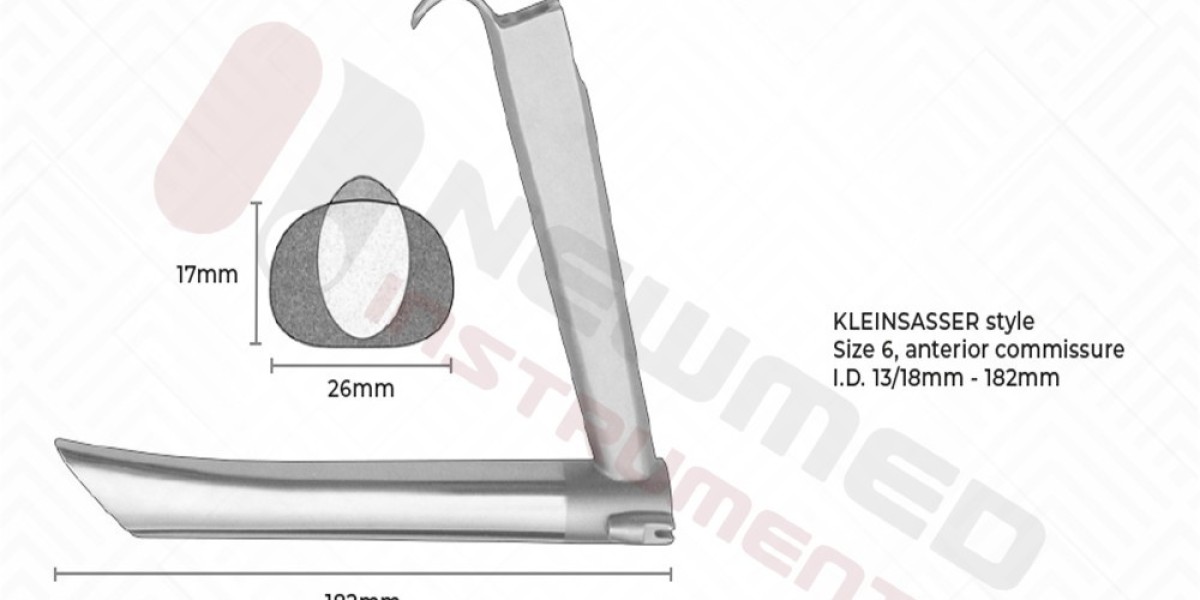

The larynx is a complex organ vital for breathing, swallowing, and phonation, and its intricate structure presents unique challenges for surgeons and healthcare professionals. Among its most critical anatomical landmarks is the point where the vocal cords meet at the front of the throat. This specific junction is not merely a structural connection but a site of significant clinical importance, particularly in the context of oncology and airway reconstruction. For surgeons aiming for perfection in their procedures, understanding the nuances of this area is paramount. New Med Instruments supports these professionals by offering high-quality surgical tools designed to navigate such delicate structures with absolute accuracy.
Defining the Anatomical Landmark
The term anterior commissure refers specifically to the anterior-most region of the glottis where the true vocal folds converge and attach to the thyroid cartilage. This attachment point is devoid of perichondrium, which makes it a unique and vulnerable site within the laryngeal framework. The absence of this protective layer means that the barrier between the mucosal surface and the cartilage is incredibly thin. This anatomical reality has profound implications for the spread of pathologies, such as squamous cell carcinoma, which can invade the thyroid cartilage more easily at this specific location than elsewhere in the larynx.
The Significance of Broyles' Ligament
At the heart of this anatomical discussion is the structure known as Broyles' ligament. This tendon-like structure penetrates the thyroid cartilage at the level of the anterior commissure and serves as the anchor for the vocal folds. Its direct insertion into the cartilage creates a pathway of least resistance for tumors. When surgeons evaluate laryngeal cancer, assessing the involvement of this ligament is crucial for staging and determining the appropriate surgical approach. A tumor that has breached this barrier may require more aggressive intervention, such as a partial or total laryngectomy, rather than a simple endoscopic resection.
Surgical Approaches and Instrumentation Needs
Operating on this delicate area requires visualization and instrumentation of the highest caliber. The narrow angle of the glottis can make exposure difficult, especially in patients with challenging airway anatomy. Surgeons rely on specialized laryngoscopes and retractors to gain a clear view of the site without causing unnecessary trauma to surrounding tissues. New Med Instruments recognizes that the difference between a successful outcome and a complication often lies in the quality of the tools in a surgeon's hand. Our commitment to providing superior service to surgeons and students around the world ensures that they have access to instruments that offer the tactile feedback and precision necessary for such refined work.
Oncological Implications and Tumor Spread
When malignancy arises in the glottic region, the anterior commissure often acts as a gateway for the vertical and horizontal spread of cancer. Tumors located here can easily extend superiorly into the supraglottis or inferiorly into the subglottis. This multidirectional spread complicates the surgical plan and necessitates a thorough preoperative assessment using advanced imaging techniques. The involvement of this specific commissure is a key prognostic factor, often indicating a higher risk of recurrence if not managed with adequate surgical margins. Precise resection is the only way to ensure that the disease is fully eradicated while preserving as much laryngeal function as possible.
Challenges in Endoscopic Laser Resection
Transoral laser microsurgery has become a standard treatment for early-stage glottic cancers, but lesions involving the front of the vocal cords present specific difficulties. The laser beam must be directed with extreme accuracy to remove the pathology without damaging the underlying cartilage or compromising the airway. Because the anterior commissure lacks a robust submucosal layer, the margin for error is non-existent. Surgeons must balance oncological safety with functional preservation, aiming to maintain the patient's voice quality. New Med Instruments provides the specialized micro-instruments that facilitate this balance, empowering healthcare professionals to perform with confidence and control.
Reconstruction and Voice Preservation
Following the resection of tissue in this area, preventing the formation of a web or scar tissue is a major concern. Laryngeal webbing can severely impact a patient's voice and breathing, leading to the need for secondary surgeries. The placement of a keel or stent is sometimes required to keep the vocal folds separated during the healing process. This reconstructive phase is as critical as the resection itself. The ultimate goal is to restore a functional airway and a serviceable voice. This objective aligns perfectly with the mission of New Med Instruments to deliver perfect results for patients through the provision of world-class medical devices.
The Role of Advanced Imaging and Diagnostics
Before any incision is made, accurate diagnosis guides the surgical hand. High-resolution CT scans and MRIs are essential for evaluating the depth of invasion at the anterior commissure site. These imaging modalities allow the surgical team to visualize the relationship between the soft tissue and the thyroid cartilage. Understanding the extent of disease involvement preoperatively allows for better counseling of patients regarding potential outcomes and voice changes. For students and residents learning these complex assessments, access to clear educational resources and reliable diagnostic tools is fundamental to their development as future experts.
Postoperative Care and Monitoring
The journey does not end in the operating room. Postoperative care for patients who have undergone surgery in this region involves vigilant monitoring for swelling, bleeding, and airway patency. Regular endoscopic follow-ups are necessary to detect any early signs of recurrence or complications like granulation tissue formation. The healing process at the commissure can be slow due to its limited blood supply compared to the posterior larynx. Healthcare professionals must remain attentive to these details to ensure the long-term success of the intervention. New Med Instruments stands as a partner in this continuum of care, supporting the medical community with the tools needed from diagnosis through to recovery.