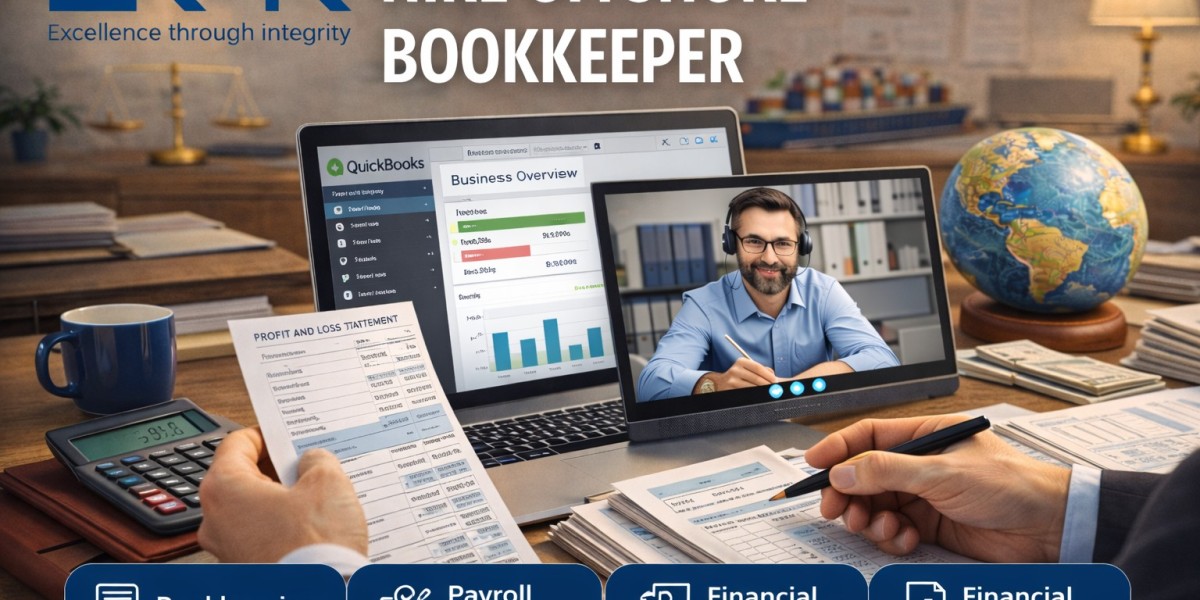

Rising operational costs, accounting talent shortages, and increasing compliance demands are forcing companies to look for smarter solutions. One strategy that’s gaining serious momentum? Choosing to hire offshore bookkeeper services.
But why is this shift happening now? And is offshore bookkeeping really the right move for your business?
Let’s break it down.
The Changing Financial Landscape in 2026
Over the last few years, accounting departments across the U.S. have faced multiple challenges:
Higher employee salary expectations
Increased healthcare and benefit costs
Difficulty finding skilled bookkeeping professionals
Growing regulatory and tax compliance complexity
Demand for real-time financial reporting
For many small and mid-sized businesses, maintaining a full in-house accounting team is no longer cost-effective.
That’s where offshore bookkeeping services come in.
What Does It Mean to Hire Offshore Bookkeeper Services?
When you decide to hire offshore bookkeeper support, you partner with experienced accounting professionals located outside the U.S. who handle your bookkeeping remotely using secure, cloud-based systems.
These professionals manage:
Accounts payable and receivable
Bank and credit card reconciliations
Payroll processing
Financial reporting
General ledger maintenance
Month-end and year-end closing
They work in compliance with U.S. accounting standards, including GAAP guidelines, while providing cost-efficient support.
Why U.S. Businesses Are Making the Shift
1. Significant Cost Savings
One of the primary reasons companies hire offshore bookkeeping services is cost reduction.
An in-house bookkeeper typically costs:
$55,000–$75,000 annual salary
20–30% additional in benefits and payroll taxes
Office space and equipment
Software subscriptions
Training and onboarding
When you hire offshore bookkeeping support, you eliminate most of these fixed costs. Businesses often reduce bookkeeping expenses by 40–60% without compromising quality.
That saved capital can be reinvested into growth, marketing, hiring sales staff, or expanding operations.
2. Access to a Larger Talent Pool
The U.S. accounting industry is currently experiencing a skilled labor shortage. Finding experienced bookkeeping professionals can take months.
Offshore accounting firms provide immediate access to:
Certified accounting professionals
QuickBooks and Xero specialists
U.S. GAAP-trained bookkeepers
Industry-specific experts
This means faster onboarding and fewer hiring delays.
3. Scalability for Growing Companies
What happens when your transaction volume doubles?
An in-house employee can quickly become overwhelmed, forcing you to hire again.
When you hire offshore bookkeeper services, scalability becomes simple:
Add more resources during busy seasons
Reduce support when workload slows
Expand into multi-entity bookkeeping
Manage rapid business growth efficiently
This flexibility is especially valuable for startups, CPA firms, e-commerce businesses, and expanding service companies.
Technology Has Removed Geographic Barriers
In 2026, bookkeeping is cloud-driven.
Modern accounting relies on:
QuickBooks Online
Xero
NetSuite
Cloud-based payroll systems
Secure document-sharing platforms
With real-time dashboards and encrypted access controls, business owners can monitor financial data from anywhere.
Geography no longer limits financial collaboration — technology makes offshore bookkeeping seamless.
Is It Safe to Hire Offshore Bookkeeper Services?
Security is a valid concern.
Reputable offshore bookkeeping firms implement:
Confidentiality agreements (NDAs)
Secure cloud-based platforms
Data encryption protocols
Two-factor authentication
Role-based access permissions
Internal quality control reviews
In many cases, these systems are more structured and secure than small in-house setups.
Security depends on process — not physical location.
Improved Efficiency and Faster Reporting
Another reason businesses are choosing offshore bookkeeping in 2026 is speed.
Offshore teams often provide:
Faster month-end closings
Dedicated review processes
Multiple team members per account
Extended work-hour coverage
This means:
Timely financial reports
Better cash flow visibility
Accurate forecasting
Reduced compliance stress
Timely reporting allows business owners to make smarter decisions.
Who Should Consider Offshore Bookkeeping?
You should consider hiring offshore bookkeeping support if:
Your bookkeeping workload is increasing
Your internal team is overwhelmed
You want to reduce overhead
You’re planning expansion
You need scalable accounting support
You want structured, process-driven bookkeeping
Small businesses and growing mid-sized companies benefit the most from this model.
Common Questions Business Owners Ask
Is offshore bookkeeping legal?
Yes. Offshore bookkeeping is completely legal as long as U.S. accounting and tax laws are followed.
Will I lose control over my finances?
No. Cloud-based accounting systems provide real-time access and transparency.
Is offshore bookkeeping only for large companies?
No. Many small businesses and startups benefit from flexible offshore bookkeeping services.
The Strategic Advantage in 2026
Choosing to hire offshore bookkeeper services is no longer just about saving money.
It’s about building:
Agile financial operations
Scalable accounting systems
Efficient back-office processes
Compliance-ready reporting structures
Businesses that adapt to flexible financial models are better positioned to compete in fast-changing markets.
Final Thoughts
The question in 2026 isn’t whether offshore bookkeeping works — it’s whether your business can afford to ignore it.
When you hire offshore bookkeeping support, you gain:
Cost efficiency
Access to skilled professionals
Operational scalability
Improved reporting accuracy
Stronger financial control