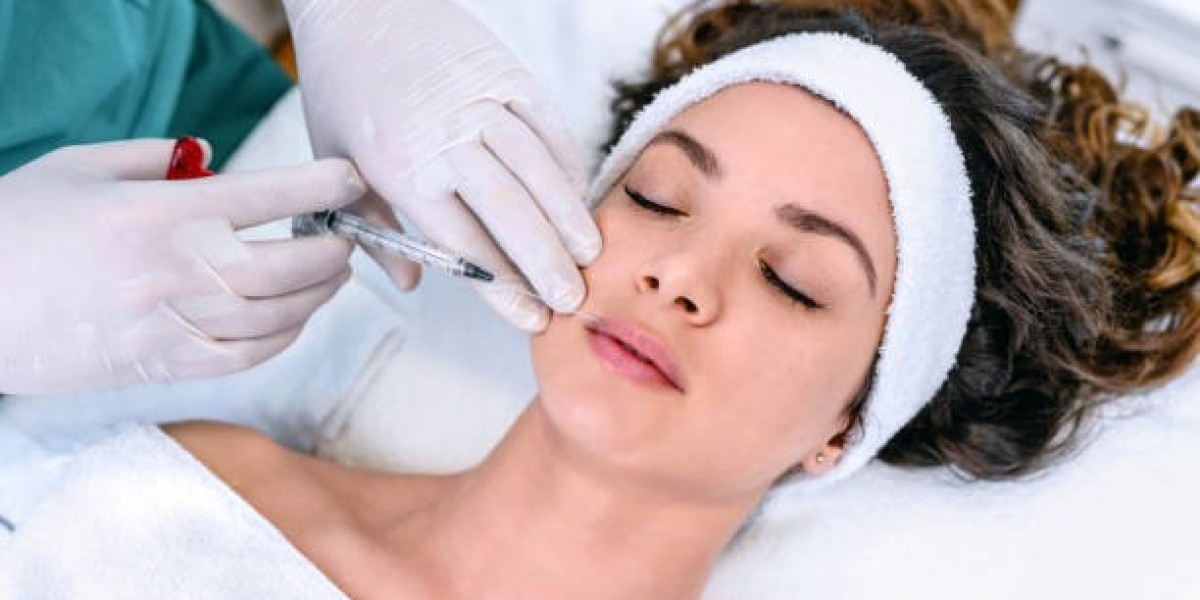

For many, the end of active acne is only the beginning of a struggle with "textural leftovers." Pitted scars, specifically "rolling" and "boxcar" scars, are the result of internal fibrotic bands pulling the skin downward. While lasers address the surface, Fillers in Dubai are increasingly used to treat the structural "dips" from beneath. In clinical settings, we observe that injecting soft Hyaluronic Acid or biostimulators into these depressions provides an immediate lifting effect that topical creams cannot replicate. This "subsurface" approach not only levels the skin but also encourages long-term collagen synthesis in the scarred tissue.
The Clinical Science of Scar Subcision and Filling
Smoothing acne scars is more complex than standard volumization; it requires breaking down old tissue to make room for the new.
The "Lifting" Effect: Fillers provide a mechanical support structure that "props up" the floor of the scar to match the surrounding skin level.
Subcision Integration: In clinical settings, we often perform "subcision" (using a needle to release tethered scar bands) followed immediately by filler. The filler acts as a spacer, preventing the bands from re-attaching.
Biostimulation: Certain fillers stimulate the body’s fibroblasts. Over time, the filler is replaced by your own natural collagen, meaning the scar becomes shallower even after the product metabolizes.
Light Reflection: By eliminating the "shadows" created by pitted scars, the skin immediately appears more uniform and "airbrushed" under overhead lighting.
How Much Pain is Actually Felt During Scar Filling?
Is treating acne scars more sensitive than other filler areas?
Acne scar filling involves many small, localized injections, which can feel like a "series of quick snaps." Most patients rate the pain at a 4/10. Because scar tissue is denser than healthy tissue, there may be a sensation of "resistance" or a "popping" feeling as the filler is placed. Based on post-procedure follow-ups, the integrated Lidocaine works quickly, and the "burning" sensation often associated with lasers is entirely absent here.
Who is the Ideal Candidate for Scar Fillers?
Are fillers effective for all types of acne scars?
In clinical settings, we categorize scars before treatment. Fillers work best for "Rolling" scars (sloping depressions) and some "Boxcar" scars (sharper edges). They are generally not effective for "Icepick" scars (very narrow, deep holes), which require chemical peels or punch excisions. Additionally, patients must have no active acne in the treatment area to ensure the needle does not spread bacteria into the deeper dermis.
Step-by-Step Patient Sensations: The Texture Timeline
The recovery from scar filling is focused on the resolution of localized "micro-swelling."
The "Bumpy" Phase (Day 1): Immediately after, the treated scars may look like small "mosquito bites." This is a normal clinical response to the localized volume.
Day 2–3: The redness fades. The skin feels "firm" in the treated spots. You may notice that your skin looks its best during this phase due to minor edema (swelling) filling in the gaps.
Week 1: The "mosquito bite" appearance flattens. The filler begins to soften and integrate with the surrounding collagen.
Month 1: This is the "True Texture" phase. The initial swelling is gone, and you can see the actual level of correction achieved by the product.
Why Choose Tajmeels Clinic for Specialized Scar Revision?
At Tajmeels Clinic, we understand that acne scars are deeply personal. Our approach to Fillers in Dubai for scarring involves "Micro-Point Precision." We don't just fill; we analyze the "tethering" of each scar to decide if subcision is necessary. We often use a "Multi-Modality" approach, combining fillers with microneedling to treat both the depth and the surface texture. By choosing Tajmeels Clinic, you are choosing a clinical team that specializes in complex skin textures, ensuring your path to smooth skin is safe, methodical, and effective.
Genuine Patient Perspectives
"I’ve tried every laser for my rolling scars and nothing worked. The doctor at Tajmeels explained that my scars were 'tethered' and needed filler to lift them. It felt like a few sharp pinches, but the difference in the mirror was instant. For the first time in years, I don't feel like I need heavy foundation." — Omar
"The team at Tajmeels was so patient. They did a 'test' on one area first so I could see the result. It felt a bit tight for a few days, like little hard spots under my skin, but they vanished after a week. My skin just looks... smoother. The shadows are gone." — Sarah
Frequently Asked Questions
Is the result permanent?
While HA fillers last 6 to 12 months, the collagen stimulation they trigger can lead to permanent minor improvements in scar depth.
Can I have this done while on Accutane?
In clinical settings, we generally advise waiting 6 months after finishing Accutane before any elective skin procedures.
Will it make me break out?
Fillers are non-comedogenic (they don't clog pores), but we provide a specific post-care cleansing routine to keep the skin clear.
How many sessions will I need?
Most patients see a significant difference in one session, though deep scarring may require a "touch-up" after 4 weeks.
Can I wear makeup over the treated scars?
Wait at least 24 hours to ensure the injection points are closed to prevent any bacteria from entering.
Does it work on dark skin tones?
Yes. Unlike some lasers, fillers carry no risk of post-inflammatory hyperpigmentation (PIH) for darker skin types.