
Tissue sectioning techniques include paraffin sectioning and cryosectioning. The choice of method depends on the type of tissue and purpose of examination.
Tissue Sectioning Market Overview and Growth Analysis
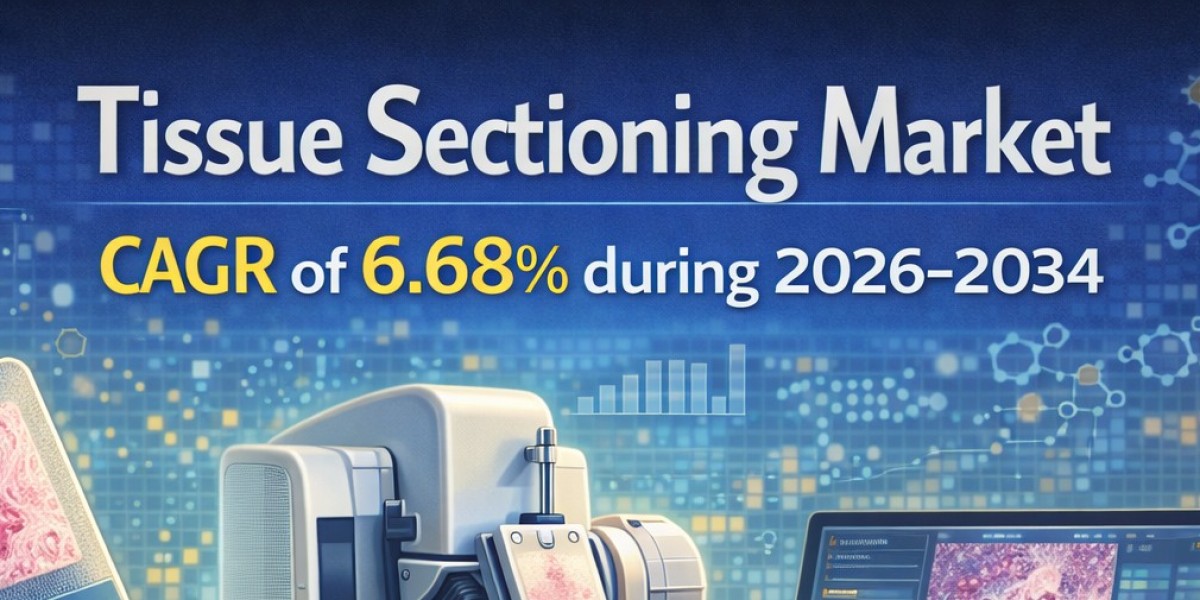
The global Tissue Sectioning Market is projected to grow from US$ 751.58 million in 2025 to US$ 1345.0 million by 2034, registering a CAGR of 6.68% during the forecast period from 2026 to 2034. This steady expansion is driven by the increasing prevalence of cancer, rising adoption of histopathology in disease diagnosis, laboratory automation, and growing demand for advanced microtomes and cryostats in both clinical and research environments.
Tissue sectioning plays a fundamental role in histological and pathological evaluation. It involves cutting thin, uniform slices of biological tissues for microscopic examination. Accurate sectioning is critical for disease diagnosis, biomarker discovery, and drug development. Modern systems ensure consistent section thickness, minimal tissue distortion, and enhanced visualization, supporting reliable diagnostic outcomes and research accuracy.
Market Drivers and Growth Catalysts
One of the primary drivers of the Tissue Sectioning Market is the rising incidence of cancer and chronic diseases worldwide. Increasing biopsy volumes have led to higher demand for efficient and high precision sectioning systems in pathology laboratories. As healthcare systems focus more on early diagnosis and screening programs, the need for reliable tissue preparation tools continues to grow.
Automation in histopathology laboratories is another significant growth factor. Automated rotary microtomes, motorized cryostats, and integrated sectioning platforms reduce manual errors, improve reproducibility, and enhance workflow efficiency. These technological advancements are transforming laboratory operations by increasing throughput and minimizing variability.
The growing emphasis on personalized medicine and biomarker based diagnostics further fuels market demand. Molecular diagnostics and targeted therapies require highly accurate tissue samples, which depend on advanced sectioning technologies. The shift toward digital pathology and artificial intelligence based slide analysis also supports demand for high quality sectioning systems compatible with whole slide imaging platforms.
Download Free Sample PDF- https://www.theinsightpartners.com/sample/TIPRE00019692
Market Opportunities and Emerging Trends
Emerging markets present strong growth opportunities. Countries such as China, India, Brazil, and the UAE are investing heavily in diagnostic infrastructure and research facilities. Expanding laboratory networks in these regions are increasing demand for modern tissue sectioning instruments and consumables.
Integration with digital pathology and AI platforms is another promising opportunity. Advanced sectioning systems that seamlessly connect with imaging software and AI assisted analysis tools enhance diagnostic accuracy and laboratory productivity. Manufacturers are focusing on developing automated and high throughput systems, including robotic tissue handling and automated blade technologies, to differentiate their offerings in a competitive landscape.
Segmentation Analysis
The Tissue Sectioning Market is segmented across multiple categories to provide a comprehensive understanding of its structure.
By Product
The market includes Instruments, Accessories and Consumables, and Services. Instruments such as microtomes and cryostats account for a significant revenue share due to their essential role in laboratories. Accessories and consumables generate recurring revenue streams, while service offerings support maintenance and technical assistance.
By Technology
Technology segments include Automatic, Semiautomatic, and Manual systems. Automatic systems are gaining popularity due to their efficiency and precision, especially in high volume diagnostic laboratories. Semiautomatic and manual systems continue to serve smaller laboratories and research institutions.
By Application
Applications are divided into Diagnosis and Research. Diagnostic applications dominate due to increasing pathology workloads, while research applications are expanding in academic and pharmaceutical settings.
By End Use
End users include Hospitals, Clinics, Diagnostic Laboratories, and Research Centers. Diagnostic laboratories represent a substantial share due to rising biopsy procedures and cancer screening initiatives.
Regional Insights
North America leads the market, supported by advanced healthcare infrastructure, high adoption of digital pathology, and strong research funding. Europe follows with significant investments in histopathology modernization. Asia Pacific is expected to witness rapid growth driven by expanding healthcare infrastructure and increasing cancer incidence. South and Central America, along with the Middle East and Africa, are experiencing gradual development as diagnostic capabilities improve.
Key Market Players
- Thermo Fisher Scientific
- Leica Biosystems Nussloch GmbH
- LLS ROWIAK LaserLabSolutions GmbH
- Sakura Finetek Europe B.V
- Diapath S.p.A.
- Histo-line Laboratories
- Medite Medical GmbH
- SLEE medical GmbH
- Abcam plc
- Amas Scientific Pty Ltd
These companies focus on product innovation, automation technologies, and strategic collaborations to strengthen their global presence.
Future Outlook
The Tissue Sectioning Market is expected to maintain consistent growth through 2034, driven by technological advancements and expanding diagnostic requirements. Increasing integration of automation, robotics, and digital pathology platforms will enhance laboratory efficiency and diagnostic accuracy. As personalized medicine and biomarker research continue to expand, the demand for precise and high throughput tissue sectioning systems will rise steadily. Investments in emerging economies and continuous product innovation will further shape the market landscape in the coming decade.
Related Report: