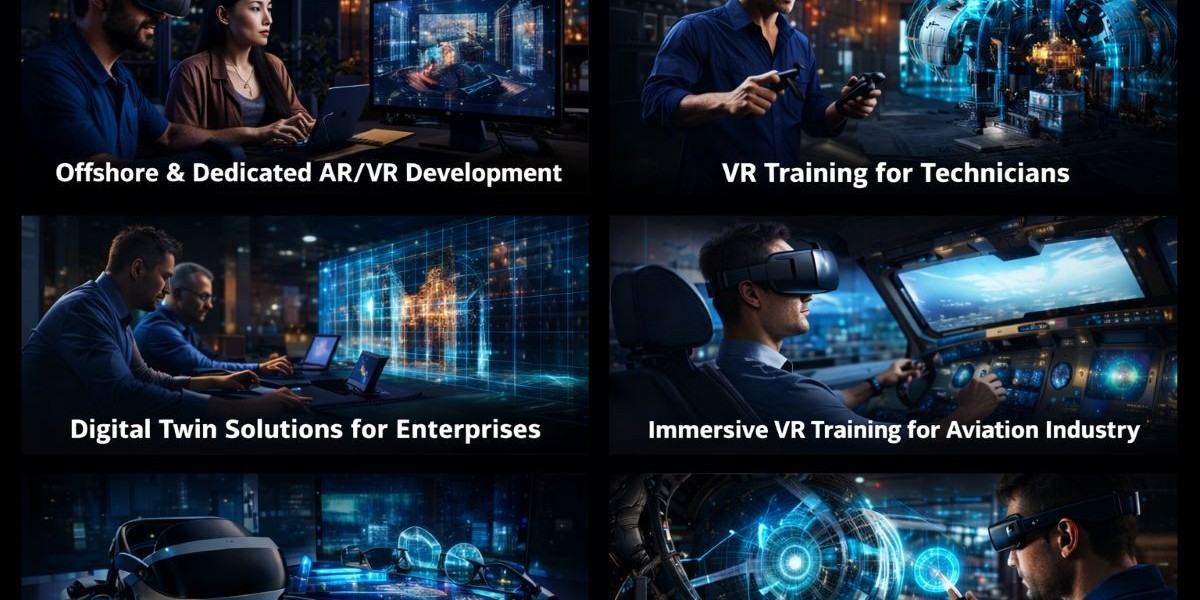

AuraInteract Private Limited develops immersive technology solutions that help enterprises enhance operational efficiency and workforce readiness. In highly regulated and precision-driven sectors such as aviation, training accuracy and safety compliance are critical. Emerging technologies like augmented reality (AR) and virtual reality (VR) are transforming how aviation professionals acquire, practice, and maintain essential skills.
To successfully implement immersive systems in such complex environments, organizations often rely on a Dedicated AR VR Development Team with deep technical expertise and industry understanding. Aviation training requires realistic simulations, system integration, and strict adherence to safety standards—making specialized development capabilities essential.
The Need for Advanced Training in Aviation
The aviation industry involves highly technical operations, including aircraft maintenance, cockpit procedures, ground handling, and emergency response. Traditional training methods combine classroom theory, physical simulators, and on-the-job practice. While effective, these methods can be resource-intensive and limited by equipment availability.
Immersive technology enhances training programs by introducing digital simulations that replicate real-world scenarios. Virtual environments allow aviation professionals to practice procedures repeatedly without operational risk. This improves confidence and skill retention while reducing dependency on physical aircraft or simulation hardware.
Role of a Dedicated AR VR Development Team
Implementing aviation-grade immersive systems requires collaboration between software engineers, 3D artists, UI/UX designers, and system architects. A Dedicated AR VR Development Team ensures that simulations are:
Technically accurate and visually realistic
Aligned with aviation compliance standards
Integrated with existing training management systems
Scalable across multiple training centers
Such teams utilize advanced engines like Unity or Unreal Engine to build high-fidelity environments. Detailed aircraft models, cockpit instrumentation, and maintenance workflows are recreated digitally to provide immersive learning experiences.
Structured development processes—including requirement analysis, prototype validation, performance testing, and deployment—ensure reliability and precision. Continuous updates allow training modules to evolve alongside regulatory or aircraft system changes.
VR Training For Aviation Industry: Practical Applications
VR Training For Aviation Industry covers a wide range of operational scenarios. These include:
1. Aircraft Maintenance Training
Technicians can practice inspection routines, part replacements, and troubleshooting procedures within virtual aircraft models. This reduces the need for repeated physical equipment usage during early-stage training.
2. Emergency Response Simulations
VR modules can simulate rare but critical scenarios such as engine failure, fire incidents, or adverse weather conditions. Practicing these situations in a virtual environment improves preparedness without real-world risks.
3. Ground Crew Operations
Baggage handling, aircraft marshaling, and safety checks can be replicated digitally, allowing ground staff to develop procedural accuracy.
4. Cabin Crew Training
Simulated cabin environments support customer interaction training and emergency evacuation drills.
These immersive modules enable consistent and repeatable learning experiences, ensuring that personnel across different locations receive standardized instruction.
Benefits of Immersive Aviation Training
The adoption of immersive training systems provides several measurable advantages:
Reduced training costs associated with equipment use
Lower risk during skill development stages
Faster onboarding of new aviation professionals
Improved compliance monitoring
Enhanced knowledge retention through interactive learning
Performance analytics integrated into VR platforms allow instructors to evaluate accuracy, response time, and adherence to protocols. This data-driven approach strengthens competency assessment and continuous improvement.
Integration and Security Considerations
Aviation training platforms must operate within secure digital ecosystems. Immersive systems are designed to integrate with Learning Management Systems (LMS), maintenance databases, and compliance tracking tools. Secure cloud deployment ensures accessibility while protecting sensitive operational information.
Cross-device compatibility enables training modules to function across various VR headsets and enterprise hardware systems. Scalable architecture allows aviation organizations to expand immersive capabilities as operational demands grow.
Preparing Aviation Professionals for the Future
As aircraft systems become more technologically advanced, aviation personnel must continuously upgrade their skills. Immersive technologies provide structured and adaptable learning platforms that evolve alongside industry innovation.
By collaborating with a Dedicated AR VR Development Team, aviation organizations can implement reliable and scalable VR Training For Aviation Industry programs. These solutions enhance safety, standardization, and operational readiness while supporting long-term workforce development.
Immersive technology is becoming a valuable component of aviation education—bridging the gap between theoretical knowledge and practical expertise in a secure, controlled, and measurable environment.