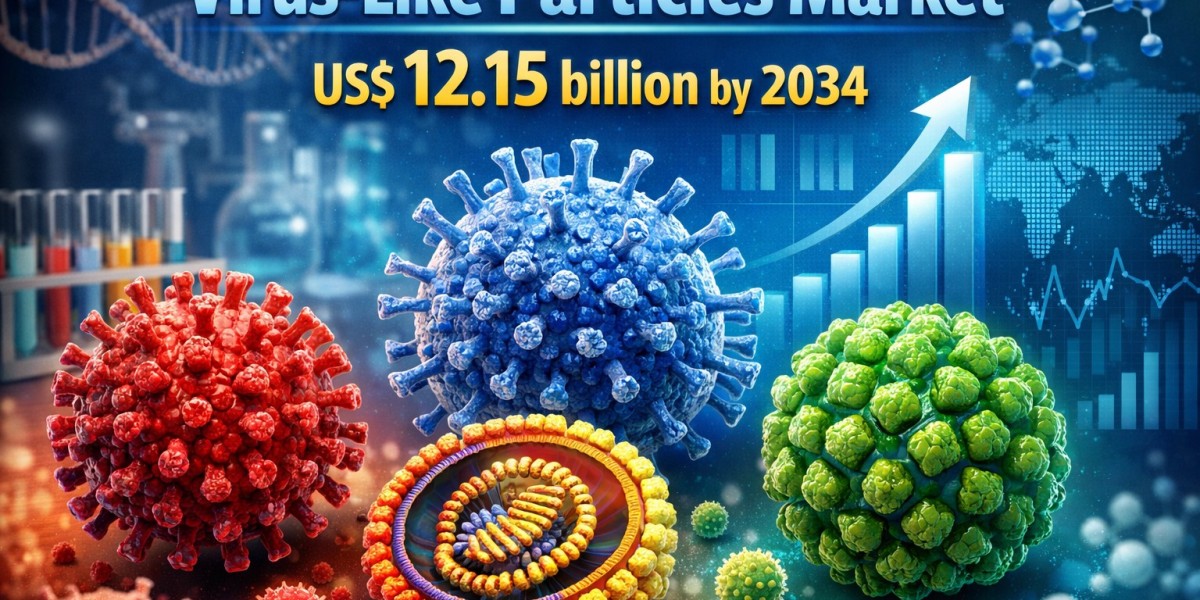

Virus-like particles function as self-assembling protein structures that mimic viral morphology while remaining non-infectious. Their predictable size and shape make them highly suitable for controlled immune system activation and targeted therapeutic delivery.
The global virus-like particles market is entering a phase of sustained expansion, with projected growth from US$ 6.25 billion in 2025 to US$ 12.15 billion by 2034. This trajectory reflects a CAGR of 7.61% during 2026 to 2034, supported by accelerating demand for advanced vaccine platforms and precision delivery technologies. Stakeholders are increasingly moving beyond traditional vaccine development toward high-value payload delivery strategies that leverage the structural advantages of virus-like particles.
The market landscape is shaped by the growing importance of VLPs as targeted carriers for RNA therapeutics and CRISPR components. Their structural properties make them promising alternatives to lipid nanoparticle systems, particularly for applications requiring transport across biological barriers such as the blood-brain barrier. This capability expands their role beyond prophylactic vaccines into therapeutic delivery for neurological and oncological conditions.
Driving Factors
One of the strongest drivers is the global rise in infectious diseases and chronic illnesses such as cancer. Healthcare systems are seeking vaccine technologies that offer improved immunogenicity and safety compared to traditional attenuated or inactivated approaches. VLP-based platforms meet these requirements while supporting rapid antigen customization.
Government initiatives focused on preventive healthcare are also accelerating adoption. Public health strategies increasingly emphasize broad-spectrum immunization and rapid deployment capabilities, creating favorable funding conditions for VLP research and commercialization. In addition, advances in recombinant expression technology have improved production efficiency, enabling faster development cycles and greater manufacturing consistency.
Market Trends
Artificial intelligence integration is emerging as a transformative trend within the VLP ecosystem. AI-driven modeling enables the design of synthetic scaffolds and multivalent vaccine constructs with enhanced precision. This reduces development timelines and improves antigen presentation efficiency, giving early adopters a competitive advantage.
Download Sample PDF: https://www.theinsightpartners.com/reports/virus-like-particles-market
Another key trend is the expansion of oncology-related immunotherapies. Researchers are exploring VLP platforms for targeted drug delivery and tumor-specific immune activation. This shift toward therapeutic applications reflects a broader industry movement from preventive vaccines toward multifunctional biologics capable of addressing both infectious and non-communicable diseases.
Regional manufacturing localization is also gaining momentum. Establishing production hubs closer to demand centers strengthens supply chain resilience and supports rapid distribution during public health emergencies.
Growth Opportunities
Significant opportunities lie in payload delivery applications, particularly for nucleic acid therapeutics. VLPs offer a stable and customizable structure that can enhance targeting accuracy and reduce off-target effects. Companies that invest in platform versatility can expand across multiple therapeutic areas while maintaining technological continuity.
Another opportunity is the development of next-generation multivalent vaccines capable of addressing multiple pathogens simultaneously. This approach aligns with healthcare priorities focused on efficiency and comprehensive protection. Strategic partnerships between biotechnology firms and public health agencies are expected to accelerate commercialization pathways.
Future Outlook
The virus-like particles market is expected to evolve into a central pillar of modern biopharmaceutical innovation. Continued investment in scalable manufacturing, AI-assisted design, and targeted delivery technologies will likely expand application scope across neurology, oncology, and infectious disease prevention. As regulatory frameworks adapt to platform-based biologics, commercialization timelines may shorten, further supporting sustained revenue growth through 2034.
FAQs
1. What are virus-like particles used for?
Virus-like particles are primarily used in vaccines and targeted drug delivery systems. They stimulate strong immune responses without causing infection.
2. Why are virus-like particles considered safe?
They lack viral genetic material, which means they cannot replicate or cause disease while still triggering immune recognition.
Related Report Metabolomics Services Market Growth Insights 2034