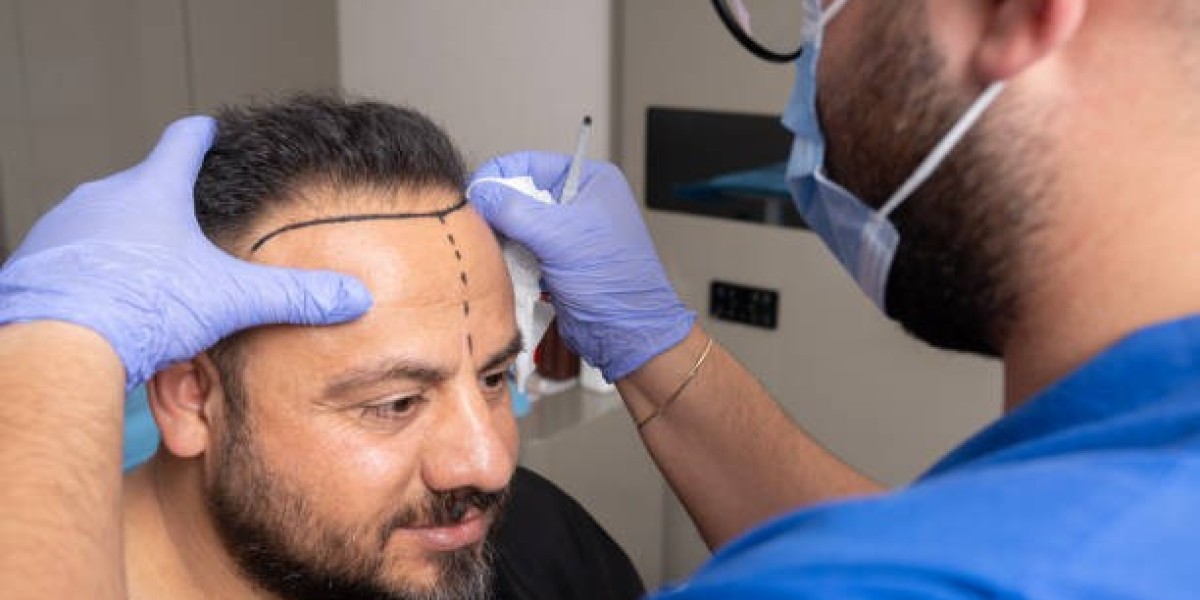

For patients seeking maximum density and a faster return to social life, the Direct Hair Implantation (DHI) technique represents the peak of modern hair restoration. Unlike traditional methods where channels are cut into the scalp before hair is placed, DHI integrates these steps into a single motion. When undergoing a Hair Transplant in Dubai using this method, the focus shifts from simply covering bald spots to "high-definition" detailing. By utilizing specialized tools that protect the follicle, DHI offers a level of precision that is particularly beneficial for those looking to fill in thinning areas without a full head shave.
What Makes the DHI Technique Clinically Unique?
In clinical settings, we observe that the primary advantage of DHI lies in the "out-of-body" time of the hair follicle. The faster a graft is returned to the scalp, the higher its chance of survival.
The specific benefits of the DHI approach include:
No-Pre-Incision Required: The Choi Implanter Pen creates the site and places the follicle simultaneously, reducing scalp trauma.
Superior Angle Control: The pen allows the clinician to control the depth, direction, and angle (up to 360 degrees) with extreme accuracy.
Higher Density Potential: Because the tool is so fine, we can place grafts closer together than with traditional forceps.
Reduced Bleeding: The minimally invasive nature of the implanter pen leads to less micro-bleeding during the procedure.
Faster Healing: With smaller "wounds" created in the recipient area, the skin typically closes and heals more rapidly.
Is DHI Better for Women or Unshaven Procedures?
Because DHI does not require the surgeon to create large "slits" in the scalp, it is often the preferred choice for patients who wish to keep their existing hair long.
How does the "No-Shave" option work with DHI?
For many professionals, the biggest barrier to a Hair Transplant in Dubai is the requirement to shave their head. DHI bypasses this in many cases. In clinical settings, we can work between long hairs, implanting new follicles directly into thinning patches. This makes it a popular choice for women experiencing female pattern hair loss or men who only need to lower their hairline or fill in temple recesses. Patients often report that they can return to work within 48 hours without any obvious signs of surgery beyond minor redness.
What are the Actual Pain Levels During a DHI Session?
The tactile experience of DHI is often described as "lighter" than traditional FUE because of the specialized instrumentation.
What sensations occur during the implantation phase?
Based on post-procedure follow-ups, the extraction phase feels identical to FUE—a series of "tapping" sensations once the local anesthetic is active. However, the implantation phase with the Choi Pen is described as a repetitive "clicking" or "pressing" sensation. Patients generally rate the pain at a 1/10 or 2/10. Because the implanter pen is so precise, there is often less "throbbing" in the scalp during the first evening compared to methods that involve manual channel creation.
Realistic Recovery: The DHI Advantage
The more controlled the "trauma" to the scalp, the more streamlined the recovery process becomes for the patient.
How quickly does the scalp recover with DHI?
Day 1–2: Redness is localized only to the tiny points of implantation.
Day 3–5: Scabbing is minimal and often looks like small "freckles" rather than a large crust.
Week 1: Most of the donor and recipient areas are healed enough that a special wash can be performed to clear the skin.
Social Integration: Because DHI often avoids the "shaven head" look, many patients feel comfortable in social settings much sooner than with other techniques.
Reduced Swelling: Clinical data suggests that DHI patients often experience less severe forehead swelling because of the reduced volume of saline and anesthetic needed in the recipient area.
Safety Considerations: Who is Not a Candidate for DHI?
While DHI is highly advanced, it is not always the best choice for every hair type or level of hair loss.
When should DHI be avoided in favor of other methods?
Large-Scale Balding: If a patient requires more than 3,500–4,000 grafts in a single session, DHI may be too slow; FUE is often more efficient for "mega-sessions."
Certain Hair Textures: Extremely curly or "kinky" hair can sometimes be difficult to load into the Choi Pen without damaging the follicle.
Tight Scalps: If the recipient tissue is very scarred or tight, a manual channel creation method may be safer to ensure graft depth.
Budget Constraints: DHI is a more labor-intensive and expensive technique due to the specialized equipment and the time required for the clinical team to load each pen.
Why Choose Tajmeels Clinic for Your DHI Procedure?
At Tajmeels Clinic, we have invested in the most advanced Choi Implanter technology to ensure our patients receive the full benefits of the DHI method. Our approach to a Hair Transplant in Dubai involves a specialized "Three-Person Team" for every DHI case: one to extract, one to load the pens, and the lead clinician to implant. This ensures that the follicles are out of the body for the shortest time possible, maximizing your growth results. By choosing Tajmeels Clinic, you are opting for a high-precision, boutique experience designed for those who demand the most natural and dense results available.
Genuine Patient Perspectives
"I didn't want to shave my head for work reasons. The DHI method at Tajmeels allowed me to fill in my temples while keeping my hair long. Three days later, I was back in meetings with just a bit of redness that looked like a slight sunburn. It was incredibly discreet." — Sami R.
"The Choi Pen made a huge difference for me. I’d had a transplant elsewhere years ago that felt very 'aggressive.' This time, with DHI, the recovery was so much faster, and the density in my crown area looks much more natural." — Thomas L.
Frequently Asked Questions
Is DHI more expensive than FUE?
Yes, it usually carries a higher cost because it requires more clinical staff and specialized, single-use tools for implantation.
Can DHI be used for beard transplants?
Absolutely. DHI is actually the "Gold Standard" for beards because it allows for the exact angulation needed to mimic facial hair growth.
Does DHI have a higher success rate?
While both are high, DHI often sees slightly better graft survival because the follicles are handled less and implanted more quickly.
Will I still experience "Shock Loss" with DHI?
Yes, shedding is a biological phase of the hair follicle and will still occur regardless of the implantation method.
How many grafts can be done with DHI?
Typically, DHI is used for sessions of 1,500 to 3,000 grafts; larger sessions may require two days or a combination of techniques.
Is the DHI tool painful?
No, the Choi Pen is very fine, and since the scalp is numbed, you will only feel a rhythmic pressure during the process.