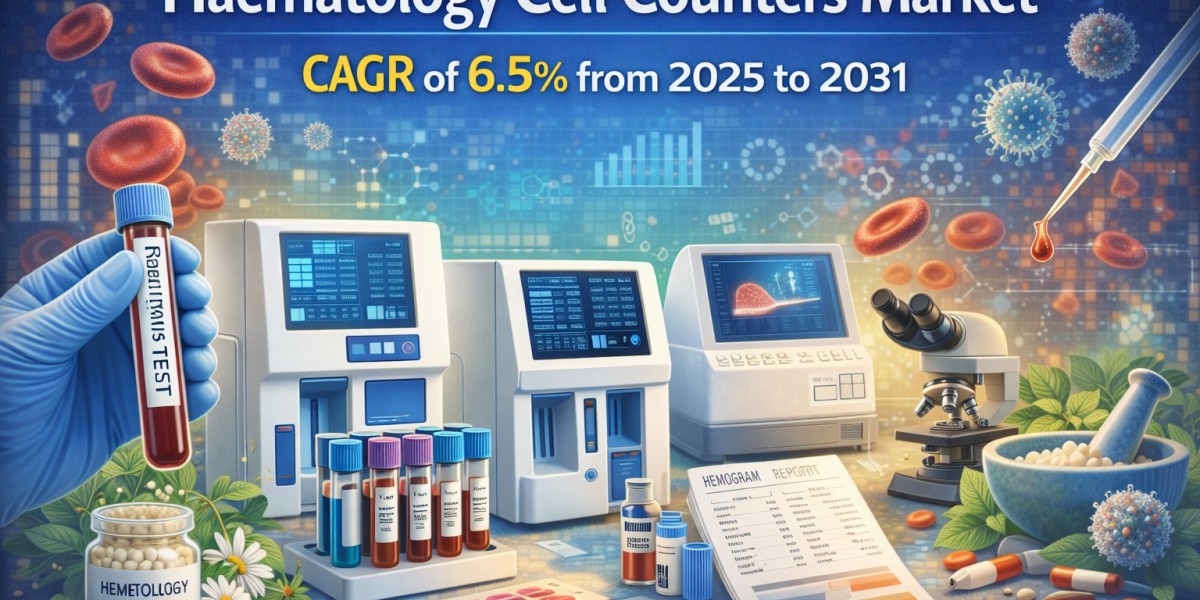

Automated haematology analyzers use electrical impedance or flow cytometry principles to differentiate and count blood cells. They improve precision and efficiency in clinical laboratories.
Haematology Cell Counters Market In depth Analysis
The Haematology Cell Counters Market is projected to register a CAGR of 6.5% from 2025 to 2031, reflecting steady growth driven by rising diagnostic demand, technological innovation, and expanding healthcare infrastructure worldwide. Haematology cell counters play a crucial role in blood analysis, enabling accurate counting and classification of blood cells for the diagnosis of various hematological disorders. With increasing emphasis on early disease detection and preventive healthcare, the adoption of advanced hematology analyzers continues to expand across clinical and research settings.
Haematology Cell Counters Market Overview
The market is segmented by type into automatic hematology analyzers and semiautomatic hematology analyzers. Automatic analyzers dominate the segment due to higher throughput, improved accuracy, and reduced manual intervention. Semiautomatic systems remain relevant in smaller laboratories and cost sensitive markets where budget constraints limit full automation.
By application, the market is categorized into clinical diagnostics and research applications. Clinical diagnostics represents the largest share, as routine blood testing is a standard component of patient evaluation. Research applications are also expanding due to growing interest in hematology related studies, oncology research, and drug development.
Based on end user, the market serves hospitals, research and academic laboratories, and other healthcare facilities. Hospitals account for a significant portion of demand, driven by the high volume of diagnostic procedures conducted daily.
Geographically, the market spans North America, Europe, Asia Pacific, South and Central America, and the Middle East and Africa, with values presented in US dollars for all segments.
Download Free Sample PDF- https://www.theinsightpartners.com/sample/TIPRE00012930
Market Growth Drivers
One of the primary drivers is the rising prevalence of blood related diseases such as anemia, leukemia, and other hematological disorders. The increasing burden of chronic diseases and aging populations globally necessitates accurate and efficient blood diagnostics. Healthcare providers rely heavily on advanced cell counters to support timely diagnosis and treatment planning.
Technological advancements are another major growth catalyst. Innovations in automated counting systems, improved precision, user friendly interfaces, and integration with laboratory information systems enhance workflow efficiency. These advancements not only reduce manual errors but also improve laboratory productivity and patient outcomes.
The growing demand for point of care testing is further fueling market expansion. Portable and compact hematology analyzers enable rapid diagnostics in emergency rooms, outpatient clinics, and remote settings. This capability supports faster clinical decisions and improves patient management, particularly in underserved areas.
Emerging Trends
Miniaturization and portability of devices are reshaping the industry landscape. Compact analyzers designed for decentralized testing environments enhance accessibility and speed of diagnosis. This trend aligns with the global movement toward decentralized healthcare delivery.
Workflow automation is becoming a central focus for laboratories. Automated hematology systems streamline sample processing, reduce turnaround time, and improve throughput. Laboratories increasingly prefer analyzers that integrate seamlessly with existing automation platforms.
Multi parameter analyzers are also gaining popularity. These advanced systems provide comprehensive blood analysis in a single test, delivering data on cell counts, morphology, and other parameters simultaneously. This capability improves diagnostic accuracy and operational efficiency.
Market Opportunities
Rising global health awareness and preventive care initiatives create substantial opportunities. Routine blood testing is becoming more common as individuals seek proactive health monitoring. Healthcare facilities must invest in advanced hematology equipment to meet this growing demand.
Collaboration with telehealth service providers offers another promising avenue. Integrating hematology analyzers with telemedicine platforms can enable remote diagnostics and patient monitoring, particularly in rural and underserved regions.
Increased focus on research and development presents opportunities for innovation. Investment in biotechnology and automation can lead to the development of more sophisticated, high precision analyzers, strengthening competitive differentiation in the market.
Regional Insights
North America leads the market due to advanced healthcare infrastructure, strong research activities, and high adoption of automated technologies. Europe follows closely with well established laboratory networks and supportive healthcare policies. Asia Pacific is expected to witness significant growth, driven by expanding healthcare access, increasing disease prevalence, and rising investments in diagnostic infrastructure. Emerging markets in South and Central America and the Middle East and Africa are gradually adopting advanced hematology systems as healthcare modernization progresses.
Key Market Players
- Sysmex
- Abbott
- Danaher Corporation
- Siemens AG
- Bio Rad Laboratories
- Shenzhen Mindray Bio Medical Electronics Co., Ltd.
- Nihon Kohden Corporation
- HORIBA, Ltd
- F. Hoffmann La Roche Ltd
- Hycel Medical
These companies focus on product innovation, automation integration, geographic expansion, and strategic partnerships to strengthen market presence.
Future Outlook
The future outlook for the Haematology Cell Counters Market remains positive, supported by a projected CAGR of 6.5% through 2031. Continued advancements in automation, rising demand for point of care testing, and expanding diagnostic infrastructure will drive sustained growth. As healthcare systems prioritize early detection and precision diagnostics, hematology analyzers will remain an essential component of modern laboratory operations.
Related Report:










