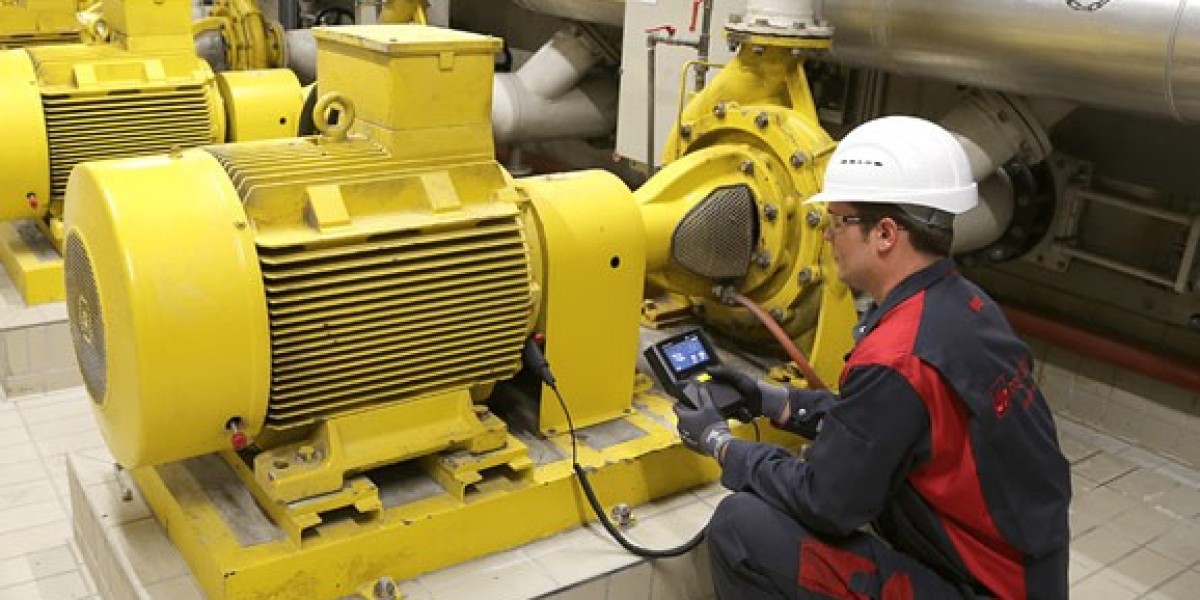

In the world of heavy industry, the worst sound an engineer can hear is a sudden, grinding crunch coming from a machine that was supposed to last another five years. We’ve all been there—stuck in a cycle of reacting to a crisis rather than preventing it. This is exactly why many forward-thinking facility managers are shifting toward Condition Monitoring Services to act as a high-tech early warning system. Instead of holding your breath and waiting for a total meltdown, these services allow you to "listen" to the heartbeat of your equipment. In this post, we’re going to look at five techniques that are changing how we keep the wheels of industry turning without the constant fear of a surprise shutdown.
1. The Art of Listening to Vibrations
Every piece of rotating equipment has a unique rhythm. When a bearing starts to pit or a shaft becomes slightly misaligned, that rhythm changes. Vibration analysis lets us catch these microscopic shifts long before they ever become loud enough for a human to hear. By placing sensors on key points of a motor or pump, we can map out exactly where the stress is building up.
Track deviations from baseline performance instantly.
Differentiate normal noise from mechanical wear.
Use Turboflex V Belts to eliminate false vibration alarms.
2. Seeing the Heat
Thermal imaging is like giving your maintenance crew predator vision. By using infrared cameras, we can see heat spots that indicate electrical resistance or friction-induced overheating. It’s a brilliant, non-contact way to scan an entire electrical panel or a series of conveyor drives in seconds. If a connection is loose or a lubricant has dried up, the heat signature will glow like a beacon, allowing you to schedule a quick fix during a planned break rather than dealing with an emergency blackout.
3. High-Resolution Sound Waves
Sometimes, the issue isn't in a moving part but in the fixed metal itself. This is where Phased Array Ultrasonic Testing by RVS Quality Certifications Pvt. Ltd. comes into play. Unlike older methods that only looked at one point at a time, this advanced technique uses multiple ultrasonic beams to create a "slice" view of the material. It can spot internal corrosion, cracks, or weld defects with incredible speed. It’s essentially a high-speed ultrasound for your infrastructure, ensuring the "bones" of your facility are just as healthy as the "muscles."
4. Keeping an Eye on the Frame
We often get so focused on the machines that we forget about the floor they stand on. Maintaining BUILDING STRUCTURAL STABILITY is a critical part of a holistic monitoring strategy. If a foundation settles or a support column weakens due to constant industrial vibration, it can throw your most precise machines out of alignment. Monitoring the tilt, strain, and crack propagation in the facility itself ensures your high-tech equipment has a steady, safe platform to operate on.
Detect tiny geometric shifts from environmental loads.
Link structural health data with machine performance.
Prevent settling that leads to costly floor repairs.
Catch fatigue early to avoid major reconstruction.
5. Oil Analysis: The Blood Test of Industry
If vibration analysis is the heartbeat, then oil analysis is the blood test. By taking regular samples of the lubricants running through your system, lab technicians can find traces of metal shavings, moisture, or chemical breakdown. This tells you exactly which part of the machine is wearing out. For instance, finding bronze particles might point to a specific gear bushing, while iron particles suggest a problem with the cylinder walls.
Developing In-House Expertise
Technology is only half the battle; the other half is the human brain. Many companies are realizing they shouldn't just rely on outside consultants for every small check. This has led to a surge in employees enrolling in NDT Level 2 Certification Courses. When your own team understands the nuances of non-destructive testing, they act as the first line of defense. They can interpret the data from the sensors and make real-time decisions that save the company from a week of lost production.
The Path to Uninterrupted Production
The move away from "break-fix" maintenance toward a proactive, data-driven approach is the smartest investment a modern facility can make. By combining the sharp eyes of certified experts with the precision of advanced sensors and high-quality hardware, you create a shield of reliability around your operations. It’s about more than just avoiding repairs; it’s about having the confidence to push your facility to its full potential, knowing you have the tools in place to catch any hiccup before it becomes a heartbeat-stopping failure.