
RF front end modules play a critical role in supporting high-speed data communication by enhancing signal quality and minimizing noise. These components simplify complex RF design requirements and improve network reliability. Growing demand for advanced connectivity in smartphones and smart devices is driving their adoption.
Market Overview
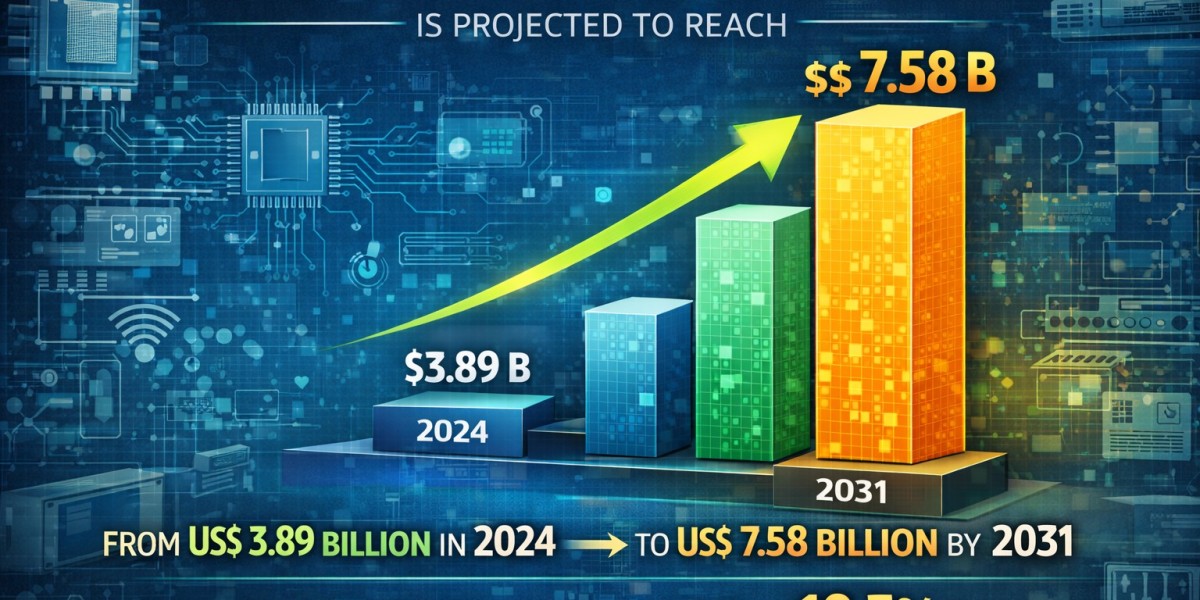
The RF front end module market is witnessing strong growth due to the increasing adoption of wireless communication technologies across consumer electronics, automotive, telecommunications, and industrial sectors. The market is projected to grow from US$ 3.89 billion in 2024 to US$ 7.58 billion by 2031, registering a CAGR of 10.3% during the forecast period. This growth is primarily driven by the rapid expansion of 5G networks, increasing smartphone penetration, and rising demand for connected devices. In addition, the growing need for miniaturized and energy efficient electronic components is encouraging manufacturers to develop compact and highly integrated RF front end modules.
An RF front end module is a critical component that manages signal transmission and reception in wireless communication systems. It integrates key components such as power amplifiers, low noise amplifiers, RF filters, and RF switches into a single unit. These components enhance signal strength, improve reception sensitivity, and ensure reliable communication. By improving link reliability and reducing signal interference, RF front end modules help optimize network performance, reduce latency, and improve overall communication efficiency.
RF front end modules are widely used in smartphones, tablets, Wi Fi routers, wearable devices, and IoT systems. These modules simplify device design by providing pre integrated solutions that manage complex RF requirements. This reduces the need for extensive RF design expertise and accelerates product development cycles for manufacturers. As wireless connectivity becomes essential across industries, the demand for efficient RF front end modules continues to rise.
Market Drivers and Growth Factors
The growing demand for smartphones and consumer electronics is one of the major drivers of the RF front end module market. Modern smartphones require advanced RF modules to support multiple frequency bands, high speed data transmission, and seamless connectivity. The increasing adoption of 5G technology has further accelerated the demand for advanced RF solutions that support higher frequencies and faster data speeds.
The automotive industry is also contributing significantly to market growth. Connected vehicles and autonomous driving systems require reliable wireless communication for real time data transmission, navigation, and safety applications. RF front end modules enable communication between vehicle sensors, control systems, and external infrastructure. Applications such as advanced driver assistance systems, collision avoidance, adaptive cruise control, and vehicle to everything communication rely heavily on efficient RF communication. As autonomous and connected vehicles become more common, the demand for RF front end modules is expected to increase steadily.
The rapid proliferation of Internet of Things devices is another key growth driver. IoT devices are used in smart homes, healthcare, industrial automation, and asset tracking applications. These devices rely on wireless communication protocols such as Bluetooth, Zigbee, and Wi Fi. RF front end modules enable efficient and reliable communication while maintaining low power consumption. Their ability to operate efficiently in battery powered devices makes them essential for IoT ecosystems.
Download Sample PDF:https://www.theinsightpartners.com/sample/TIPRE00012737
Market Segmentation Analysis
Based on component, the RF front end module market is segmented into RF filters, RF power amplifiers, RF switches, and others. Among these, RF filters held the largest share in 2024 due to their critical role in removing unwanted frequencies and ensuring signal clarity and performance.
Based on end user, the market is segmented into consumer electronics, telecommunication, automotive, defense and military, and others. The consumer electronics segment dominated the market due to high demand for smartphones, tablets, and wearable devices. The automotive segment is also growing rapidly due to increasing adoption of connected and autonomous vehicle technologies.
Based on connectivity, the market is segmented into Wi Fi, Bluetooth, and others. The Wi Fi segment held the largest market share due to the increasing demand for high speed internet connectivity, smart home applications, and enterprise networking solutions.
Regional Analysis
North America held a significant share of the RF front end module market due to strong investments in wireless infrastructure and increasing demand for high speed internet connectivity. The expansion of broadband access and deployment of advanced communication networks are driving the adoption of RF front end modules in the region.
Asia Pacific is expected to witness the fastest growth during the forecast period. This growth is driven by the presence of leading electronics manufacturers, increasing smartphone production, and rapid expansion of 5G networks in countries such as China, Japan, and India. Europe is also showing steady growth due to advancements in automotive technologies and increasing adoption of connected vehicle systems.
Key Players
The RF front end module market is highly competitive, with several global players focusing on technological innovation and strategic expansion.
• Analog Devices Inc.
• Broadcom Inc.
• Murata Manufacturing Co Ltd.
• Qorvo Inc.
• Skyworks Solutions Inc.
• Microchip Technology Inc.
• NXP Semiconductors NV
• Qualcomm Inc.
• Infineon Technologies AG
• TDK Corporation
These companies are investing in research and development to introduce advanced RF solutions that support emerging technologies such as 5G, Wi Fi 7, and IoT connectivity.
Future Outlook
The RF front end module market is expected to witness strong growth in the coming years due to continuous advancements in wireless communication technologies. The global rollout of 5G networks will create significant demand for advanced RF modules capable of supporting higher frequency bands and faster data transmission. In addition, the expansion of IoT applications across industries such as healthcare, automotive, and industrial automation will further increase market demand. The growing trend toward device miniaturization and energy efficiency will encourage manufacturers to develop more compact and integrated RF front end solutions. As digital transformation accelerates worldwide, RF front end modules will play a critical role in enabling reliable and efficient wireless connectivity across a wide range of applications.
Related Reports: