
Surgeons rely on a vast array of sophisticated instruments to perform life-saving procedures. While robotic assistants and advanced imaging systems often dominate the headlines, the fundamental success of many operations relies on hand-held instruments that have stood the test of time. These tools are the direct extension of a surgeon's skill, bridging the gap between medical knowledge and patient application. Among these essential instruments, the curette bone plays a pivotal role in orthopedics, neurosurgery, and various reconstructive surgeries. Understanding the function and quality of this instrument offers insight into the meticulous nature of surgical success.
Precision in Debridement and Shaping
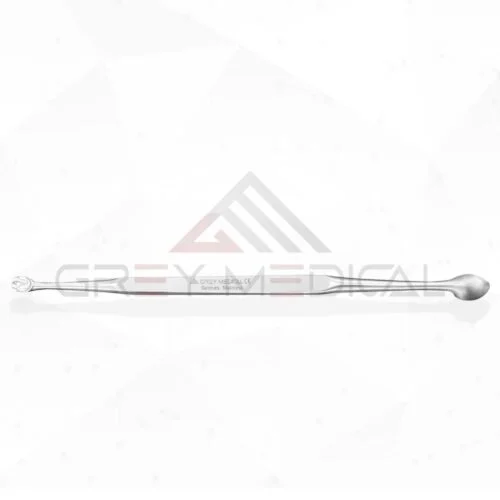
The primary function of a curette is to scrape, scoop, or debride biological tissue. Resembling a small spoon or scoop with sharp edges, it allows the surgeon to remove tissue with exceptional control. In orthopedic procedures, the curette bone is frequently employed to remove necrotic or infected bone tissue, a process known as debridement. This is a delicate task where the surgeon must aggressively remove unhealthy matter while preserving the structural integrity of the healthy bone surrounding it. The design of the instrument allows for a tactile feedback loop, letting the surgeon feel the difference between soft, diseased tissue and hard, healthy bone.
Beyond cleaning and debridement, these surgery instruments are essential for harvesting bone grafts. When a patient requires a graft to repair a non-union fracture or fill a void, surgeons use the curette bone to scoop out cancellous bone—the spongy interior bone tissue—from a donor site. This harvested material is rich in osteoblasts, which are cells that promote bone growth. The shape of the curette makes it the ideal tool for gathering this material efficiently without causing excessive trauma to the donor area. This versatility makes it a staple on the instrument tray for procedures ranging from spinal fusion to tumor removal.
The GreyMedical® Standard of Craftsmanship
At GreyMedical®, we understand that a surgical instrument is only as good as the materials used and the hands that crafted it. A sub-par instrument can compromise a procedure, leading to longer operating times or less-than-ideal outcomes. For a tool designed to scrape and shape hard tissue, durability and edge retention are paramount. We manufacture our curette bone instruments using the highest grade of German stainless steel, ensuring they maintain their sharpness through repeated sterilization cycles and rigorous use.
Our approach to manufacturing combines traditional craftsmanship with modern innovation. We recognize that ergonomics play a massive role in surgical precision. A surgeon may hold an instrument for hours, and hand fatigue can lead to a loss of fine motor control. GreyMedical® designs handles that offer a secure grip and optimal weight balance. This attention to detail ensures that when a surgeon reaches for a curette bone, they are picking up a tool that feels like a natural extension of their own hand. We are dedicated to providing medical professionals with tools that offer reliability, allowing them to focus entirely on the patient rather than the performance of their equipment.
A Commitment to Surgical Excellence
The success of a surgery is rarely defined by a single moment, but rather by a series of precise choices and actions. The instruments used are critical partners in this process. From removing a benign tumor to preparing a site for an implant, the utility of the curette bone cannot be overstated. It is a tool of both aggression and finesse, capable of removing the bad to make way for the good. GreyMedical® remains committed to supporting the medical community by providing instruments that meet the highest standards of quality and reliability, ensuring that every procedure is performed with the best possible equipment.