
The field of bioinformatics supports drug discovery by analyzing genetic and protein interactions. Researchers use computational methods to identify potential drug targets and reduce development time. This improves efficiency and lowers research costs for pharmaceutical companies.
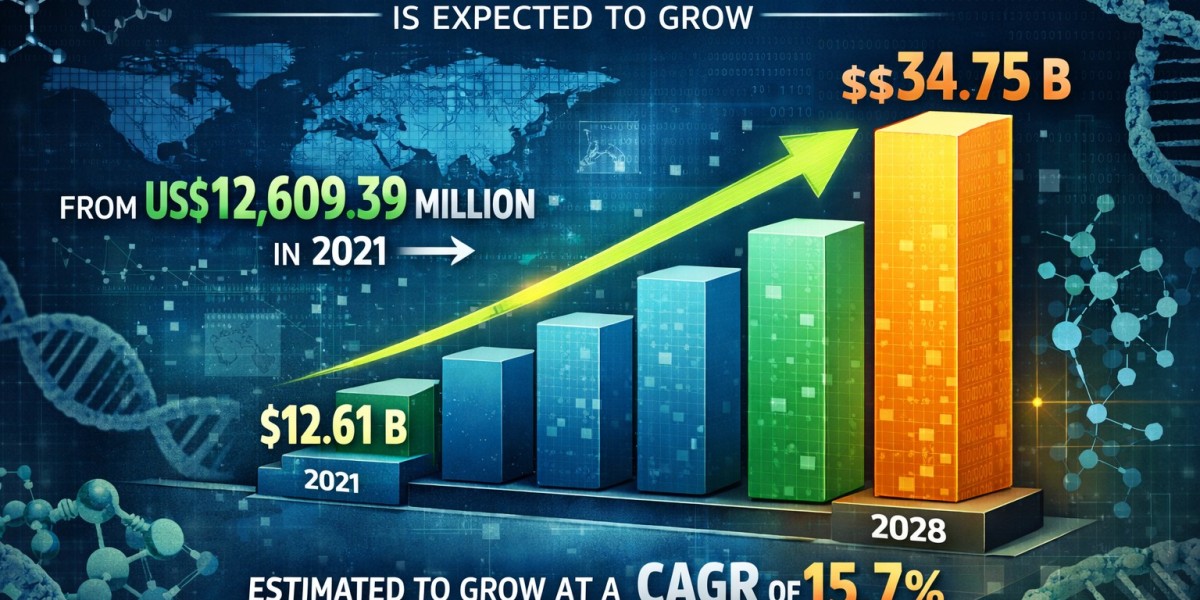
The global bioinformatics market is experiencing significant expansion, driven by the growing need to manage and interpret large volumes of biological and clinical data. The market is projected to increase from US$ 12,609.39 million in 2021 to US$ 34,749.78 million by 2028, registering a strong CAGR of 15.7% during the forecast period from 2022 to 2028. This robust growth reflects the increasing value of bioinformatics across genomics, drug discovery, clinical diagnostics, and precision medicine. As life sciences research becomes more data intensive, organizations are investing heavily in advanced computational tools and analytics platforms to accelerate innovation and improve healthcare outcomes.
Market Insights and Industry Analysis
Bioinformatics involves the use of computational technologies and statistical methods to store, organize, analyze, and interpret complex biological data generated from laboratory experiments and clinical studies. It is a multidisciplinary field that brings together expertise from biology, computer science, mathematics, and statistics. The ability to process large datasets quickly allows researchers to translate scientific discoveries into clinical applications within shorter timeframes.
The importance of bioinformatics became highly visible during the COVID-19 pandemic, when researchers rapidly sequenced viral genomes and supported vaccine development within months. Beyond infectious diseases, bioinformatics is widely used in studying complex disorders such as cancer, diabetes, and genetic conditions. Increasing research funding and the growing adoption of data-driven healthcare approaches continue to support market expansion.
Download Sample PDF:https://www.theinsightpartners.com/sample/TIPRE00003993
Growth Drivers
The rapid growth of genomics research is one of the primary factors driving the bioinformatics market. Bioinformatics tools play a critical role in genome sequencing, annotation, and comparative analysis, helping scientists understand gene expression, protein interactions, and molecular evolution. The dramatic reduction in genome sequencing costs has enabled large-scale research projects and increased the volume of biological data that requires advanced analysis.
Global initiatives to collect and analyze human genomic data are also contributing to market growth. Millions of genomes have already been studied worldwide, and this number is expected to rise significantly in the coming years. These datasets support population health research, disease risk assessment, and personalized treatment planning.
The rising adoption of precision medicine is another major growth driver. Genomic insights help predict how patients respond to specific therapies, enabling clinicians to select the most effective drugs and dosages. In oncology, genomic profiling is increasingly used to guide targeted treatments and improve patient outcomes.
Market Challenges
Despite strong growth prospects, the bioinformatics market faces several challenges. The field evolves rapidly, with new data types, analytical techniques, and experimental methods emerging frequently. Managing this continuous innovation requires skilled professionals, advanced infrastructure, and ongoing software updates. Additionally, the shortage of trained bioinformatics specialists and the need for standardized data management systems can limit operational efficiency for some organizations.
Segmental Analysis
Based on product type, the market is segmented into bioinformatics platforms, knowledge management tools, and bioinformatics services. Bioinformatics platforms accounted for the largest share in 2021 due to their widespread use in data processing and workflow automation. However, knowledge management tools are expected to grow at the highest rate as organizations focus on integrating and managing expanding data repositories.
By application, genomics dominated the market in 2021 due to large-scale sequencing initiatives and increasing clinical adoption. Chemoinformatics and drug design are expected to register the fastest growth, supported by the need for efficient and cost-effective drug discovery processes.
In terms of sector, medical biotechnology held the largest share and is expected to maintain strong growth. Increasing demand for advanced diagnostics, biomarker discovery, and personalized therapies is driving adoption across pharmaceutical and biopharmaceutical companies.
Regional Analysis
North America represents the largest regional market, supported by strong government funding, advanced research infrastructure, and the presence of major biotechnology and pharmaceutical companies. National programs focused on genomic research and precision medicine continue to strengthen regional leadership.
Asia Pacific is projected to be the fastest-growing region during the forecast period. Countries such as China, Japan, and India are investing heavily in genomics and life sciences research. The growing patient population, rising healthcare investments, and increasing research collaborations are driving demand for bioinformatics solutions across the region.
Market Trends
A key trend shaping the bioinformatics market is the integration of artificial intelligence and machine learning. These technologies enhance data processing capabilities, improve predictive modeling, and accelerate drug discovery. Advanced sequencing technologies combined with machine learning now allow rapid genome analysis within a day. Additionally, wearable health devices are generating continuous patient data, expanding the role of bioinformatics in real-time health monitoring and disease prediction.
The COVID-19 pandemic also created long-term opportunities by highlighting the importance of bioinformatics in pathogen analysis, biomarker identification, drug repurposing, and vaccine development.
Key Players
Major companies operating in the bioinformatics market include:
Illumina, Inc.
Thermo Fisher Scientific Inc.
QIAGEN
Agilent Technologies, Inc.
PerkinElmer Inc.
Eurofins Scientific
Bruker Corporation
Dassault Systèmes
Biomax Informatics AG
These companies focus on technological innovation, strategic partnerships, cloud-based platforms, and AI-enabled analytics to strengthen their competitive position.
Future Outlook
The bioinformatics market outlook remains highly positive, supported by continuous advancements in sequencing technologies, increasing clinical adoption of genomics, and rising global investments in precision medicine. The expansion of cloud computing and AI-driven analytics will improve scalability, reduce operational complexity, and make bioinformatics tools more accessible. As healthcare systems move toward personalized and data-driven models, bioinformatics will play a central role in early disease detection, targeted treatment, and preventive care, ensuring sustained market growth beyond 2028.
Related Reports:
Camera Tracking Software Market