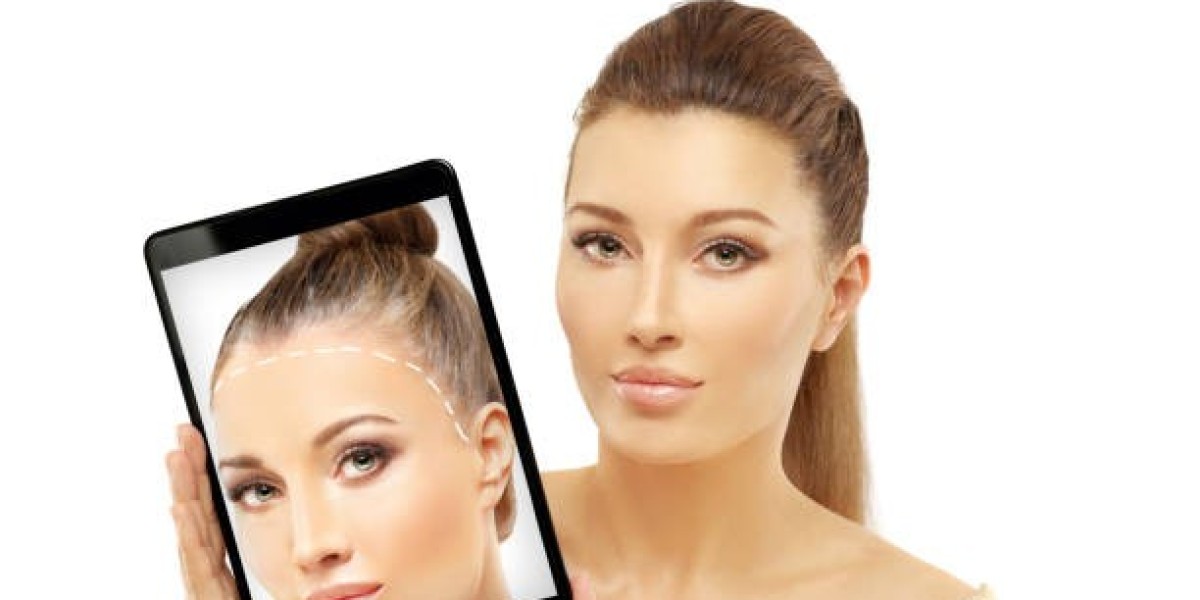

The recession of the temples is often the earliest and most persistent sign of male pattern baldness. For many, this change alters the entire facial structure, making the forehead appear larger and the face less balanced. Choosing an FUE hair transplant in Dubai specifically for temple restoration requires a high level of surgical artistry because the hair in this region grows at a significantly different angle and density than the rest of the scalp.
In clinical settings, we observe that temple restoration is as much about "negative space" as it is about hair. A hairline that is too straight or too low can look artificial. This guide provides a clinical look at how surgeons reconstruct the temple peak, what the procedure feels like, and how the recovery unfolds for this specific area.
The Architecture of a Natural Temple Peak
Temple restoration is technically demanding because the hair here grows nearly flat against the skin and points downward and backward.
How do practitioners customize the approach for temples?
To achieve a seamless blend with your existing hair, surgeons adjust their technique using these clinical parameters:
Ultra-Low Angulation: Grafts are placed at a 10 to 15-degree angle. If the angle is too high, the hair will stick straight out, creating an unnatural "brush" effect.
Fine Hair Selection: Surgeons specifically "cherry-pick" the thinnest single-hair follicles from the nape of the neck or behind the ears. Using thick, multi-hair grafts in the temples is the most common cause of a "surgical" look.
Density Shading: We follow a "feathering" technique, where density is highest at the core of the temple and gradually thins out as it approaches the forehead.
Is Temple Reconstruction Painful?
What are the actual sensations during treatment?
The temple area is rich in nerve endings, making the initial numbing phase slightly more sensitive than the back of the head. However, once the anesthetic is active, the procedure is remarkably comfortable.
Step-by-Step Patient Sensations:
The "Numbing" Phase: You will feel 3 to 4 quick pinches near the eyebrow and sideburn area. Many clinics use a "chilled" anesthetic or a vibration tool to minimize this sensation.
The Extraction Phase: At the back of your head, you will feel a dull, rhythmic vibration. It feels similar to a firm scalp massage.
The Implantation Phase: For temple work, the surgeon works very close to your eyes. You will feel a light "tapping" sensation. Most patients report that the most difficult part is simply keeping their head still for a prolonged period.
"The temples were my biggest insecurity. The injections around my forehead were a bit 'spicy' for a minute, but after that, I didn't feel a thing. I even watched a full documentary during the placement." — Youssef
Safety Considerations: Who Should Avoid Temple FUE?
Are there medical reasons to reconsider?
Temple restoration isn't always the right first step. Clinical observation suggests caution in the following scenarios:
Very Young Patients: If you are in your early 20s, your temples may continue to recede behind the transplant. This creates an unnatural gap that requires further surgery later.
Retrograde Alopecia: Some patients lose hair not just from the top, but also from the "safe" donor area above the ears. If this hair is thin, it is not suitable for transplantation.
Tight Scalp Skin: Temples have less "subcutaneous fat" than the top of the head. If the skin is exceptionally tight, graft "popping" (where the graft is pushed out by skin tension) is a higher risk.
Chronic Skin Conditions: Eczema or seborrheic dermatitis in the temple area must be cleared before surgery to ensure a sterile environment for the grafts.
FUE vs. DHI for Temple Work
| Feature | FUE for Temples | DHI for Temples |
| Angle Control | High (Surgeon-made slits) | Superior (Controlled by Choi Pen) |
| Graft Thickness | Standard | Ultra-fine (Easier with DHI) |
| Incision Size | $0.8mm - 0.9mm$ | $0.6mm - 0.8mm$ |
| Density Potential | High | Maximum (Allows for tighter packing) |
| Healing Time | 7–10 days | 5–7 days |
The Honest Recovery Timeline: Temple Edition
When will my face look normal again?
Restoring the temples can cause more visible swelling than other areas because of the proximity to the eyes.
Days 1–3: You may notice swelling around the eyelids. This is gravity pulling the local anesthetic fluid downward. Using a cold compress on the forehead (never on the grafts) helps significantly.
Days 4–7: The "Crust Phase." Tiny scabs will appear at the temples. Because this area is so visible, many patients choose to wear glasses or stay home during this week.
Days 10–14: The scabs shed. The skin may remain slightly pink, which can be easily hidden if you have slightly longer hair on top.
Months 3–5: The "Shock Loss" ends, and the first new hairs begin to emerge. They may be thin at first but will gain caliber by Month 8.
"The swelling around my eyes on day two was a bit much, but it was gone by day four. The scabs in the temples were small enough that I could hide them by combing my hair forward." — Ali
FAQs
Will the new temple hair grow as fast as my old hair?
Yes. Once the hair is transplanted, it retains its original growth rate. Because donor hair is usually more robust, you may find you need to trim your new temple hair slightly more often than your natural hair.
Can I sleep on my side after temple FUE?
No. For the first 5 to 7 nights, you must sleep on your back with your head elevated. Sleeping on your side puts direct pressure on the new temple grafts, which can dislodge them.
How many grafts are usually needed for temples?
It varies, but typically 400 to 800 grafts per side are required to create a dense, natural-looking temple peak.
Will the scars be visible when I get a fade haircut?
In the recipient area (temples), there are no visible scars. In the donor area (back of head), the micro-dots are invisible unless you shave the head with a razor.
Why Choose Tajmeels Clinic?
At Tajmeels Clinic, we treat temple restoration as a high-precision architectural task. Our surgeons don't just fill in gaps; they analyze your bone structure and facial symmetry to design a temple peak that looks age-appropriate and balanced. We use specialized, ultra-fine extraction punches to ensure the donor hair is the perfect match for the delicate temple region. By combining clinical safety with a deep focus on angulation and "flow," we ensure that your restored temples are indistinguishable from the hair you were born with.