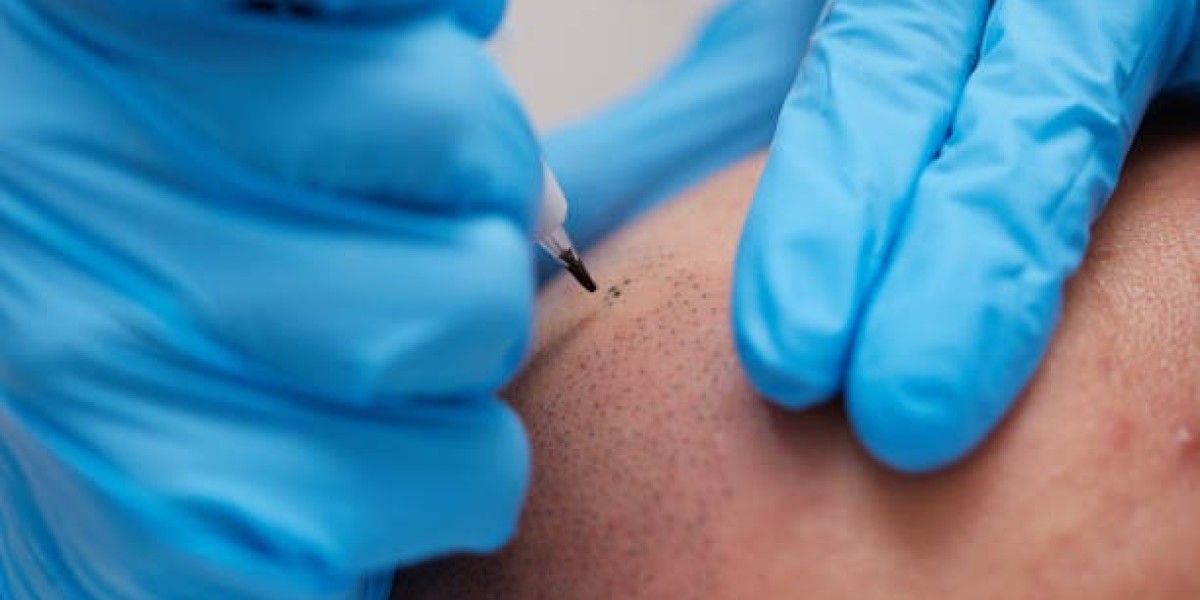

Alopecia Areata, an autoimmune condition that causes hair to fall out in unpredictable patches, presents a unique challenge for traditional hair restoration. Because the condition is characterized by an overactive immune response, surgical hair transplants are often not recommended, as the body may attack the new grafts. Scalp Micropigmentation in Dubai has become a primary clinical solution for Alopecia patients, offering a way to "fill in" patches with medical-grade pigments. By replicating the look of active follicles, SMP provides a consistent, uniform appearance that masks the contrast between smooth skin and remaining hair, allowing patients to regain control over their appearance without invasive surgery.
How Does SMP Address Autoimmune Hair Loss?
Is SMP safe for patients with active Alopecia Areata?
In clinical settings, we observe that SMP is one of the few aesthetic treatments that can be performed during various stages of Alopecia. Because the pigment is deposited in the upper dermis—above the hair bulb where the immune attack occurs—the procedure does not interfere with the body's biological processes or potential future hair regrowth. For patients with Alopecia Totalis (total hair loss), SMP can be used to create a full "shaved-head" look, including a custom-designed hairline. For those with patchy loss, the practitioner skillfully blends the pigments into the edges of the patches to make the transition between hair and skin invisible to the naked eye.
What Does an Alopecia SMP Session Feel Like?
Do patches of hair loss feel different during treatment?
Patients with Alopecia often report varied sensations depending on the "age" of the patch. Areas of the scalp where hair has been missing for a long time can sometimes be slightly more sensitive because the skin is thinner and more exposed to the elements. During the session, you will feel a rhythmic "tapping" or "pulsing" sensation. Unlike a tattoo, which uses a scraping motion, the SMP needle enters the skin vertically and exits quickly. On a pain scale of 1 to 10, most patients rate the experience as a 3. If a patch is located near the "temporal peaks" or the base of the skull, the sensation may feel like a sharp tingle, but it is generally described as very tolerable.
"Living with Alopecia meant I never knew where a new patch would show up. Getting SMP gave me a 'permanent base.' Even when my hair shifts, the shadow is always there so the patches don't stand out. The treatment was a bit tingly, but nothing I couldn't handle."
— Faisal
Recovery and Pigment Stability in Alopecia Cases
Does Alopecia affect how well the scalp holds pigment?
Based on post-procedure follow-ups, we have identified specific recovery milestones for patients with autoimmune hair loss:
Initial Redness (24–48 Hours): Patches of Alopecia may show redness more clearly than areas with hair. This is temporary and subsides quickly.
The "Micro-Crust" Phase (Days 3–6): Tiny scabs form over the pigment dots. It is essential for Alopecia patients to keep the scalp moisturized with clinical-grade balms to prevent the skin from becoming too tight.
The Settlement (Weeks 2–4): In Alopecia cases, the skin can sometimes be slightly more "resistant" to pigment. This is why a third "perfection session" is almost always required to ensure the density is perfectly matched across both bald and hairy areas.
Comparing SMP for Alopecia vs. Patchy Thinning
| Clinical Factor | Alopecia Areata Treatment | Standard Thinning Treatment |
| Goal | Camouflage smooth, circular patches | Increase density between existing hairs |
| Hairline Design | Often requires full reconstruction | Enhances existing hairline |
| Session Count | 3–4 sessions for maximum blending | 2–3 sessions for density |
| Needle Depth | Shallow (Preserving follicles) | Standard (Upper dermis) |
| Visual Result | Unified "shaved" or "stubble" look | Thicker, fuller appearance of long hair |
Technical Insights: Mapping the Unpredictable
How do practitioners plan for future patches?
Information gain for Alopecia patients lies in the "boundary-blending" technique. Practitioners do not just fill the current patch; they "feather" the pigment 1–2 centimeters into the surrounding healthy hair. In our clinical observations, this ensures that if the Alopecia patch expands slightly, the transition remains soft and natural-looking. We also use a "multi-tonal" approach, using slightly different shades of grey-black to mimic the way natural hair reflects light differently across the scalp’s curves.
FAQ: Alopecia Treatment Specifics
Will SMP stop my hair from growing back?
No. SMP is strictly a surface-level aesthetic treatment. It does not damage the follicles. Many patients see their natural hair grow back through the SMP pigments if their Alopecia goes into remission.
Can SMP be used for Alopecia Universalis (Total body hair loss)?
Yes. We can reconstruct the entire scalp and even provide "brow-shading" to mimic the look of eyebrows, helping to restore the natural frame of the face.
What if my hair grows back a different color?
We use neutral, carbon-based pigments that are designed to match the "root shadow" of almost all hair colors. Since we are mimicking the follicle and not the hair shaft, it remains a natural match even with slight color changes.
Is there a risk of an allergic reaction?
At a medical clinic, we use hypoallergenic, specialized pigments. However, for patients with highly sensitive autoimmune systems, we can perform a small "patch test" 24 hours before the full procedure.
Why Choose Tajmeels Clinic
Treating Alopecia requires more than just technical skill; it requires an empathetic, clinical understanding of how the condition behaves. At Tajmeels Clinic, we specialize in providing Scalp Micropigmentation in Dubai that is specifically tailored for the unique skin textures associated with Alopecia. Our practitioners use a "conservative-first" approach, building density across sessions to ensure the most natural transition possible. We provide a private, professional environment where your comfort and long-term results are our primary focus. By combining medical-grade sterilization with high-level aesthetic mapping, we help you transition from managing a condition to enjoying a restored, maintenance-free look.