
QKS Group highlights that the Low-Code Application Development (LCAD) Platforms for Business Developers market is projected to expand at a strong CAGR of 17.01% through 2030. This rapid growth reflects increasing enterprise demand for faster, more accessible application development approaches.
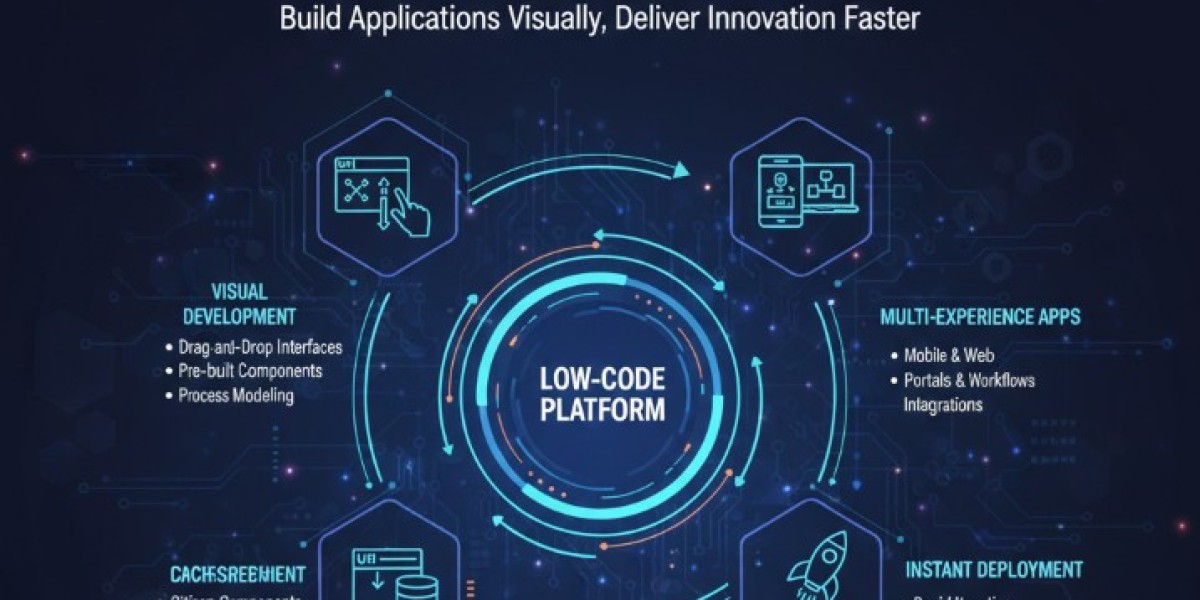
Low-code application development platforms provide a visual, model-driven way to build applications with minimal manual coding. Using drag-and-drop interfaces, graphical modeling tools, pre-built components, and simplified logic configurations, these platforms enable both developers and business users to design, develop, test, deploy, and manage multi-device enterprise applications efficiently.
Rather than relying on complex programming languages, Low-Code Application Development platforms leverage visual development methodologies. This democratizes application development by allowing non-technical users to build solutions tailored to specific business needs while still enabling professional developers to extend and customize functionality when required.
While speed-to-market is a major advantage of low code, its value extends far beyond rapid development. Low code bridges the long-standing gap between business requirements and IT delivery. By empowering business stakeholders to directly participate in application creation, organizations can align digital solutions more closely with operational goals, improve agility, and accelerate innovation.
Key Questions Addressed in the Study
How fast is the low-code development platform market for professional users growing?
What are the major growth drivers and restraints shaping the global market?
Which industries present the strongest growth opportunities?
Which regions are expected to experience the highest adoption rates?
Which customer segments offer the most growth potential?
Which deployment models (cloud, on-premise, hybrid) will expand most rapidly over the next five years?
Strategic Market Direction
Low-code development platform vendors are increasingly focused on enabling professional users to build enterprise-grade, complex applications through enhanced no-code modules and advanced drag-and-drop workflow capabilities.
Emerging enterprise strategies such as hyperautomation and composable business architectures are heavily leveraging low-code platforms to integrate applications, data, workflows, and services seamlessly across the organization.
Vendors are also enhancing collaboration capabilities, allowing multiple stakeholders to co-develop applications simultaneously. This promotes cross-functional teamwork, accelerates knowledge sharing, and shortens development cycles.
Additionally, hybrid implementation models are gaining traction. These models allow developers to gradually extend applications with custom code as their technical capabilities mature, while still benefiting from the simplicity of visual interfaces for most development tasks.
#LowCode #ApplicationDevelopment
#DigitalTransformation #Hyperautomation
#ComposableBusiness #EnterpriseIT