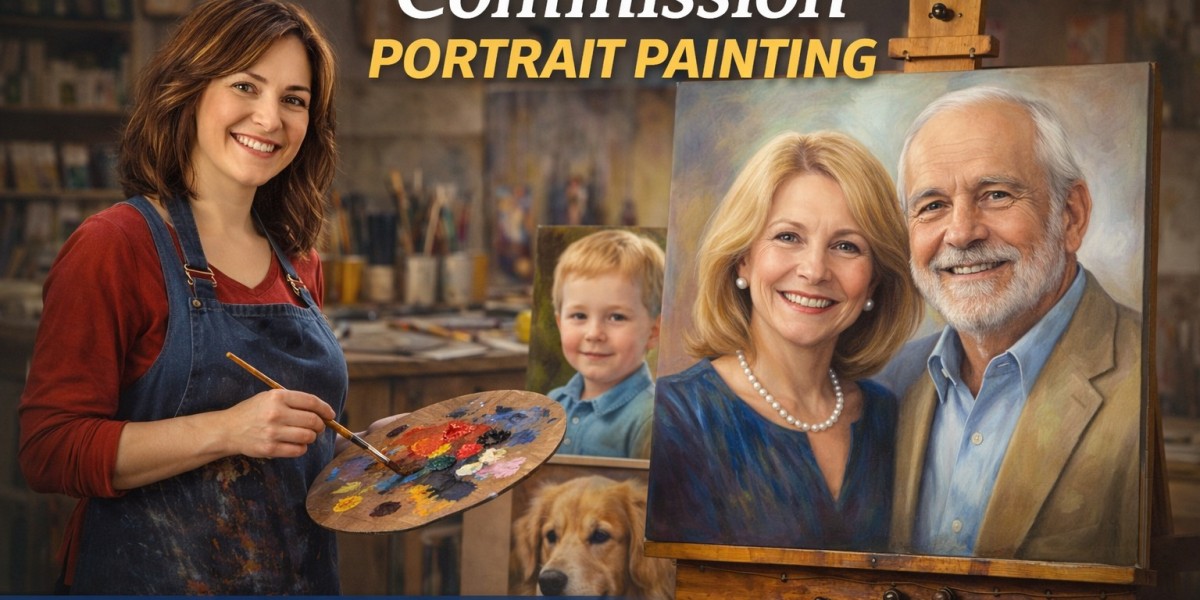

I’ve worked with portrait artists for years—painters who don’t just copy a photo but study expressions, posture, and the small habits people carry in their faces. A commission portrait painting is rarely about decoration. It’s about memory. A father’s quiet smile. A child’s stubborn eyes. A grandparent’s steady gaze that still feels present long after they’re gone.
What a Commission Portrait Really Involves
It starts with the right reference
Most people assume any photo will work. That’s where trouble begins. Low light, phone blur, or stiff poses produce flat paintings.
A strong portrait needs:
Clear lighting
Natural expression
Sharp facial detail
Body language that tells a story
Cause and effect is simple. Better photo = stronger painting.
Artist interpretation matters more than realism
I’ve seen technically perfect portraits feel lifeless. The good ones adjust tone, soften harsh shadows, and rebalance proportions. They don’t copy. They interpret.
That’s what separates a painted face from a painted presence.
Why People Choose Custom Portraits
Personal milestones
Clients often commission portraits for:
Wedding anniversaries
Memorial tributes
Retirement gifts
Birthdays
Family heritage
A couple in their sixties once asked for a portrait using two separate photos taken 30 years apart. The artist merged them into one shared moment. That painting now hangs above their dining table.
Problem: No shared photo existed.
Solution: A painted one.
Emotional durability
Photos fade into storage. Paintings stay visible. They’re part of daily life. That’s why commission portrait painting stays relevant even when everyone carries a camera.
How Pricing Actually Works
Size and medium
Oil costs more than acrylic. Canvas costs more than paper. Larger surfaces demand longer drying times and higher detail.
Typical factors:
Canvas dimensions
Number of subjects
Background complexity
Medium used
Revision requests
This isn’t arbitrary pricing. Time equals money in portrait work. More faces mean more structure, shading, and correction layers.
Why cheap portraits disappoint
Fast production leads to stiff anatomy and flat skin tones. You get a face, but not a person. That’s the difference between decoration and portraiture.
The Process from Start to Finish
Step 1: Consultation
A real artist asks questions:
Who is this for?
What mood should it carry?
Where will it hang?
This guides lighting style and pose choice.
Step 2: Sketch approval
Before paint touches canvas, the outline is shown. Corrections happen here. It saves time later and avoids disappointment.
Step 3: Layering and texture
Skin tones go down first. Shadows second. Highlights last. Clothing and background frame the face, not compete with it.
Step 4: Final seal
A protective varnish stabilizes the surface and enhances color depth. It’s not cosmetic. It’s preservation.
Common Problems and Their Fixes
“It doesn’t look like them”
Cause: Poor reference photo
Fix: Ask for a second image or adjust facial proportions during sketch stage
“The eyes feel wrong”
Cause: Incorrect light source
Fix: Repaint highlight placement and rebalance pupil depth
“The background is distracting”
Cause: Over-detailed scenery
Fix: Simplify background to tone-based gradient
These aren’t mistakes. They’re part of the refinement cycle in commission portrait painting.
Digital vs Hand-Painted Portraits
Digital works for speed
Digital portraits work well for:
Casual gifts
Fast turnaround
Budget projects
But they lack surface texture and depth when printed large.
Hand-painted works for legacy
Acrylic and oil paintings age differently. Pigment settles. Brush strokes remain visible. That physicality carries emotional weight.
I’ve seen families pass down painted portraits. I’ve never seen them pass down JPEGs.
Where People Go Wrong When Ordering
Choosing style over skill
Stylized art is fine. Weak anatomy is not. Look for consistent facial proportions and controlled brushwork.
Ignoring communication
If an artist doesn’t ask about subject personality, they’re just painting shapes.
Portraits need context. That’s how emotion enters the work.
How Commission Work Connects to the Art Market
Many buyers who start with custom work later begin collecting. They learn what effort looks like. That’s often when they decide to buy original paintings online from artists they trust. Commission portrait painting builds that trust through experience.
Custom work teaches people how art is made. Collection teaches them how art lives.
Expert Observations from the Field
Soft lighting produces more natural skin tones
Three-quarter face angles age better than straight-on poses
Neutral backgrounds extend visual lifespan
Oil handles aging better than acrylic
Fewer subjects increase emotional focus
These patterns appear across artists and regions.
When a Portrait Becomes More Than Art
A woman once told me her commissioned portrait of her late mother felt “like a window, not a picture.” That happens when expression, posture, and color align.
That’s the goal. Not realism alone. Recognition.
Commission portrait painting is slow work for a reason. It isn’t about speed. It’s about accuracy of feeling. When done right, it doesn’t just show a person. It keeps them present.