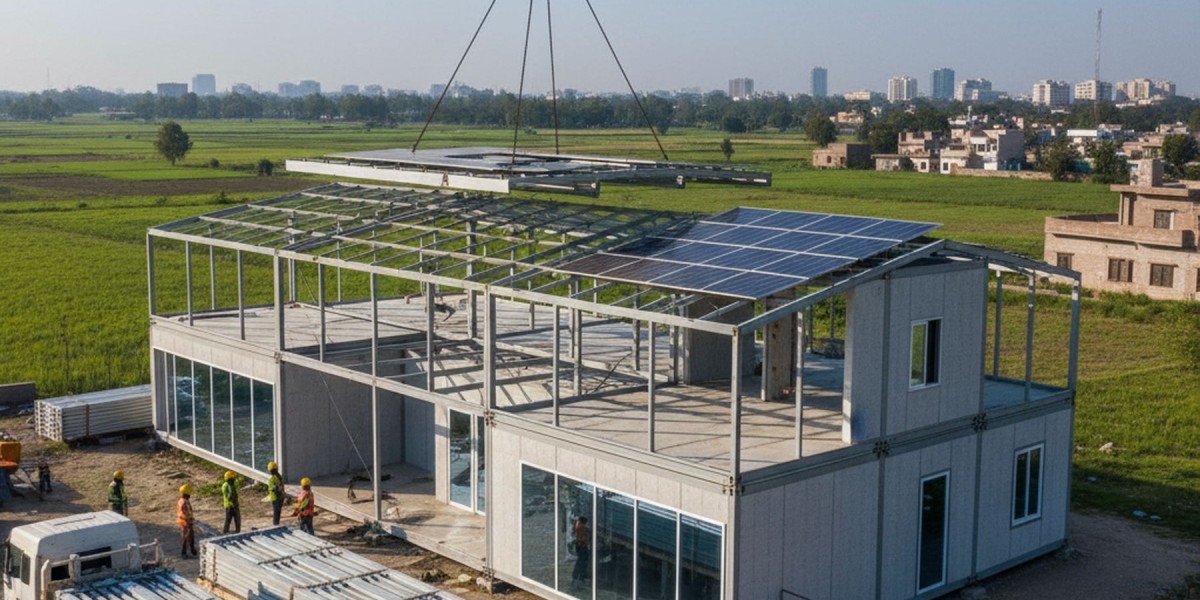

Construction is one of the fastest-growing sectors in Pakistan, driven by urban expansion, infrastructure projects, and housing demands. Builders, developers, and homeowners often face a critical decision: should they choose prefabricated (prefab) construction or stick to traditional brick-and-mortar construction? Cost is a major factor influencing this choice.
This article provides a detailed prefab vs traditional construction cost comparison in Pakistan, highlighting the advantages, challenges, and long-term considerations for both methods.
What Is Prefabricated Construction?
Prefabricated, or modular construction, involves manufacturing building components off-site in a controlled factory setting. These components are then transported to the construction site and assembled quickly. Prefab structures can include walls, floors, roofs, and even fully-finished modules such as office cabins, housing units, and industrial buildings.
Prefab construction is known for its speed, efficiency, and reduced material wastage, making it increasingly popular in Pakistan’s commercial and residential sectors.
What Is Traditional Construction?
Traditional construction relies on brick, cement, steel, and concrete built directly on-site. The process typically involves laying foundations, erecting walls, installing roofing, electrical and plumbing systems, and completing interior finishes. Traditional construction is well-suited for permanent, customized structures but requires more time, labor, and material investment.
Key Cost Factors
To compare prefab vs traditional construction cost in Pakistan, several key factors must be considered:
Material Costs – Quality, type, and quantity of materials used.
Labor Costs – Skilled and unskilled labor for on-site work.
Construction Time – Duration impacts financing and overhead.
Maintenance Costs – Long-term upkeep requirements.
Customization – Design complexity affects cost.
Site Preparation – Foundation, grading, and utility setup.
Each of these factors contributes to the overall cost and feasibility of either construction method.
Initial Construction Cost
Prefabricated Construction
Prefab buildings generally cost 30% to 50% less than traditional construction in Pakistan. Factory production reduces material wastage, labor cost is minimized, and construction speed lowers financing and site overheads.
For example:
Small prefab office/house (100–200 sq. ft.): PKR 800–1,500 per sq. ft.
Medium modular house (500–800 sq. ft.): PKR 1,200–2,000 per sq. ft.
Costs vary based on material quality, insulation, finishing, and the inclusion of utilities.
Traditional Construction
Traditional brick-and-mortar construction is more expensive due to on-site labor, material handling, and longer project timelines.
Typical costs:
Residential building (100–200 sq. ft.): PKR 3,000–5,000 per sq. ft.
Medium commercial office (500–800 sq. ft.): PKR 4,000–6,000 per sq. ft.
Additional costs include skilled masons, carpenters, painters, and site supervision over several months.
Time Efficiency
Feature | Prefab Construction | Traditional Construction |
Construction Time | 2–8 weeks (depending on size) | 6–12 months |
Labor Requirement | Lower, factory-assisted | High, on-site labor intensive |
Project Delays | Minimal, controlled environment | High, weather and site dependent |
Prefabricated construction is significantly faster, making it ideal for urgent projects or temporary structures.
Material and Labor Considerations
Prefab
Factory-controlled environment reduces material wastage
Lightweight panels, steel frames, and modular fittings reduce labor costs
Less dependency on local labor availability
Traditional
Materials include bricks, cement, steel, concrete, and wood
Labor-intensive, requiring skilled masons, carpenters, and electricians
Costs may fluctuate due to market demand for construction materials
Long-Term Maintenance Costs
Prefabricated buildings are designed for efficiency and durability, but they may require periodic inspection for panel wear, roofing, and insulation. Maintenance is typically lower than traditional structures in the short term.
Brick-and-mortar buildings are more robust, often lasting decades with proper upkeep. However, repairs, painting, and structural maintenance add to long-term expenses.
Flexibility and Customization
Feature | Prefab Construction | Traditional Construction |
Design Flexibility | Moderate – based on modular components | High – fully customizable |
Expansion | Easy – additional modules can be added | Difficult – requires significant construction |
Portability | Possible – structures can be relocated | Not feasible |
Aesthetic Options | Limited but improving | Wide range of architectural finishes |
Prefab is ideal for projects where speed and efficiency matter, while traditional construction suits highly customized, long-term permanent buildings.
Environmental and Sustainability Considerations
Prefabricated construction is more sustainable due to:
Reduced material waste
Controlled factory production
Energy-efficient design and insulation
Traditional construction generates more waste and often consumes more resources, though it allows integration of durable materials for long-term sustainability.
Cost Summary Table — Prefab vs Traditional Construction in Pakistan
Feature | Prefabricated Construction | Traditional Construction |
Initial Cost per sq. ft. | PKR 800–2,000 | PKR 3,000–6,000 |
Construction Time | 2–8 weeks | 6–12 months |
Labor Requirement | Low | High |
Flexibility | High | Low |
Maintenance | Low to moderate | Moderate to high |
Environmental Impact | Low | Higher |
Long-Term Value | Moderate | High |
FAQs — Prefab vs Traditional Construction Cost Pakistan
Q1: Can prefabricated buildings be permanent?
Yes, with high-quality materials and proper installation, prefab buildings can serve as long-term structures.
Q2: Why is prefab construction cheaper?
Reduced material waste, faster assembly, lower labor costs, and minimal on-site construction time contribute to lower costs.
Q3: Are prefab structures durable in Pakistan’s climate?
Yes, modern prefab units are designed to withstand heat, rain, and moderate seismic activity with proper insulation and materials.
Q4: Can traditional buildings be faster?
Traditional buildings can be accelerated using modern construction methods, but they still take longer than prefabricated solutions.
Q5: Which is better for commercial projects?
Prefab is ideal for fast deployment and modular offices, while traditional construction is preferred for permanent, large-scale, or architecturally customized buildings.
Conclusion
The prefab vs traditional construction cost comparison in Pakistan shows a clear distinction between speed, cost, and flexibility. Prefabricated construction offers lower initial costs, faster completion, and reusability, making it an attractive option for temporary offices, housing, or urgent projects.