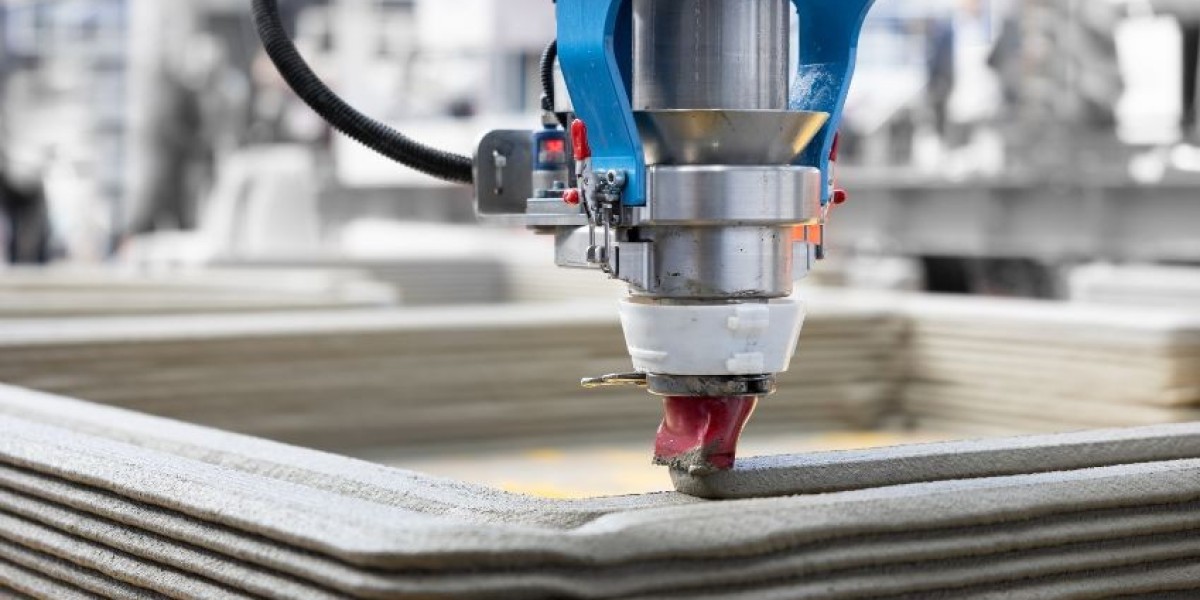

Spain 3D Concrete Printing Market Outlook
According to industry analysis, the Spain 3D concrete printing market is witnessing rapid transformation, driven by the growing need for innovative, sustainable, and cost-effective construction solutions. 3D concrete printing, also referred to as additive manufacturing for construction, enables the automated fabrication of building components and structures through layer-by-layer deposition of concrete or cementitious materials. This technology is increasingly being recognised as a viable alternative to traditional construction methods, particularly in addressing challenges related to labour shortages, construction waste, project timelines, and design flexibility.
The 3D concrete printing market in Spain is projected to grow at an exceptional CAGR of 81.40% between 2026 and 2035, reflecting strong interest from construction companies, technology providers, research institutions, and government bodies. The increasing focus on digitalisation in the construction sector, combined with Spain’s commitment to sustainable building practices and infrastructure modernisation, is expected to significantly support market expansion over the forecast period.
Spain 3D Concrete Printing Market Size
The Spain 3D concrete printing market currently represents a relatively nascent but fast-emerging segment within the broader construction and advanced manufacturing landscape. While the market size remains modest in absolute terms compared to conventional construction technologies, it is expanding rapidly due to pilot projects, demonstration housing initiatives, and infrastructure-related applications.
Investments in research and development, coupled with growing collaboration between universities, construction firms, and technology startups, are contributing to the gradual scaling of 3D concrete printing capabilities across the country. As commercial adoption accelerates and regulatory frameworks evolve to accommodate additive construction techniques, the market size is expected to increase substantially during the forecast period.
Request a Free Sample Report with Table of Contents - https://www.expertmarketresearch.com/reports/spain-3d-concrete-printing-market/requestsample
Spain 3D Concrete Printing Market Share
Within the European context, Spain is emerging as one of the promising markets for 3D concrete printing, alongside countries such as the Netherlands, Germany, and France. Spain’s market share is supported by its active construction sector, strong architectural innovation culture, and increasing participation in European Union-funded research and sustainability programmes.
The market is currently characterised by the presence of a limited number of specialised technology providers and construction firms that dominate early-stage projects. However, as awareness grows and entry barriers gradually decline, the competitive landscape is expected to become more diversified, with new domestic and international players entering the Spanish market.
Spain 3D Concrete Printing Market Trends
Several key trends are shaping the growth trajectory of the Spain 3D concrete printing market. One of the most prominent trends is the increasing emphasis on sustainable construction. 3D concrete printing enables precise material usage, significantly reducing construction waste and lowering the carbon footprint associated with traditional building methods. This aligns closely with Spain’s environmental goals and EU-wide sustainability directives.
Another notable trend is the growing application of 3D concrete printing in affordable housing and social infrastructure projects. The ability to rapidly construct housing units at reduced costs makes this technology particularly attractive for addressing housing shortages and urban development needs. Additionally, there is a rising interest in customised architectural designs, as 3D concrete printing allows complex geometries and innovative structures that are difficult or expensive to achieve using conventional techniques.
The integration of digital design tools, such as Building Information Modelling (BIM) and parametric design software, is also gaining traction. These tools enhance design accuracy, streamline project execution, and improve collaboration across stakeholders, further strengthening the adoption of 3D concrete printing in Spain.
Drivers of Growth
The primary driver of growth for the Spain 3D concrete printing market is the increasing demand for efficient and cost-effective construction solutions. Traditional construction methods often face challenges related to labour shortages, rising material costs, and extended project timelines. 3D concrete printing addresses these issues by automating construction processes, reducing dependency on manual labour, and enabling faster project completion.
Another significant growth driver is the government and institutional support for innovation and sustainability. Spain’s participation in EU-funded research initiatives and smart city projects has created a favourable environment for the adoption of advanced construction technologies. Public and private investments in sustainable infrastructure and housing are further accelerating market growth.
Moreover, the growing focus on resilient and disaster-resistant structures is contributing to increased interest in 3D concrete printing. The technology allows for precise structural optimisation, enhancing the durability and performance of buildings, particularly in regions prone to environmental stressors.
Technology and Advancement
Technological advancements are at the core of the Spain 3D concrete printing market’s rapid development. Innovations in printing hardware, including robotic arms and gantry-based systems, have improved printing accuracy, scalability, and reliability. These systems are increasingly capable of handling large-scale construction projects, expanding the potential applications of 3D concrete printing.
Advancements in material science have also played a crucial role. The development of specialised concrete mixes with enhanced flowability, rapid setting properties, and improved strength has enabled more efficient printing processes and higher-quality finished structures. Researchers and manufacturers in Spain are actively exploring the use of recycled materials and low-carbon cement alternatives to further improve sustainability outcomes.
Additionally, the integration of automation, artificial intelligence, and real-time monitoring systems is enhancing process control and quality assurance. These technological improvements are expected to reduce operational risks and increase confidence among stakeholders, supporting broader market adoption.
Spain 3D Concrete Printing Market Segmentation
The market can be divided based on concrete type, printing type, technique, end use and region.
Market Breakup by Concrete Type
- Precast
- Ready-Mix
- Shotcrete
- High-density
- Others
Market Breakup by Printing Type
- Gantry System
- Robotic Arm
Market Breakup by Technique
- Powder-based
- Extrusion-based
Market Breakup by End Use
- Residential Building
- Commercial Building
- Infrastructure
- Others
Market Breakup by Region
- Andalusia
- Catalonia
- Madrid
- Valencian Community
- Rest of Spain
Competitive Landscape
Some of the major players explored in the report by Expert Market Research are as follows:
- Fundacio Privada Centre Cim
- Aenium Engineering, S.L.
- 3dconcrete, SL
- PERI SE
- Others
Industry Analysis
The Spain 3D concrete printing industry is still in its early stages but is evolving rapidly. The industry ecosystem comprises technology developers, construction companies, material suppliers, research institutions, and regulatory bodies. Collaboration among these stakeholders is essential for addressing technical challenges, establishing industry standards, and ensuring regulatory compliance.
Construction firms are increasingly exploring partnerships with technology providers to pilot 3D printing projects, while academic institutions are contributing through research and workforce training. The industry is also benefiting from knowledge transfer and best practices derived from successful projects in other European countries.
As the market matures, the industry is expected to move from experimental and pilot-scale projects toward commercial-scale applications, particularly in residential, commercial, and infrastructure construction.
Challenges and Opportunities
Despite its strong growth potential, the Spain 3D concrete printing market faces several challenges. One of the key challenges is the lack of standardised regulations and building codes specifically tailored to 3D-printed structures. Regulatory uncertainty can delay project approvals and limit widespread adoption.
High initial investment costs associated with advanced printing equipment and specialised materials also pose a barrier, particularly for small and medium-sized construction firms. Additionally, the shortage of skilled professionals with expertise in additive construction technologies may constrain short-term growth.
However, these challenges also present significant opportunities. The development of clear regulatory frameworks and industry standards can unlock large-scale adoption. Investments in training and education can help build a skilled workforce, while technological advancements are expected to gradually reduce costs and improve accessibility. The growing demand for sustainable and innovative construction solutions offers substantial long-term opportunities for market participants.
Spain 3D Concrete Printing Market Forecast
Looking ahead, the Spain 3D concrete printing market is expected to experience exponential growth over the forecast period. With a projected CAGR of 81.40% between 2026 and 2035, the market is poised to transition from niche applications to mainstream construction practices.
The increasing adoption of sustainable building methods, continued technological innovation, and supportive policy initiatives are likely to drive market expansion. As confidence in 3D concrete printing grows and successful projects demonstrate its viability, Spain is expected to emerge as a key hub for additive construction in Europe.