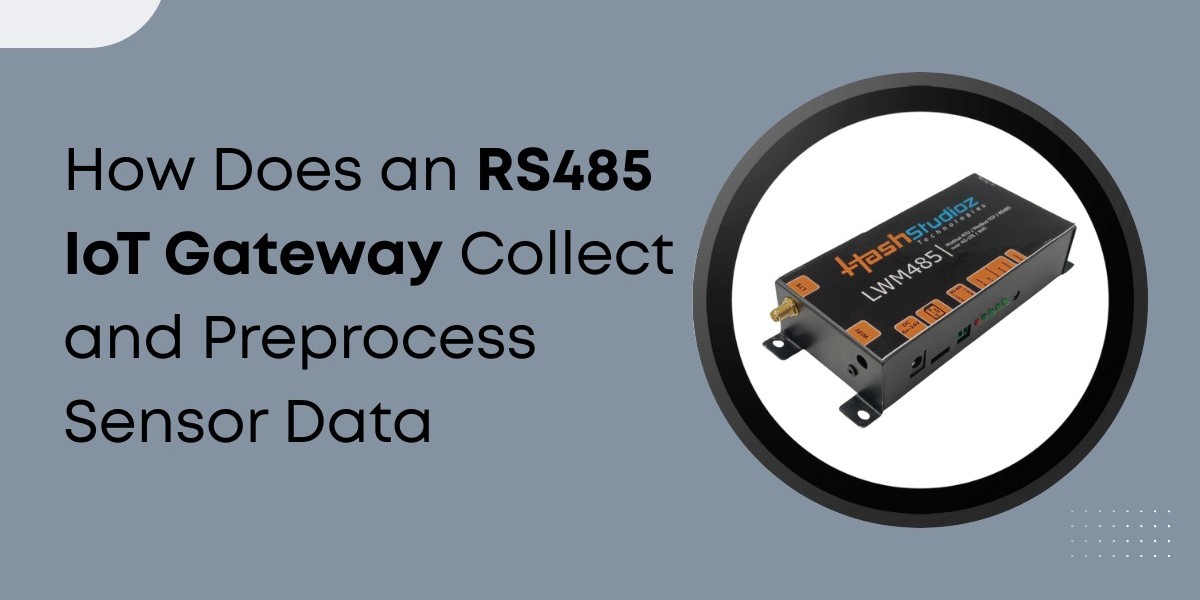

In modern industrial systems, converting raw sensor readings into actionable insights is critical for automation and monitoring. An RS485 IoT Gateway acts as the bridge between legacy devices and modern IoT systems. These gateways read data from industrial sensors, preprocess it, and transmit it to cloud or local platforms. Understanding how they work is essential for engineers and system designers.
What is an RS485 IoT Gateway?
An RS485 IoT Gateway is a device that connects RS485 serial devices to modern IP-based networks. RS485 remains popular in factories because it supports long distances (up to 1200 meters) and multiple devices on a single line.
Industrial IoT Gateways extend this functionality by providing:
1. Protocol translation (Modbus RTU to MQTT or HTTP): Gateways convert industrial protocols, such as Modbus RTU, into modern formats like MQTT or HTTP, allowing legacy devices to communicate seamlessly with cloud platforms and contemporary data processing systems.
2. Local data processing: These gateways can perform processing locally, reducing the amount of data sent over networks, enabling faster analytics, filtering unnecessary information, and ensuring critical operations continue even with intermittent connectivity.
3. Secure cloud integration: Industrial gateways provide secure connections to cloud platforms, encrypting data in transit and enabling remote monitoring, analytics, and management while ensuring that sensitive industrial information remains protected.
4. Device management: Gateways simplify the administration of multiple connected devices, offering configuration, monitoring, firmware updates, and diagnostics, which allow operators to efficiently manage complex industrial environments.
These gateways allow legacy equipment to participate in smart monitoring and analytics.
How RS485 IoT Gateways Collect Sensor Data
1. Physical Connections
RS485 IoT Gateways connect directly to sensors, controllers, and programmable logic controllers (PLCs) via serial ports. Multiple devices can share a single RS485 bus. The gateway reads data registers from each device at scheduled intervals.
2. Polling Sensors
The gateway uses a polling mechanism to query each connected device periodically. It reads specific registers or sensor outputs, converts binary or hexadecimal values into readable measurements, and ensures timely data collection.
Typical polling intervals vary from one second to several minutes, depending on the sensor type and application requirements, balancing network load with the need for real-time monitoring and accurate data acquisition.
3. Register Mapping
Each connected device has unique data registers. The gateway maintains a register map that identifies sensor types, addresses, and conversion rules, enabling consistent interpretation of readings across different devices and systems.
This mapping ensures that all measurements, whether temperature, pressure, or energy, are accurately translated from raw register values into meaningful, human-readable data for analytics and industrial monitoring purposes.
Preprocessing Data Locally
Before sending data to the cloud, gateways preprocess it locally to improve reliability and reduce network load.
1. Noise Filtering
Industrial environments often introduce electrical noise, causing spikes or incorrect readings. Gateways apply filters to remove anomalies, smooth the data, and maintain measurement accuracy, ensuring reliable input for further processing and cloud transmission.
2. Unit Conversion and Formatting
Raw sensor values often require conversion. For example, a register value of 3456 may represent 34.56°C, and energy meter readings convert pulses into kilowatt-hours. Data is structured into JSON or similar formats.
3. Aggregation and Summaries
Gateways can compute averages, minimum or maximum values, and trends over defined time windows. This reduces transmitted records and enables quicker decision-making while optimizing bandwidth usage in industrial deployments.
4. Event Detection
Gateways can implement local rules for event detection, such as triggering alarms when thresholds are exceeded, activating relays, or tagging events with timestamps, reducing cloud dependency and enabling faster response.
5. Local Buffering
When network connectivity is unavailable, gateways temporarily store data locally. Once the connection is restored, buffered data is transmitted sequentially, preventing loss and ensuring consistent historical records for analysis.
Protocol Translation and Network Transmission
RS485 devices use serial protocols, while modern IoT platforms use IP-based protocols. Gateways convert data formats for compatibility:
Modbus RTU → Modbus TCP
RS485 → MQTT
RS485 → HTTP/REST API
Data can be sent to cloud platforms, on-premise servers, or analytics dashboards securely. Using MQTT or REST ensures smooth integration with modern Industrial IoT systems.
Example Workflow
Consider a factory with five RS485 temperature sensors:
The gateway polls each sensor every 30 seconds.
It filters out readings outside acceptable ranges.
Converts register values to Celsius.
Computes 5-minute average temperatures.
Tags each reading with a timestamp and device ID.
Sends structured data to the cloud via MQTT.
Generates alerts if temperature exceeds safety limits.
This ensures accurate, actionable data reaches system operators efficiently.
Advantages of Local Preprocessing
Reduced bandwidth usage: Only relevant or aggregated data is transmitted.
Lower latency: Local alarms and decisions happen immediately.
Improved reliability: Data buffering prevents loss during network outages.
Simplified integration: Data arrives in ready-to-use formats for dashboards and analytics.
Security Considerations
Industrial data must be protected. RS485 IoT Gateways implement:
1. Encrypted data transmission (TLS/SSL)
Gateways use TLS or SSL protocols to encrypt data in transit. This ensures that both raw and preprocessed information cannot be intercepted or altered, maintaining integrity and confidentiality across networks. These measures safeguard both raw and preprocessed data.
2. Secure Authentication
Device access is protected through secure authentication mechanisms, allowing only authorized users and systems to interact with gateways, preventing unauthorized control or configuration changes in industrial environments.
3. Hardware-Level Protections
Many gateways include secure boot, firewall configurations, and tamper-resistant hardware. These features protect against firmware attacks, physical tampering, and unauthorized modifications, ensuring overall system integrity.
4. Data Protection Summary
By combining encryption, authentication, and hardware security, RS485 IoT gateways safeguard industrial data throughout its lifecycle, from sensor collection to cloud transmission, maintaining reliability and compliance in critical applications.
Applications in Industrial IoT
RS485 IoT gateways play a critical role in industrial environments, enabling connectivity, data collection, and analysis from legacy and modern devices, supporting smart operations and predictive maintenance across multiple sectors.
1. Manufacturing Plants
Gateways monitor machines and production lines, collecting sensor data for performance analysis, fault detection, and predictive maintenance, helping reduce downtime and improve overall operational efficiency in manufacturing facilities.
2. Energy and Utility Metering
They collect readings from electricity, gas, or water meters, converting data into actionable insights for monitoring consumption, detecting anomalies, and supporting accurate billing and energy management processes.
3. Building Automation
Gateways integrate sensors for HVAC, lighting, and security systems, enabling automated control, energy efficiency, and remote monitoring, while connecting legacy building equipment to modern management platforms.
4. Water and Wastewater Monitoring
Industrial gateways gather real-time data from pumps, valves, and treatment sensors, allowing precise monitoring, leak detection, and regulatory compliance, improving water management in municipal and industrial facilities.
5. Agriculture and Environmental Sensing
They connect soil, weather, and environmental sensors to cloud systems, enabling precision agriculture, resource optimization, and environmental monitoring for improved crop yields and sustainable practices.
6. Renewable Energy Installations
Gateways collect performance data from solar panels, wind turbines, and energy storage systems, supporting analytics, fault detection, and predictive maintenance for more efficient renewable energy operations.
7. Legacy Sensor Enablement
By bridging older sensors with modern protocols and cloud platforms, RS485 IoT gateways extend the operational life of legacy devices while enabling advanced analytics and industrial intelligence.
Market and Adoption
Legacy RS485 devices remain widely used. Studies show over 65% of industrial controllers still rely on RS485-based communication. Industrial IoT Gateways bridge these devices to modern systems, enabling:
Remote monitoring
Predictive maintenance
Process optimization
The market for industrial IoT gateways is projected to grow by over USD 3 billion between 2024 and 2029 due to rising industrial digitization.
Best Practices for Implementing RS485 IoT Gateways
Adjust polling intervals according to sensor dynamics.
Apply edge thresholds to reduce unnecessary data transmission.
Secure access with encrypted credentials and role-based permissions.
Monitor gateway health to ensure continuous data flow.
Ensure proper grounding and cabling to minimize RS485 communication errors.
Conclusion
An RS485 IoT Gateway is a critical component in modern industrial systems. By collecting, filtering, converting, and forwarding sensor data, it enables legacy devices to participate in Industrial IoT Gateway. Local preprocessing ensures clean, actionable data while reducing network load. These gateways provide industries with reliable, fast, and secure pathways from raw sensor readings to actionable insights.
Understanding this process is essential for engineers, integrators, and operators who aim to maximize the value of industrial data. Proper deployment ensures accurate monitoring, better control, and improved operational efficiency.