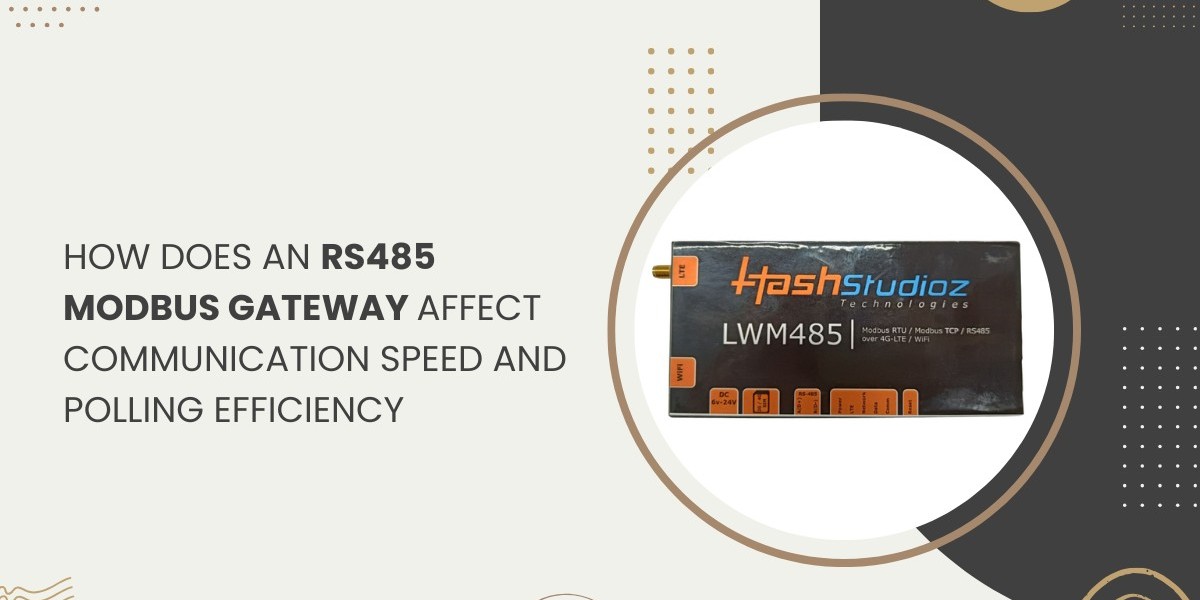

In modern industrial automation, communication between field devices and control systems is critical. Modbus remains one of the most widely used protocols for industrial networks. RS485 is commonly deployed for Modbus RTU devices, but integrating them with Ethernet or cloud-based systems often requires an RS485 Modbus Gateway.
The gateway serves as a bridge between serial devices and IP networks, converting Modbus RTU to Modbus TCP or other protocols. Its configuration and performance directly impact communication speed and polling efficiency. Efficient data transmission is essential for Industrial IoT applications, predictive maintenance, and real-time monitoring.
This article examines how an RS485 Modbus Gateway affects communication speed, polling efficiency, and overall system performance. It also discusses design considerations, practical deployment strategies, and real-world use cases.
Understanding RS485 Communication and Modbus Protocol
1. RS485 Basics
RS485 is a serial communication standard widely used in industrial automation:
Supports multi-drop networks with up to 32 devices on a single bus.
Uses differential signaling to resist electrical noise.
Typical data rates range from 1.2 kbps to 10 Mbps depending on cable length.
RS485 is reliable for local device communication but lacks native TCP/IP capabilities. Connecting RS485 networks to modern control systems requires a gateway.
2. Modbus Protocol Overview
Modbus is a simple, open protocol designed for master-slave communication:
Modbus RTU uses RS485 serial lines.
Modbus TCP uses Ethernet networks.
Master devices poll slaves for data periodically.
Polling frequency, network load, and data size influence communication efficiency.
What Is an RS485 Modbus Gateway?
An RS485 Modbus Gateway is a device that connects serial Modbus devices to Ethernet or IP networks. It translates between protocols, allowing modern SCADA, Industrial IoT platforms, or cloud services to communicate with legacy equipment.
Key Features
Protocol conversion from Modbus RTU to Modbus TCP or MQTT.
Multi-device support for simultaneous polling.
Configurable baud rate and timeout settings.
Network redundancy in advanced models.
An Industrial IoT Gateway is an advanced version that may include additional features such as MQTT, REST API support, edge computing, and secure data transmission.
Communication Speed and Factors Affecting It
Communication speed refers to how quickly data moves from devices to the gateway and then to the network. Multiple factors influence this speed in RS485 Modbus networks.
1. Baud Rate
RS485 baud rate directly affects data transfer speed.
Higher baud rates reduce transmission time but shorten cable distance reliability.
Typical rates: 9600, 19200, 38400, 115200 bps.
2. Number of Devices
More slave devices increase total polling time.
Each slave requires request-response cycles.
A network with 20 devices may take over 1 second per full polling cycle at 9600 bps.
3. Packet Size
Larger data packets take longer to transmit.
Modbus RTU frames consist of address, function code, data, and CRC.
Optimizing data frame size reduces total transmission time.
4. Gateway Processing
The RS485 Modbus Gateway adds latency:
Time to receive serial data, convert it, and forward it over Ethernet.
High-performance gateways may introduce <5 ms latency per transaction.
Poorly optimized gateways can delay multiple milliseconds per device, reducing polling frequency.
Polling Efficiency and Its Importance
Polling efficiency is the ability of the master or gateway to collect data from multiple devices rapidly without overloading the network.
Factors Affecting Polling Efficiency
1. Network Topology: Daisy-chain RS-485 networks may experience slower communication over long cables, while star topology reduces latency but might require repeaters to maintain signal integrity across multiple devices.
2. Gateway Configuration: Setting the optimal baud rate and timeout enhances efficiency, and limiting retries for stable devices saves time, reducing unnecessary communication delays and improving overall system performance.
3. Concurrent Requests: Advanced gateways can poll multiple devices simultaneously using multithreading, whereas standard gateways poll sequentially, increasing cycle times and slowing data collection in large networks.
4. Error Handling: Retransmissions caused by CRC errors or timeouts reduce throughput, but gateways with error recovery improve reliability, ensuring accurate data, though slightly affecting communication speed.
Real-World Implications
Efficient polling ensures:
Faster response to critical events.
More frequent data collection for predictive maintenance.
Reduced load on master devices and networks.
RS485 Modbus Gateway vs Industrial IoT Gateway
While standard RS485 Modbus Gateways focus on protocol translation, Industrial IoT Gateways add features that improve communication speed and polling efficiency.
1. Edge Processing
Industrial IoT Gateways can process data locally.
Only relevant or aggregated data is sent to servers, reducing network load.
This lowers latency for time-sensitive applications.
2. Protocol Conversion Optimization
MQTT or REST API support allows asynchronous data transfer.
Reduces the overhead of repeated polling cycles compared to standard Modbus TCP polling.
3. Security and Reliability
Industrial IoT Gateways include encrypted data channels.
Failover and dual SIM LTE options maintain communication in remote or harsh environments.
Reduced interruptions improve effective polling efficiency.
Practical Examples
1. Factory Machine Monitoring
50 sensors connected via RS485 to a gateway.
Polling every 2 seconds using 19200 bps.
A standard RS485 Modbus Gateway completes each cycle in 1.5 seconds.
Introducing an Industrial IoT Gateway with multithreaded polling reduced cycle time to 0.8 seconds.
This improvement allows faster detection of anomalies and immediate alerts.
2. Energy Metering
100 Modbus RTU meters connected via RS485.
Data collected by a central SCADA system over Ethernet.
Standard gateways introduced 20% delay due to sequential polling.
Using an Industrial IoT Gateway with optimized polling reduced latency by 35%, ensuring near real-time energy tracking.
Design Considerations for Optimizing Speed and Polling Efficiency
1. Select the Right Gateway
High-performance gateways reduce latency, support concurrent polling, and handle large RS-485 networks efficiently, ensuring faster communication and reliable data collection across multiple devices.
2. Optimize Baud Rate and Frame Size
Use the highest stable baud rate and minimize unnecessary data in each Modbus frame to improve network efficiency and reduce transmission delays.
3. Use Shorter Cable Lengths or Repeaters
RS-485 networks are limited to 1200 meters at lower baud rates. Repeaters maintain signal integrity, allowing longer connections without slowing communication.
4. Enable Multi-Threaded Polling if Supported
Gateways that support multi-threaded polling reduce total cycle time in networks with many devices, enabling faster and more efficient data collection.
5. Monitor Network Errors
High error rates cause repeated queries and slow performance. Proper termination and grounding reduce CRC errors and improve overall network reliability.
6. Consider Industrial IoT Gateway Features
High error rates cause repeated queries and slow performance. Proper termination and grounding reduce CRC errors and improve overall network reliability.
Performance Metrics and Observations
In typical deployments, RS485 networks operate at 9600–38400 bps.
Each additional slave adds ~50–200 ms to the polling cycle at moderate baud rates.
Gateways with multithreading reduce polling times by 30–50% in multi-device networks.
Error-free networks allow predictable polling cycles, essential for automation timing.
Challenges and Limitations
1. Network Latency
Even high-speed gateways cannot eliminate inherent RS-485 delays. Physical network quality, cable length, and topology ultimately limit overall throughput and affect communication efficiency.
2. Device Response Time
Some Modbus slave devices respond slowly, reducing effective polling efficiency. Optimizing query intervals and managing slow devices can help maintain consistent network performance.
3. Gateway Cost vs Performance
High-performance Industrial IoT Gateways offer faster speeds and advanced features but come at a higher cost. Budget gateways may be sufficient for small, low-frequency networks.
Conclusion
An RS485 Modbus Gateway connects serial Modbus devices to Ethernet or IP systems, with performance influenced by baud rate, device count, and network topology. Features like multithreading, error handling, and protocol optimization improve polling efficiency, while Industrial IoT Gateways add edge processing and concurrent polling. Proper selection and configuration ensure fast, reliable, and scalable data collection for monitoring, automation, and analytics.