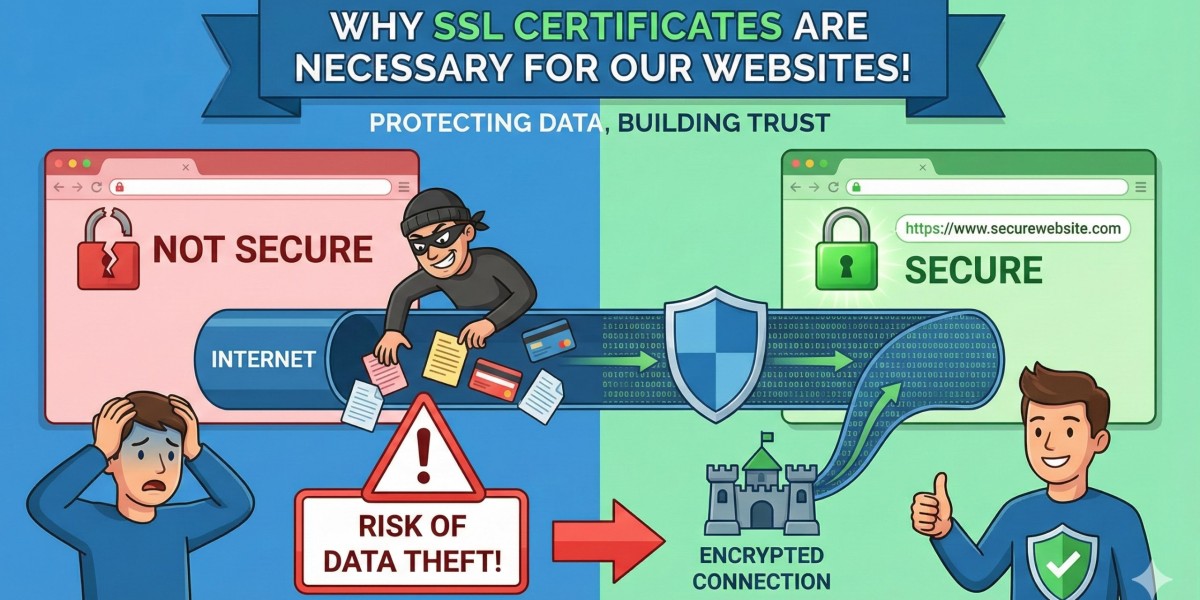

In today’s digital-first world, websites are no longer just online brochures—they are platforms for communication, transactions, data exchange, and business growth. As cyber threats continue to rise, protecting users’ data has become a critical responsibility for website owners. One of the most fundamental technologies that ensures online safety is the SSL certificate.
SSL certificates are no longer a luxury or an optional add-on. They are a necessity for websites of all sizes, whether it’s a personal blog, a business website, or a large-scale e-commerce platform. In this article, we will explore in detail why SSL certificates are necessary for our websites, how they work, and the role they play in security, SEO, trust, and the future of the web.
1. Understanding SSL Certificates
An SSL (Secure Sockets Layer) certificate is a digital certificate that authenticates a website’s identity and enables encrypted communication between a user’s browser and the web server. Although SSL has technically evolved into TLS (Transport Layer Security), the term “SSL certificate” is still commonly used across the web.
When a website has an SSL certificate installed, any information exchanged—such as login credentials, payment details, or form submissions—is encrypted before being transmitted. This encryption ensures that even if data is intercepted, it cannot be read or misused by attackers.
How to Identify an SSL-Secured Website
You can easily identify whether a website is secured with SSL by checking:
The URL begins with https:// instead of http://
A padlock icon appears in the browser’s address bar
The browser does not display “Not Secure” warnings
Types of SSL Certificates
There are several types of SSL certificates, each designed for different needs:
Domain Validation (DV): Basic encryption, ideal for blogs and small websites
Organization Validation (OV): Verifies business identity, suitable for company websites
Extended Validation (EV): Displays the company name, offering maximum trust
Wildcard SSL: Secures a domain and all its subdomains
Multi-Domain SSL: Covers multiple domains under a single certificate
The most important difference to understand is between HTTP and HTTPS. HTTP transmits data in plain text, making it vulnerable to attacks, while HTTPS encrypts data, ensuring privacy and confidentiality.
2. Why SSL Certificates Matter
SSL certificates have become mandatory in the modern web ecosystem. Browsers, search engines, and users now expect every website to be secure by default.
Key Reasons SSL Is Essential
Protection of sensitive user data: SSL encrypts passwords, credit card information, and personal details
Building trust and credibility: Visitors feel confident interacting with a secure website
Prevention of cyberattacks: Protects against data interception, spoofing, and tampering
Secure online transactions: Essential for e-commerce websites and online services
Without SSL, browsers may display warnings such as “Not Secure,” which can instantly discourage users from continuing. This often results in lost traffic, lower conversions, and damage to brand reputation.
3. SSL and Website Security
One of the most important benefits of SSL certificates is enhanced website security. SSL strengthens security through three core mechanisms:
1. Encryption
Data transmitted between the user and the server is encrypted, making it unreadable to hackers.
2. Data Integrity
SSL ensures that data cannot be altered or corrupted during transmission.
3. Authentication
SSL certificates verify the identity of the website owner, ensuring users are communicating with the legitimate site.
Attacks Prevented by SSL
Man-in-the-middle attacks, where hackers intercept communication
Eavesdropping, especially on public Wi-Fi networks
Phishing attacks, where fake websites impersonate trusted ones
Modern browsers actively flag non-HTTPS websites and may disable advanced features on insecure pages, limiting functionality and user experience.
4. SEO Benefits of SSL Certificates
SSL certificates play a significant role in search engine optimization (SEO). Search engines prioritize user safety, and secure websites are rewarded accordingly.
How SSL Helps SEO
HTTPS is a ranking signal for search engines
Secure sites experience lower bounce rates
Users are more likely to trust and engage with secure websites
Improved crawlability and indexing
Although SSL alone won’t guarantee top rankings, it creates a safer environment that improves user behavior—an important factor in SEO success.
5. Business and Legal Importance
For businesses, SSL certificates are not just about security—they are also about compliance and credibility.
Websites That Require SSL
E-commerce platforms processing online payments
Login-based websites handling user credentials
Web applications storing customer data
Legal and Compliance Standards
SSL certificates help businesses comply with:
Data protection and privacy laws
Payment security standards such as PCI DSS
Industry regulations related to user data protection
Failing to secure a website can result in legal penalties, data breaches, and long-term loss of customer trust.
6. How to Choose the Right SSL Certificate
Choosing the right SSL certificate depends on your website’s purpose and scale.
Factors to Consider
Type of website: Blog, business website, or e-commerce platform
Level of trust required: Basic encryption vs enhanced validation
Number of domains or subdomains: Single or multiple
Budget vs security needs: Cost compared to functionality
Small websites can start with free SSL certificates, while large businesses often require premium certificates with warranties and extended validation.
7. Installing and Managing SSL Certificates
Installing SSL has become much easier thanks to modern hosting providers.
Basic Installation Steps
Generate a Certificate Signing Request (CSR)
Purchase or activate your SSL certificate
Install it via the hosting control panel
Redirect all HTTP pages to HTTPS
Ongoing Management Best Practices
Enable automatic renewals
Fix mixed content issues
Update internal links to HTTPS
An expired or misconfigured SSL certificate can cause browser warnings and website downtime.
8. Beyond SSL: Additional Security Measures
While SSL secures data in transit, complete website protection requires a layered security approach.
Additional measures include:
Using the latest TLS versions
Enabling HSTS to force HTTPS connections
Secure cookies and session management
Web application firewalls
Malware scanning and regular backups
Together, these measures create a strong security foundation for any website.
9. The Future of Web Security
As cyber threats become more advanced, web security will continue to evolve.
Future Trends in Web Security
Stronger encryption standards
AI-powered threat detection
Automated security monitoring
Built-in security at the device and browser level
Website owners must stay informed and proactive to keep their platforms secure.
10. Conclusion
SSL certificates are no longer optional—they are essential for survival in today’s digital landscape. They protect sensitive user data, improve SEO performance, build trust, and support legal compliance. In an era where digital trust defines success, SSL certificates form the foundation of secure and credible websites.
By implementing SSL and combining it with additional security measures, businesses and individuals can create safer online environments and ensure long-term success in the digital world.
❓ FAQs
1. Why do websites need SSL certificates?
To encrypt data, protect user privacy, and build trust.
2. What is the difference between HTTP and HTTPS?
HTTPS encrypts data using SSL/TLS, while HTTP sends data in plain text.
3. Are free SSL certificates safe?
Yes, free SSL certificates provide strong encryption for single-domain websites.
4. Does SSL affect SEO?
Yes, secure websites are favored by search engines and users.
5. Is SSL enough for full website security?
No, SSL should be combined with firewalls, updates, and monitoring for complete protection.