
Introduction to Digital Marketing Statistics
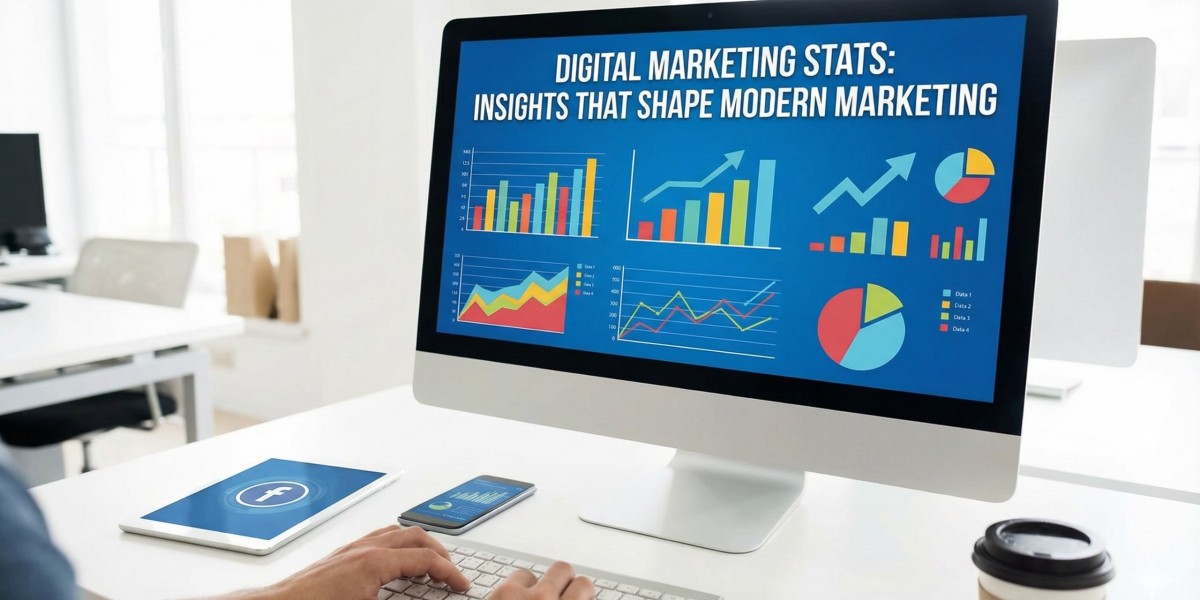
Digital marketing statistics are no longer just supporting data points; they are decision-making tools that shape modern marketing strategies. In today’s fast-paced digital environment, where consumer behavior evolves rapidly, relying on assumptions or intuition alone can lead to ineffective campaigns and wasted budgets. Data-driven insights help businesses, marketers, students, and researchers understand what works, what doesn’t, and where opportunities lie.
Digital marketing statistics make sense because they:
Provide deep insights into consumer behavior, preferences, and buying patterns
Help measure the performance and effectiveness of marketing campaigns
Reduce uncertainty and eliminate guesswork in decision-making
Assist in smart allocation of marketing budgets
Support both small businesses and large enterprises in planning long-term strategies
As digital platforms continue to grow, statistics have become the foundation of successful online marketing efforts.
Global Digital Marketing Trends
Digital marketing has expanded globally at an extraordinary pace. With increasing internet penetration and smartphone adoption, digital platforms have become the primary medium for communication, entertainment, and commerce.
Key Global Trends
A significant portion of the global population now spends more time online than watching television or listening to radio
Digital advertising spending continues to rise year after year
Many businesses operate entirely online, with no physical storefronts
Mobile devices have replaced traditional media as the primary source of information
The global shift toward digital consumption has made online marketing not just an option, but a necessity.
Content Marketing Statistics
Content marketing is the backbone of digital marketing. It helps brands educate audiences, build trust, and guide potential customers through the buying journey without aggressive selling.
Important Content Marketing Insights
Websites that publish blogs regularly attract more organic traffic
Video content generates higher engagement rates compared to text-only content
Visual content improves brand recall and message retention
Long-form, high-quality content often performs better in search engine rankings
Consistency is more important than volume when publishing content
Successful content marketing focuses on audience needs, not just keywords or competitors’ strategies.
Social Media Marketing Statistics
Social media platforms play a central role in digital marketing by enabling direct interaction with audiences.
Platform-Level Insights
Facebook remains one of the largest platforms for reach and digital advertising
Instagram is highly effective for visual storytelling and influencer-driven campaigns
LinkedIn is ideal for B2B engagement and lead generation
Twitter is widely used for news, trends, and real-time discussions
Social Media Performance Trends
Short-form videos receive higher engagement than static posts
Influencer marketing builds trust and increases brand visibility
Trend-based content often outperforms highly produced promotional videos
Search Engine Marketing and SEO Statistics
Search engines are a major gateway to information, products, and services online.
SEO and Search Trends
Organic search drives a large share of website traffic
Most users click results that appear on the first page
Trust and credibility influence click behavior
Mobile searches have surpassed desktop searches
SEO statistics highlight the importance of:
Keyword optimization
Content relevance and quality
Technical website health
Continuous SEO strategy refinement
Email Marketing Statistics
Email marketing remains one of the most effective digital channels despite being one of the oldest.
Key Email Marketing Insights
Email marketing delivers one of the highest ROIs
Personalized subject lines significantly increase open rates
Automated emails improve engagement and response times
Segmented email campaigns perform better than mass emails
Relevance, timing, and respect for user preferences are essential for long-term email marketing success.
Paid Advertising and PPC Statistics
Paid advertising provides instant visibility and measurable results.
PPC and Paid Ad Trends
Google Ads dominates the paid search advertising space
Display ads often deliver strong engagement
Well-planned campaigns achieve higher conversion rates
Cost-per-click varies by industry and competition
Effective paid advertising focuses on conversion tracking, not just clicks.
Mobile and SMS Marketing Statistics
The rise of smartphones has made mobile marketing an essential component of digital strategies.
Mobile-First Insights
Mobile devices account for a majority of online traffic
Websites must be optimized for mobile usability
SMS marketing works even without internet connectivity
High-performing mobile and SMS campaigns are:
Permission-based
Short and action-oriented
Personalized
Timely
E-Commerce and Conversion Statistics
E-commerce continues to grow as consumers prioritize convenience and accessibility.
Key E-Commerce Trends
Cart abandonment remains a significant challenge
Discount codes improve checkout completion rates
Simplified checkout processes increase conversions
Flexible payment options drive higher sales
Conversion optimization depends on:
Website speed
User experience
Trust signals such as reviews and security badges
Clear calls to action
AI and Automation in Digital Marketing
Artificial intelligence is transforming digital marketing by enabling smarter targeting and automation.
AI-Driven Marketing Insights
AI tools are increasingly adopted in marketing
Automation improves efficiency and consistency
Predictive analytics enhances audience targeting
AI supports accurate sales forecasting
Future Trends
Hyper-personalized communication
AI-driven campaign optimization
Data-powered decision-making
Conclusion: Key Takeaways from Digital Marketing Statistics
Digital marketing statistics clearly demonstrate that data-driven strategies outperform intuition-based decisions. By analyzing trends, tracking performance, and adapting quickly, businesses and marketers can achieve measurable and sustainable growth.
Key Takeaways
Social media dominates digital engagement
Content marketing strengthens SEO performance
Email and SMS remain highly effective
AI and automation represent the future of digital marketing
Understanding and applying digital marketing statistics is no longer optional—it is essential for success in the modern digital landscape.