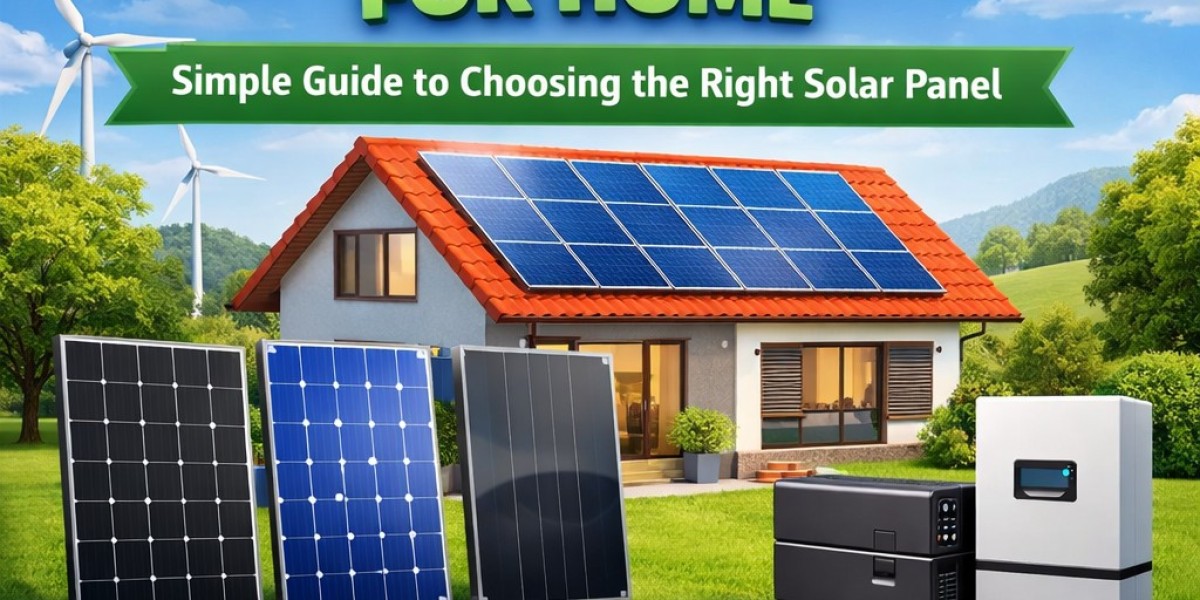

Solar power is becoming one of the smartest choices for homes today. Electricity bills are rising, power cuts still happen in many areas, and people are becoming more aware of clean energy. Solar panels help you save money, reduce your electricity bill, and use energy from the sun, which is free and renewable.
But the biggest question most homeowners have is:
Which is the best solar panel for my home?
This simple guide will help you understand:
what solar panels are
different types of solar panels
how they work
which size is right for your house
how to choose the best solar panel brand
price, warranty, and maintenance tips
This article is written in easy language so that anyone can understand, even beginners.
What Is a Solar Panel?
A solar panel is a device that converts sunlight into electricity. It is made of small units called solar cells, usually made of silicon.
When sunlight falls on the solar cells:
energy is absorbed
electrons begin to move
electricity is produced
This electricity can be used to run:
fans
lights
TV
refrigerator
AC (with bigger systems)
Solar panels are installed on:
rooftops
sheds
open ground areas
Why Should You Use Solar Panels at Home?
There are many reasons why solar panels are becoming popular for homes:
1. Save money on electricity bills
Once installed, solar panels produce free electricity for 20–25 years.
2. Protection from rising electricity prices
Electricity rates increase every year, but sunlight is free.
3. Low maintenance
Solar panels only need simple cleaning.
4. Environment-friendly energy
Solar energy does not pollute air, water, or soil.
5. Government subsidies (in many regions)
Many governments provide:
subsidy
tax benefits
net metering support
Types of Solar Panels for Home
Choosing the right solar panel becomes easier when you know the types. The three most common types are:
1. Monocrystalline Solar Panels
These are made from a single crystal of silicon.
They are:
dark black in color
highly efficient
best for limited roof space
Advantages
highest efficiency (18%–24%)
long life
better performance in low light
Best for:
small rooftops
high power requirement
2. Polycrystalline Solar Panels
These are made from multiple silicon crystals.
They are:
blue in color
slightly less efficient
cheaper than monocrystalline
Efficiency
around 16%–18%
Best for:
large rooftop areas
budget-friendly installations
3. Thin-Film Solar Panels
These are lightweight flexible panels.
Advantages
look sleek
work better in cloudy conditions
Disadvantages
less efficient
need more roof space
shorter lifespan
Best for:
temporary structures
industrial sheds
On-Grid, Off-Grid, and Hybrid Solar Systems
Solar panels alone are not enough. You also need an inverter and sometimes batteries. Based on this, there are three main types of systems:
1. On-Grid Solar System
This system is connected to the electricity grid.
Features
no batteries
extra power goes to grid
bill is adjusted through net metering
Best for
city homes
low power cuts
2. Off-Grid Solar System
This system works without grid and uses batteries.
Features
stores energy in batteries
works during power cuts
Best for
rural areas
frequent power cuts
3. Hybrid Solar System
Combination of:
on-grid system
off-grid system
Features
battery backup
also sends power to grid
Best for
homes needing backup + savings
How to Choose the Best Solar Panel for Your Home
Here are the most important factors to check.
1. Solar Panel Efficiency
Efficiency means how much sunlight the panel converts into electricity.
Higher efficiency = more power from less space
Monocrystalline panels usually have the highest efficiency.
2. Available Roof Area
Check:
size of your roof
shade from trees or buildings
direction of roof (south-facing is best in many regions)
3. Power Requirement
Calculate how much electricity you use.
Example:
Appliance | Power |
1 Fan | 75W |
1 LED Light | 10W |
TV | 120W |
Refrigerator | 250W |
Your installer can help calculate your kWh usage and suggest the right system size.
4. Budget
Solar panel price depends on:
type of panel
system size
inverter type
battery or no battery
brand
On-grid systems are cheaper than hybrid and off-grid.
5. Warranty and Lifespan
Good solar panels should offer:
10–12 years product warranty
25 years performance warranty
Always choose Tier-1 brands or trusted local brands.
6. Government Subsidy and Net Metering
Check:
state subsidy policies
central government schemes
net meter eligibility
This can reduce the total cost significantly.
How Much Solar Capacity Do You Need?
Here is a simple idea based on average home usage.
Home Type | Suggested Solar System |
Small home | 1–2 kW |
Medium home | 3–5 kW |
Large home | 6–10 kW |
Your actual need depends on:
electricity consumption
number of appliances
backup requirement
available roof space
Solar Panel Price for Home (Approximate Idea)
Prices change by region and brand but here is a general estimate:
System Size | On-Grid Price | Off-Grid Price |
1 kW | lower | higher |
3 kW | moderate | higher |
5 kW | moderate | highest |
Off-grid is costlier because batteries add extra cost.
Maintenance Tips for Solar Panels
Solar panels require very little maintenance, but small care increases life and performance.
clean panels every 15–30 days
remove dust, leaves, and bird droppings
avoid using harsh chemicals
check wiring once a year
keep batteries (if any) in ventilated area
Common Myths About Solar Panels
❌ Solar panels do not work in winter
They work as long as sunlight is available.
❌ Solar panels require daily cleaning
Normal dust cleaning is enough.
❌ Solar energy is too expensive
Costs have reduced, and subsidies help more.
Final Conclusion
Choosing the best solar panel for home depends on:
your budget
roof size
electricity needs
type of system (on-grid, off-grid, hybrid)
panel efficiency and warranty
If you have less roof space, choose monocrystalline panels.
If you want a budget option, choose polycrystalline panels.
If you face regular power cuts, choose off-grid or hybrid systems.
If you want maximum savings on bills, choose on-grid solar.