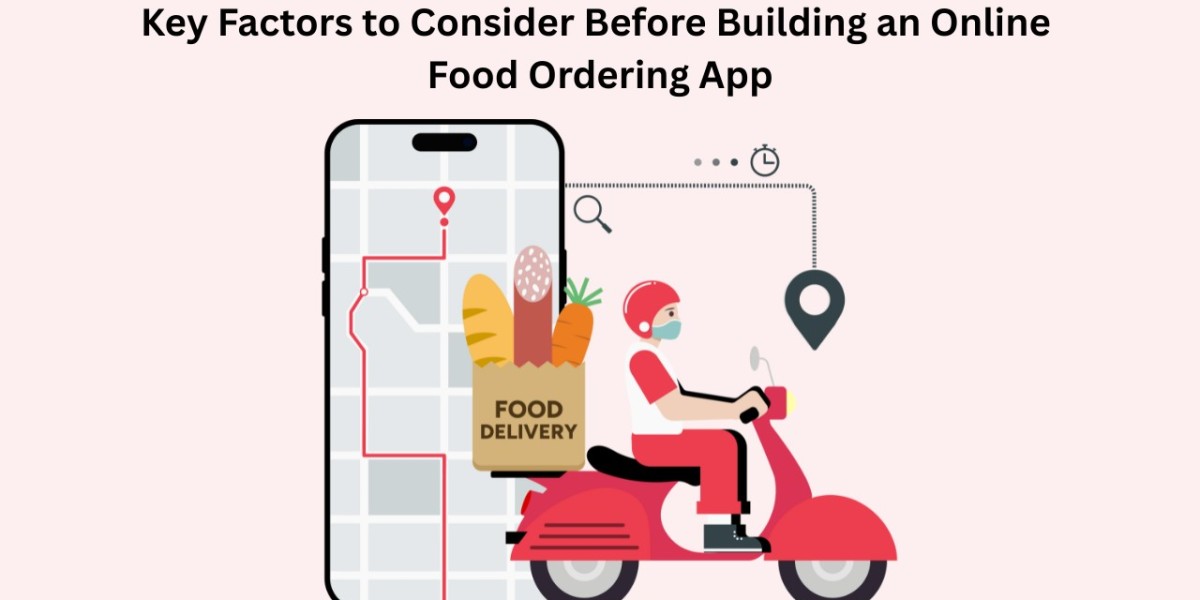

Building an online food ordering app is no longer just a digital upgrade—it is a strategic business decision that can define how your brand competes in a crowded, on-demand market. Customers now expect speed, convenience, transparency, and personalization at every touchpoint. At the same time, development involves complex choices around technology, logistics, security, and long-term scalability. Before investing, businesses must evaluate the core factors that influence performance, profitability, and growth. Working with an experienced online food ordering app development company helps translate these decisions into a platform that launches efficiently and scales with confidence.
Understanding Your Business Model
Marketplace vs Single-Brand Platform
The first decision is whether your app will act as a marketplace connecting multiple restaurants or a branded platform for a single business. A marketplace requires vendor onboarding, commission management, dispute handling, and complex administration. A single-brand app focuses on direct customer relationships, loyalty, and margin control. Your choice impacts feature sets, development timelines, and operating costs, and should be aligned with guidance from an online food ordering app development company.
Revenue Streams and Profitability
Define how the app will generate revenue: order commissions, delivery fees, subscriptions, advertising placements, premium listings, or bundled meal plans. Each model affects user experience and pricing strategy. A clear monetization framework ensures the app contributes to growth instead of becoming a long-term expense.
Market Research and Competitive Analysis
Identifying Your Target Audience
Your customer profile shapes design, features, and marketing. Busy professionals prioritize speed and reliability, families value affordability and scheduling, while students respond to deals and convenience. Understanding these needs ensures your platform delivers relevant experiences.
Analyzing Competitors and Differentiation
Study existing apps in your region to understand pricing, delivery performance, reviews, and feature gaps. Identify where competitors fall short—such as poor UI, limited cuisine options, or slow delivery—and build around those opportunities. An online food ordering app development company can help translate competitive insights into a differentiated product roadmap.
Defining Core Features and User Experience
Essential Customer-Side Capabilities
A successful app must provide intuitive onboarding, fast search and filtering, menu browsing, secure payments, order tracking, and reviews. These elements form the minimum viable product and directly affect conversion and retention.
Restaurant and Admin Dashboards
For multi-vendor platforms, restaurants need dashboards for order management, menu updates, pricing, availability, and analytics. Admin panels must support onboarding, promotions, disputes, reporting, and platform controls. Partnering with an online food ordering app development company ensures these systems are scalable and easy to use.
UX Design and Performance
Fast load times, minimal checkout steps, accessible navigation, and localized language support reduce friction. A well-designed interface is not cosmetic—it is a competitive advantage that improves completion rates and repeat usage.

Technology Stack and Architecture
Platform Strategy
Decide between native iOS/Android apps, cross-platform frameworks, or web-first solutions. Native apps offer superior performance and deeper integrations, while cross-platform builds reduce time and cost. The right choice depends on your budget, timeline, and growth goals.
Scalable Backend Infrastructure
Cloud-based infrastructure allows your app to handle traffic spikes during peak hours, promotions, or seasonal demand. Modular, API-driven architecture supports feature expansion without disrupting operations. Most leading platforms rely on an online food ordering app development company to design systems that scale reliably.
Third-Party Integrations
Payments, maps, notifications, analytics, CRM, and customer support tools must integrate smoothly. Evaluate providers for reliability, regional compliance, and transaction costs before finalizing your stack.
Delivery Operations and Logistics
In-House vs Third-Party Delivery
Running your own fleet offers branding control and potentially higher margins but requires staffing, scheduling, and fleet management. Third-party logistics provide faster scaling with lower overhead but reduce control and margins. Your operational model should align with business priorities and customer expectations.
Route Optimization and Dispatch
Real-time routing, traffic-aware navigation, and zone-based delivery reduce delays and costs. Intelligent dispatch systems match orders with the nearest available couriers, improving speed and customer satisfaction.
Handling Peak Demand
Your platform must maintain performance during surges. Features such as dynamic ETAs, order throttling, and capacity planning prevent service degradation and protect brand reputation.
Payments, Security, and Compliance
Secure Transactions
Payment security is non-negotiable. End-to-end encryption, tokenization, two-factor authentication, and fraud detection protect customers and merchants. Trust is a growth driver, not just a technical requirement.
Regional Compliance and Taxation
Automated GST/VAT calculation, compliant invoicing, and record keeping simplify legal obligations and reduce operational risk.
Data Privacy and Access Control
Role-based permissions, audit logs, and transparent privacy practices protect sensitive data and meet regulatory standards, reinforcing customer confidence.
Cost Planning and Budget Allocation
Development and Maintenance
Initial costs include UI/UX design, frontend and backend development, integrations, testing, and deployment. Ongoing expenses cover hosting, updates, security patches, and feature enhancements. A realistic lifecycle budget avoids unpleasant surprises.
MVP vs Long-Term Vision
Launching with a focused MVP accelerates market entry and validation. However, the underlying architecture must support future growth. An online food ordering app development company helps balance speed with scalability.
Marketing and User Acquisition
Allocate budget for app store optimization, paid campaigns, referral programs, and partnerships. Even the best platform needs sustained promotion to achieve traction.
Data, Analytics, and Optimization
Operational Insights
Analytics reveal peak hours, popular dishes, delivery times, and fulfillment bottlenecks. These insights inform staffing, menu design, and pricing strategies.
Customer Behavior and Retention
Tracking repeat orders, churn, and engagement enables targeted loyalty programs and personalized offers. Platforms built with analytics from day one outperform those that rely on guesswork.
Continuous Testing and Improvement
A/B testing of layouts, promotions, and fees supports data-driven optimization without risking stability.
Branding, Marketing, and Engagement
Building Direct Customer Relationships
A branded app strengthens ownership of customer data and reduces dependence on aggregators. Push notifications, loyalty points, and referral rewards increase lifetime value and lower acquisition costs.
Localization and Community Relevance
Hyperlocal promotions, language options, and region-specific menus improve adoption and trust. Customers are more loyal to platforms that reflect local preferences.
Reputation and Support
Ratings, reviews, and in-app support demonstrate accountability. Fast issue resolution improves app store rankings and organic growth.
Read More: How On-Demand Food Delivery Apps Benefit Startups and Enterprises
Scalability and Future Growth
Multi-Location Expansion
If you plan to expand across cities or onboard multiple partners, your platform must support bulk onboarding, standardized contracts, and centralized management.
Feature Roadmap
Future enhancements may include subscriptions, scheduled orders, AI-driven recommendations, and corporate catering. Modular architecture ensures new features integrate smoothly.
Global Readiness
For international growth, plan for multi-currency, localization, and compliance early to avoid costly reengineering later.
Choosing the Right Development Partner
Custom vs White-Label Solutions
White-label platforms accelerate launch but limit customization. Custom development provides flexibility and differentiation. Your choice should reflect long-term strategy and competitive positioning.
Technical Expertise and Industry Experience
Select a partner with proven experience in food platforms, logistics, and secure payments. A capable online food ordering app development company offers architecture guidance, performance optimization, and post-launch support.
Ongoing Maintenance and Innovation
Post-launch updates, security enhancements, and feature additions are essential to remain competitive as user expectations evolve.
Risk Management and Common Pitfalls
Overbuilding Without Validation
Adding too many features before launch increases cost and delays entry. Start with essentials, gather feedback, and iterate.
Underestimating Operations
Technology must be paired with delivery management, vendor onboarding, and customer support. Neglecting operations undermines even the best app.
Ignoring Marketing from Day One
Visibility drives adoption. Allocate resources for promotion, partnerships, and community engagement alongside development.
Conclusion
Building an online food ordering app demands strategic clarity, technical foresight, and operational discipline. By defining your business model, investing in scalable architecture, optimizing logistics, and prioritizing security and analytics, you create a platform designed for sustainable growth. Partnering with the right clone app development company ensures faster execution, lower risk, and the flexibility to adapt as the market evolves. Careful planning today lays the foundation for long-term profitability, stronger customer relationships, and confident expansion.
FAQs
What is the first factor to consider before developing a food ordering app?
Defining your business model and target audience is critical because it determines features, monetization, and operational complexity.
How does an online food ordering app development company support scalability?
By designing cloud-based, modular architectures that handle traffic spikes, enable rapid feature additions, and support multi-location growth.
Should startups choose custom development or white-label solutions?
White-label offers faster launches, while custom development provides flexibility and differentiation. The decision depends on budget, timeline, and long-term goals.
How can analytics improve business performance?
Analytics reveal customer behavior, optimize menus, improve delivery efficiency, and refine marketing strategies through data-driven insights.
What ongoing costs should be planned after launch?
Hosting, maintenance, security updates, feature enhancements, customer support, and marketing are continuous investments for stable growth.