
When a loved one needs to be transferred from Patna to Delhi for medical treatment, families often face two immediate concerns—safety and cost. While medical emergencies leave little time for financial planning, understanding the cost of a train ambulance can help families make informed and confident decisions during a stressful time.
Train ambulance service in Patna are designed to provide continuous medical care during long-distance travel, offering a balance between affordability and safety. This guide explains what families should know about the cost of a train ambulance from Patna to Kolkata, without confusing jargon or unrealistic promises.
Understanding Train Ambulance Services
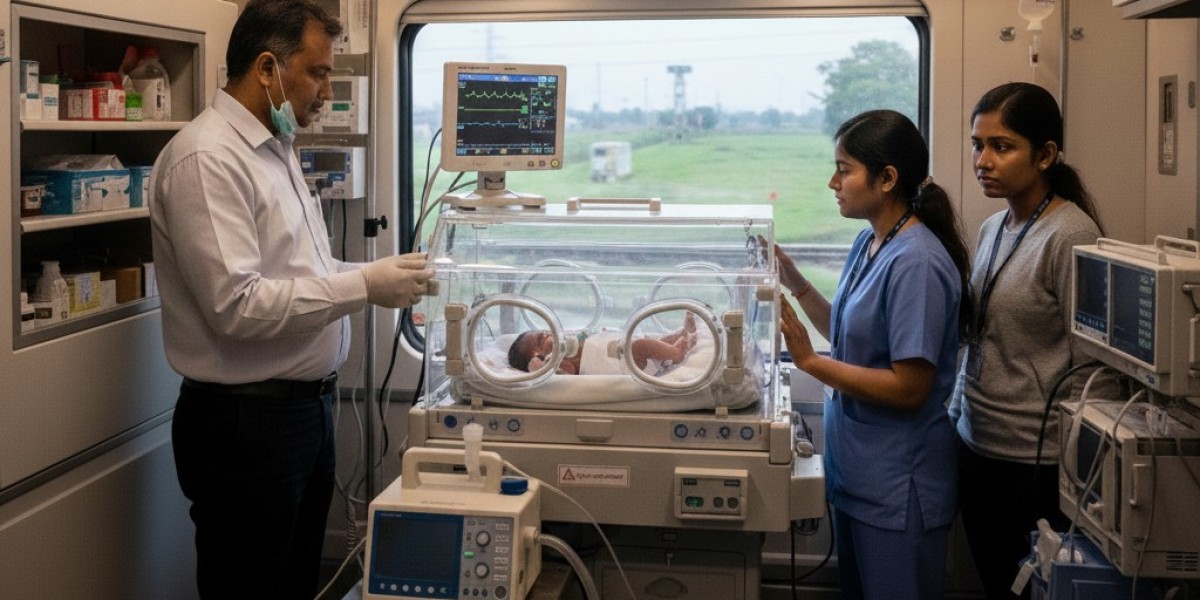
A train ambulance is not ordinary travel. It is a medically supervised transfer where a patient is transported in a specially prepared train coach equipped with life-support systems and attended by trained medical professionals.
Unlike standard road or train travel, train ambulances ensure:
- Continuous monitoring of the patient
- Availability of emergency medical intervention
- Safe long-distance transfer without exhausting the patient
For routes like Patna to Delhi, train ambulances are often chosen because they allow stable medical care over extended travel hours.
Average Cost Range of Train Ambulance from Patna to Kolkata
Families often ask for an exact price, but train ambulance costs are not fixed. The approximate cost for a train ambulance from Patna to Delhi usually falls within a moderate range, depending on medical needs and logistical requirements.
Rather than offering a flat rate, providers assess the patient’s condition first. This ensures that families are not paying for unnecessary services—or worse, risking safety by underestimating medical needs.
Key Factors That Affect Train Ambulance Cost
Several elements influence the final cost of a train ambulance transfer:
Patient’s Medical Condition
The stability of the patient plays a major role. A stable patient requiring oxygen support will cost less than a critically ill patient needing ICU care.
ICU or Non-ICU Setup
An ICU train ambulance includes advanced equipment such as ventilators, monitors, infusion pumps, and backup oxygen, which naturally increases the cost.
Medical Equipment Requirements
Equipment like neonatal incubators, ventilators, or specialized monitors adds to the overall expense but is essential for patient safety.
Medical Staff Onboard
The number and expertise of doctors, nurses, or paramedics traveling with the patient directly impacts cost.
Distance and Train Logistics
Train availability, travel duration, and berth arrangements also influence pricing.
ICU vs Non-ICU Train Ambulance: Cost Differences
A non-ICU train ambulance is suitable for patients who are stable and require basic medical supervision. These transfers are more economical.
An ICU train ambulance, on the other hand, is necessary for patients who:
- Are on ventilator support
- Require continuous monitoring
- Have unstable vital signs
While ICU setups cost more, they provide hospital-level care throughout the journey, which can be life-saving.
Additional Expenses Families Should Be Aware Of
Beyond the main transfer cost, families may encounter additional charges such as:
- Train ticket and berth reservation
- Road ambulance services at Patna and Kolkata
- Medical consumables and medications
- Emergency contingencies, if required
A transparent provider will explain these costs upfront to avoid surprises later.
Why Train Ambulance Is Often More Cost-Effective
Compared to air ambulances, train ambulances are significantly more affordable for long distances like Patna to delhi. They also provide:
- More space for equipment and family members
- Lower vibration than road transport
- Continuous medical supervision over long durations
For many families, this makes train ambulances the most practical and balanced option.
How to Avoid Hidden Costs and Delays
Families can protect themselves by:
- Sharing complete medical reports before booking
- Confirming what is included in the quoted cost
- Asking about ICU requirements clearly
- Choosing experienced providers with clear communication
- Proper planning reduces last-minute changes that can increase costs.
Financial Planning Tips for Families
Even in emergencies, a few steps can help manage expenses:
- Focus on essential medical needs first
- Avoid unnecessary add-ons
- Ask about insurance or reimbursement possibilities
- Plan early to prevent rushed decisions
Safety should always come first, but informed choices help reduce financial stress.
Frequently Asked Questions
Is train ambulance affordable for long-distance transfers?
Yes, especially when compared to air ambulances, train ambulances offer a more economical solution with medical safety.
Can costs change during the journey?
Costs generally remain fixed unless there is a medical emergency requiring additional care.
Can family members travel with the patient?
In most cases, yes—this is one of the advantages of train ambulance services.
Conclusion
The cost of a train ambulance service in Delhi depends on medical needs, not just distance. While expenses are an important consideration, patient safety and continuity of care should always be the priority.
Understanding the factors that influence pricing helps families make calm, informed decisions during difficult moments. With proper planning and the right medical support, train ambulance services provide a safe and reliable way to transfer patients across cities without compromising care.