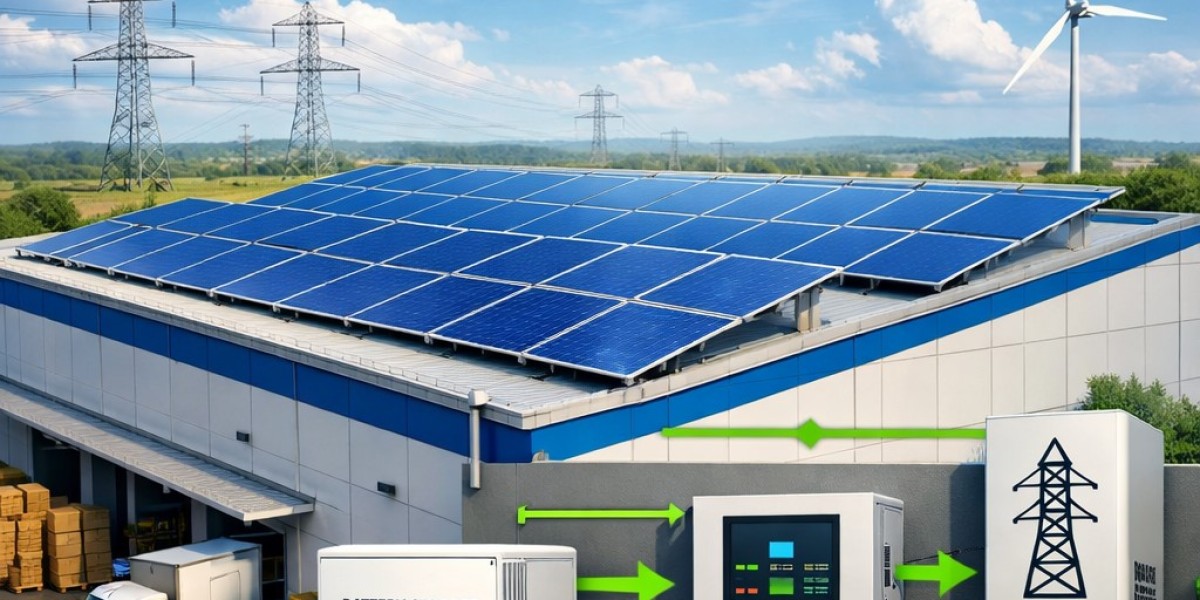

Warehouses consume a large amount of electricity every day — lighting, ventilation, cooling, conveyor systems, forklifts, computers, and security equipment all run continuously. As power tariffs continue to rise, many warehouse owners are turning to commercial solar panels with on-grid hybrid systems to control costs and ensure uninterrupted operations.
A hybrid solar setup combines the best parts of on-grid and off-grid technologies. It allows businesses to generate clean power from the sun, export extra electricity to the grid, and still have battery backup during power outages.
This guide explains how hybrid solar systems work for warehouses, what they cost, the benefits, and how to choose the right system size and components.
What Is an On-Grid Hybrid Solar System for Warehouses?
A hybrid solar system connects three energy sources:
Solar panels
Battery storage
Utility grid
Here’s how it works:
Solar panels generate electricity during the day.
Power flows first to warehouse loads.
Extra energy charges the batteries.
Surplus electricity (if any) is exported to the grid.
During outages or peak demand, batteries automatically supply power.
In simple terms, you get bill savings, energy security, and control — all in one system.
Why Warehouses Are Ideal for Solar
Warehouses often have:
Large, unused rooftop space
Consistent daytime energy consumption
Flat or gently sloped roofs suitable for solar mounting
Long-term operations (10–25 years) that match solar lifespan
This makes solar panels a natural fit and one of the most profitable energy investments for commercial facilities.
Key Benefits of Hybrid Solar Systems for Warehouses
1. Major Reduction in Electricity Bills
Solar power offsets grid consumption and reduces monthly operating expenses. Over time, savings can significantly improve profit margins.
2. Protection Against Power Cuts
Hybrid systems provide battery backup to keep essential operations running:
Security cameras
Lighting
IT systems
Inventory management equipment
This prevents downtime and loss of productivity.
3. Net Metering Advantages
Excess solar energy can be exported to the grid (depending on regulations), earning credits that further reduce electricity bills.
4. Peak Load Management
Batteries help manage high-demand periods, reducing demand charges from utilities.
5. Long-Term ROI
Most commercial solar projects recover their cost within 3–6 years, while systems continue working for 20–25 years.
6. Sustainability and Brand Image
Companies benefit from reduced carbon footprint and improved corporate sustainability reporting — something customers and partners increasingly value.
Components of a Warehouse Hybrid Solar System
A typical system includes:
Commercial-grade solar panels
Hybrid inverter
Battery storage (lithium recommended)
Mounting structures (industrial-strength)
DC/AC cables and connectors
Safety devices and switchgear
Monitoring system (web or mobile app)
Selecting quality components ensures longevity and reliable performance.
System Sizing: How Much Solar Does a Warehouse Need?
Sizing depends on:
Average monthly electricity consumption
Available roof space
Operating hours
Future expansion plans
Common warehouse systems range from:
20 kW – 50 kW for small facilities
50 kW – 200 kW for medium warehouses
200 kW and above for large logistics centers
A professional site survey helps determine exact requirements.
Cost of Commercial Warehouse Hybrid Solar Systems
Total cost depends on:
System capacity
Battery size
Panel efficiency and brand
Installation complexity
Local labor and permitting fees
Although hybrid systems cost more upfront than standard on-grid setups, the additional investment pays off through reliability and energy independence.
Think of it as an asset, not an expense.
Payback and Savings
Warehouses typically operate during daylight hours, which aligns perfectly with solar generation. This leads to:
Higher solar utilization
Faster payback
Stronger long-term returns
Most businesses experience:
50–80% reduction in electricity costs
Positive ROI within 3–6 years
Decades of low-cost energy afterward
Maintenance Requirements
Hybrid systems need minimal maintenance:
Clean panels regularly
Inspect wiring and mounting
Monitor performance through apps
Schedule periodic professional checkups
Lithium batteries require very little maintenance compared to traditional lead-acid units.
Safety Features to Look For
A reliable warehouse system should include:
Over-voltage and surge protection
Grounding and earthing safety
Fire-resistant cables
Battery management system (BMS)
Inverter protections against overload and short circuits
Safety standards are critical in industrial environments.
Choosing the Right Solar Installer
When selecting an installer, consider:
Certifications and experience
Quality of components offered
Transparent quotations
Strong warranties
After-sales support and monitoring services
Request detailed proposals and compare both cost and value — not just price.
Hybrid vs On-Grid Only: Which Is Better for Warehouses?
Feature | On-Grid System | Hybrid System |
Battery backup | No | Yes |
Cost | Lower | Higher |
Savings | High | High |
Reliability during outages | Low | Excellent |
Future-ready | Limited | Highly flexible |
For facilities where downtime is costly, hybrid is usually the smarter long-term choice.
Final Thoughts
Commercial solar panels combined with an on-grid hybrid system give warehouses the perfect mix of cost savings, reliability, and scalability. With the right design and installer, you can cut energy expenses, secure backup power, and build a cleaner, more sustainable operation.










