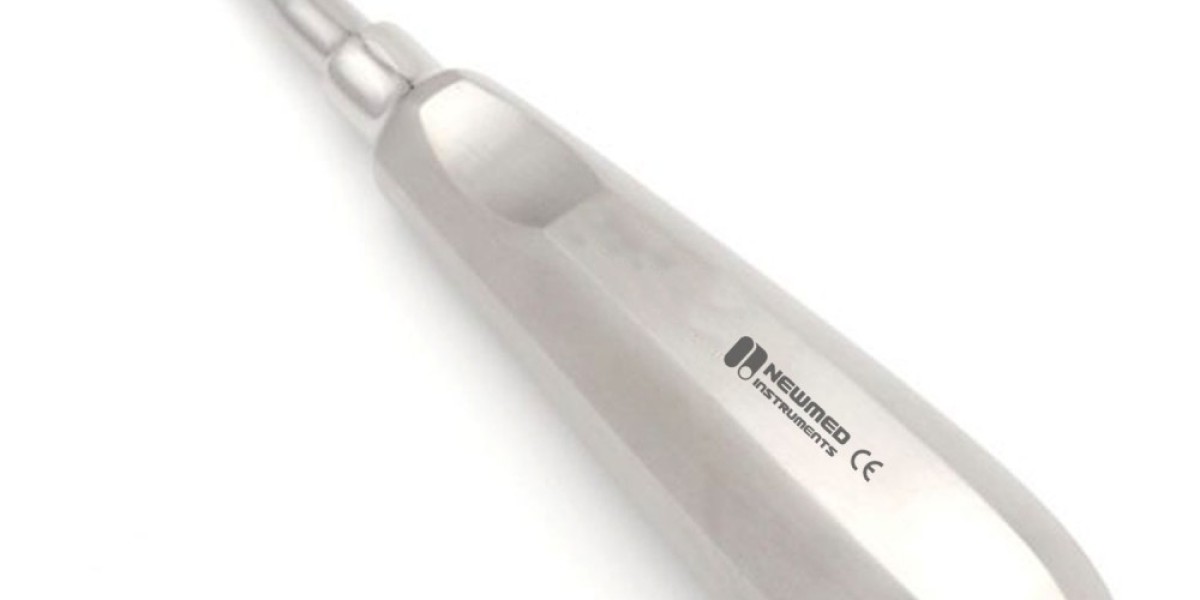

The field of dentistry relies on precision, control, and high-quality instrumentation to ensure successful patient outcomes. Among the most fundamental tools in a clinician's arsenal is the elevator, used for luxating teeth and facilitating extractions. The 301 dental elevator, in particular, stands out as a versatile and indispensable instrument for dental professionals, from seasoned surgeons to students learning the intricacies of oral surgery. Its design and function are critical for performing procedures with minimal trauma and maximum efficiency.
Understanding the 301 Dental Elevator's Design
The 301 dental elevator is a straight elevator, often referred to as the "small straight elevator." Its design is simple yet highly effective, featuring a handle, a shank, and a fine, sharp blade. This streamlined construction allows practitioners to apply controlled force to sever the periodontal ligament, expand the alveolar bone, and gently lift the tooth from its socket. The precise engineering of this tool is paramount, as it directly impacts the clinician's ability to perform delicate work without damaging adjacent structures.
The Role in Atraumatic Extractions
A primary goal in modern extractions is to be as atraumatic as possible, preserving the surrounding bone and soft tissue. This is especially important when considering future implant placement. The 301 dental elevator is a key player in achieving this goal. Its thin, sharp tip is designed to fit precisely into the periodontal ligament space, allowing the practitioner to work methodically around the tooth root. This careful luxation minimizes the need for excessive force, reducing patient discomfort and promoting faster healing.
Versatility Across Dental Procedures
While its primary use is for simple extractions, the utility of the 301 dental elevator extends to various other procedures. It is often the first instrument used to initiate luxation before transitioning to forceps or other elevators. Surgeons also use it to remove root fragments that may have fractured during an extraction. For dental students, mastering the use of the 301 is a foundational skill, teaching them the principles of leverage and control that apply to all extraction instruments.
The Importance of Quality Manufacturing
The performance of a 301 dental elevator is directly tied to its manufacturing quality. A superior instrument is crafted from high-grade surgical stainless steel, ensuring durability, resistance to corrosion, and the ability to hold a sharp edge. The handle should be ergonomically designed to provide a secure grip, allowing for confident and precise movements. Poorly made instruments can bend, break, or dull quickly, compromising the safety and effectiveness of the procedure. This is why choosing a reliable supplier is crucial for any dental practice.
New Med Instruments: A Commitment to Excellence
At New Med Instruments, we understand the critical nature of every tool in a dental professional's hands. Our commitment is to provide surgical instruments of the highest quality to surgeons, students, and healthcare professionals around the world. We believe that perfect and precise results for patients begin with perfectly crafted tools. Our 301 dental elevator is a testament to this philosophy, engineered for optimal performance and longevity.
Proper Technique and Handling
Effective use of the 301 dental elevator requires proper technique. The instrument should be held with a palm grip, using the index finger along the shank to act as a guide and a guard. It is used as a lever, with the adjacent bone acting as a fulcrum. The tip is inserted into the gingival sulcus and advanced apically along the root surface. Rotational, wedge-like movements are applied to expand the socket, creating space and severing the ligament. This controlled approach prevents root fractures and protects the integrity of the alveolar socket.
Sterilization and Maintenance Protocols
Proper care and maintenance are essential for extending the life of any surgical instrument. The 301 dental elevator must be thoroughly cleaned and sterilized after each use to prevent cross-contamination. Following standard autoclave procedures is critical. Regular inspection of the instrument's tip is also important to ensure it remains sharp and free of defects. A sharp dental elevator is safer and more effective, requiring less force to perform its function.
The Foundation of a Dental Toolkit
For any dental professional involved in oral surgery, from general practitioners to specialists, the cryer elevator dental is a foundational tool. Its simplicity, versatility, and effectiveness make it one of the first instruments reached for during an extraction. Investing in a high-quality version of this tool is an investment in patient safety, procedural efficiency, and superior clinical outcomes. It is a workhorse instrument that proves its value time and time again in daily practice.
Conclusion: Precision You Can Trust
The 301 dental elevator is more than just a piece of steel; it is an extension of the clinician's skill and a critical component of successful dental surgery. Its role in facilitating atraumatic extractions and preserving oral structures cannot be overstated. New Med Instruments is dedicated to supporting healthcare professionals by providing impeccably designed instruments that they can trust. By choosing quality, practitioners ensure they are equipped to deliver the perfect and precise results their patients deserve.