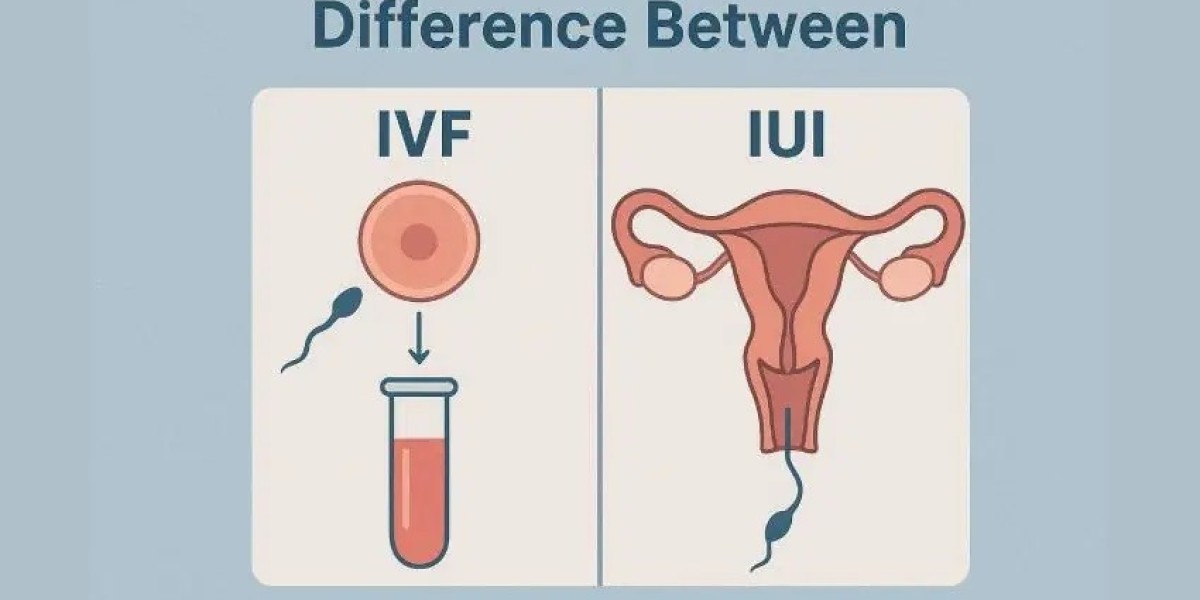

Becoming parents is one of life’s most beautiful dreams — but sometimes, medical challenges can make conception difficult. Thankfully, modern fertility science offers safe, effective, and personalized solutions. Two of the most common treatments helping couples conceive are IUI (Intrauterine Insemination) and IVF (In Vitro Fertilization).
At Kolte Hospital, Ravet, PCMC, Pune, under the expert guidance of Dr Dipak S. Kolte, we help couples understand their fertility journey and choose the treatment best suited to their health, age, and medical background. Whether you’re exploring IUI treatment in Ravet, PCMC or IVF treatment in Pune, this detailed guide will walk you through both options — so you can make an informed, confident choice.
What is Fertility Treatment?
Fertility treatments are medical procedures designed to help couples or individuals conceive when natural conception isn’t happening. These treatments correct issues such as hormonal imbalance, poor egg or sperm quality, blocked tubes, PCOS, or unexplained infertility.
At Kolte Hospital Ravet Pune, fertility care begins with a complete evaluation — hormonal tests, ultrasound scans, semen analysis, and lifestyle assessments. Based on these results, Dr Kolte recommends a personalized plan that could include IUI, IVF, or other assisted reproductive options.
Understanding IUI and IVF – The Basics:
Both IUI and IVF aim to achieve pregnancy, but their process, complexity, and cost differ.
- IUI (Intrauterine Insemination): A simpler, less-invasive treatment where washed and concentrated sperm are placed directly into the uterus during ovulation.
- IVF (In Vitro Fertilization): A more advanced procedure where eggs and sperm are fertilized outside the body in a lab, and the resulting embryo is transferred into the uterus.
Let’s look at each step more closely.
How Does IUI Work?
IUI is often the first-line fertility treatment for couples with mild infertility.
- Ovulation Monitoring: The woman’s cycle is tracked using scans and hormonal tests.
- Semen Preparation: The partner’s semen sample is “washed” to separate the healthiest sperm.
- Insemination: Using a thin catheter, these sperm are gently placed into the uterus around ovulation time.
The procedure takes only a few minutes and feels similar to a routine check-up. At Kolte Hospital, we perform IUI under expert supervision, ensuring maximum comfort and accuracy.
How Does IVF Work?
IVF is recommended when IUI or other basic treatments don’t succeed, or when there are advanced fertility issues.
- Ovarian Stimulation: Hormone injections encourage the ovaries to produce multiple eggs.
- Egg Retrieval: Mature eggs are collected using a minor procedure under anaesthesia.
- Fertilization in the Lab: The eggs are combined with sperm in a controlled environment.
- Embryo Transfer: A healthy embryo is placed in the uterus after 3–5 days of culture.
- Pregnancy Test: A blood test confirms implantation after two weeks.
At Kolte Hospital Fertility Centre, our state-of-the-art IVF lab follows international standards for embryo culture, ensuring high success rates and safe outcomes.
IUI vs IVF: Key Differences Explained
Understanding the main differences between IUI and IVF helps you choose the right treatment
- Complexity – IUI is simpler and less invasive, while IVF involves multiple steps and procedures.
- Success Rate – IVF has higher success rates (40-50% per cycle for women under 35) compared to IUI (10-20% per cycle).
- Cost – IUI is more affordable (₹10,000-₹15,000 per cycle) compared to IVF (₹1.2-₹2.5 lakhs per cycle) in Pune.
- Time Commitment – IUI requires fewer clinic visits, while IVF needs regular monitoring and multiple appointments.
- Invasiveness – IUI is non-surgical and painless, while IVF involves egg retrieval under sedation.
- Where Fertilization Occurs – In IUI, fertilization happens naturally inside the body. In IVF, fertilization occurs in the laboratory.
Who Should Choose IUI?
IUI works best for couples with specific fertility situations:
- Women with unexplained infertility
- Mild male factor infertility (low sperm count or reduced motility)
- Women with cervical mucus problems
- Single women or same-sex couples using donor sperm
- Women with PCOS who need ovulation assistance
- Couples where the female partner is under 35 years old
At Kolte Hospital Ravet, IUI is often combined with ovulation induction and follicular monitoring for higher success.
Who Might Benefit from IVF?
IVF is recommended for more complex fertility challenges:
- Blocked or damaged fallopian tubes
- Severe male infertility (very low sperm count or poor sperm quality)
- Advanced maternal age (over 35-40 years)
- Moderate to severe endometriosis
- Failed IUI attempts (after 3-4 cycles)
- Women with diminished ovarian reserve
- Couples requiring genetic testing of embryos
- Unexplained infertility after other treatments have failed
- Women with PCOS not responding to other treatments
Dr Dipak S. Kolte, one of the best fertility specialists in Ravet and PCMC, tailors each IVF cycle to the patient’s reproductive health, age, and goals.
When Should You Consider Fertility Treatment?
You should consult a fertility specialist if:
- You’ve been trying to conceive for one year without success (if under 35)
- You’ve been trying for six months without success (if over 35)
- You have irregular or absent periods
- You have a history of pelvic infections or endometriosis
- Your partner has known fertility issues
- You’ve experienced multiple miscarriages
- You’re planning to preserve fertility for future use
Early consultation with an experienced fertility doctor like Dr. Dipak S. Kolte in Ravet can identify issues quickly and improve treatment outcomes.
Diagnostic & Evaluation Approach at Kolte Hospital:
We follow a step-by-step diagnostic protocol, including:
- Hormonal and thyroid profiling
- Pelvic and transvaginal ultrasound
- Hysterosalpingography (HSG) for tube patency
- Semen analysis
- Genetic and immunological tests when required
This helps us choose the most effective and least invasive treatment.
Comprehensive Fertility Treatments Offered by Kolte Hospital:
Along with IUI and IVF, Kolte Hospital offers:
- ICSI (Intracytoplasmic Sperm Injection)
- Ovulation Induction Therapy
- Fertility Preservation
- Endometriosis and PCOS Management
- Counselling and Lifestyle Support
Our integrated fertility care ensures that every couple receives emotional, physical, and medical guidance throughout their journey.
Success Rates of IUI vs IVF at Kolte Hospital:
Success depends on factors such as age, ovarian reserve, and underlying conditions.
At Kolte Hospital Ravet Pune, our success rates are:
- IUI: 15 – 25 % per cycle (on average)
- IVF: 45 – 65 % per cycle depending on age and embryo quality
We use advanced imaging, precision timing, and embryo grading to ensure excellent results.
Cost of IUI vs IVF in Pune, PCMC:
Fertility treatments are customized, so costs vary.
- IUI treatment in Pune: ₹8,000 – ₹18,000 per cycle
- IVF treatment in Pune: ₹90,000 – ₹2,50,000+ depending on medications and procedures
At Kolte Hospital, we offer transparent packages for IUI and IVF with no hidden costs, ensuring accessibility and affordability.
Book an Appointment for Fertility Consultation in Ravet, PCMC, Pune:
If you’re facing challenges in conceiving or exploring fertility treatments like IUI or IVF in Pune, reach out to Dr. Dipak S. Kolte at Kolte Hospital, Ravet — your trusted destination for complete reproductive and maternity care. Call us at 7768072072 / 8042755821 Visit our clinic Kolte Hospital, Pearl Residency, Ravet, PCMC, Pune.
At Kolte Hospital Fertility Centre in Pune, we’re committed to helping couples build their families with trust, technology, and compassionate care — because every journey to parenthood deserves expert guidance and emotional support.