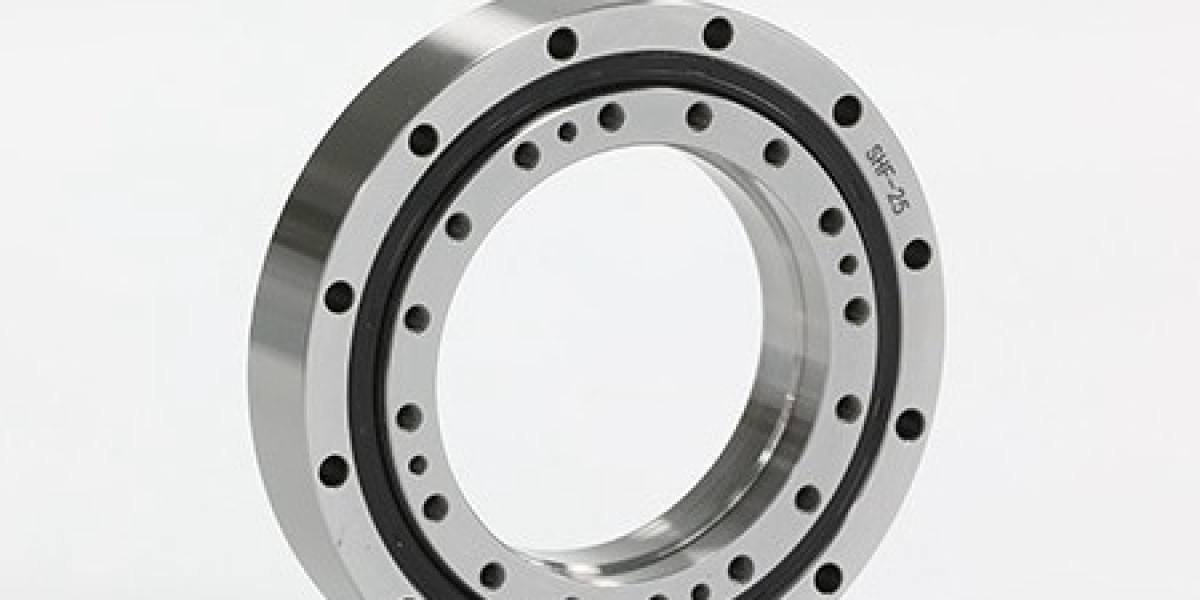

Why Precision Systems Fail When Cross Roller Bearings Can’t Handle the Load
The Hidden Reason Behind Accuracy Loss and Structural Instability
Unexpected vibration, positioning errors, and structural deflection are major challenges in precision-driven systems such as robotics, CNC machines, rotary tables, and inspection equipment. While these issues are often blamed on motors or control systems, the real problem frequently lies in the bearing arrangement.
When a cross roller bearing lacks rigidity or dimensional accuracy, it struggles to support complex loads. This leads to uneven stress distribution, reduced precision, and early mechanical failure—disrupting operations where accuracy is non-negotiable.
Why Cross Roller Bearings Matter in High-Precision Applications
Cross roller bearings are uniquely designed with cylindrical rollers arranged at right angles to each other. This configuration allows a single bearing to handle radial loads, axial loads, and moment loads simultaneously. In compact designs where space is limited but stiffness is critical, this bearing type becomes essential.
However, not all cross roller bearings perform the same. Poor manufacturing tolerances or low-quality materials can reduce rigidity, increase friction, and compromise rotational accuracy—creating performance bottlenecks in high-precision equipment.
Common Problems Caused by Low-Quality Cross Roller Bearings
One of the most common pain points users face is premature wear under combined loading. Bearings with inconsistent roller geometry or improper heat treatment often experience surface fatigue, noise, and increased rotational resistance.
In applications like robotic joints or precision indexing tables, even minimal clearance variation can result in backlash or misalignment. Over time, this degrades repeatability and positioning accuracy, leading to rejected parts, recalibration costs, and production delays.
How a High-Quality Cross Roller Bearing Improves System Rigidity
Choosing a properly engineered cross roller bearing significantly enhances structural stiffness and load stability. Precision-ground rollers, optimized raceway geometry, and controlled internal clearance help distribute loads evenly across the bearing.
This design minimizes elastic deformation under moment loads, ensuring smooth rotation and consistent accuracy. As a result, machines maintain alignment longer, experience less vibration, and operate more efficiently—even under demanding conditions.
Compact Design Without Compromising Performance
Many modern machines require compact components without sacrificing strength or reliability. Cross roller bearings are ideal for these scenarios, replacing multiple bearing arrangements with a single, space-saving solution.
A well-designed cross roller bearing reduces system complexity while maintaining high rigidity. This simplifies installation, improves design flexibility, and lowers the risk of assembly-related errors that can impact performance.
Long-Term Reliability Reduces Total Cost of Ownership
While low-cost bearings may appear attractive initially, they often result in higher long-term expenses due to frequent replacements, downtime, and secondary damage to surrounding components. Precision equipment demands components that perform consistently over extended service periods.
High-quality cross roller bearings deliver longer service life, reduced maintenance intervals, and predictable performance. This reliability translates into stable production schedules, improved product quality, and lower overall operating costs.
Preventing Precision Failure Starts With the Right Bearing Choice
When accuracy, rigidity, and reliability are critical, the bearing selection process cannot be overlooked. A cross roller bearing designed for high-load, high-precision environments ensures smoother motion control, improved load handling, and long-term system stability.
For industries that rely on exact positioning and structural integrity, investing in the right bearing solution is not just a technical decision—it’s a strategic one that protects productivity and performance.