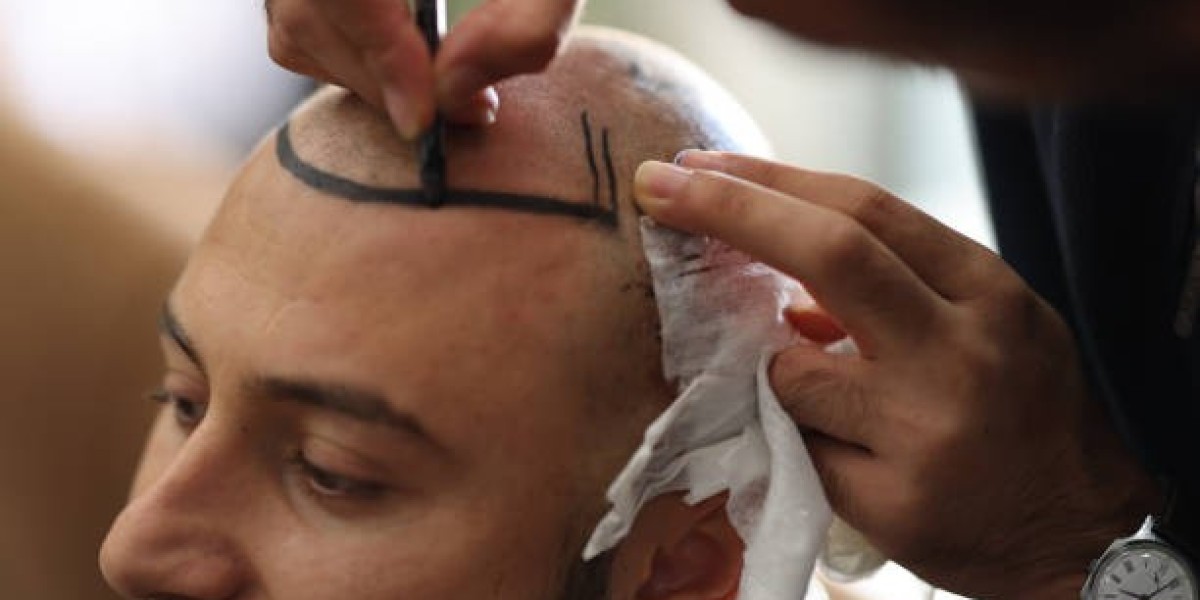

The donor area is a critical aspect of a Hair Transplant in Riyadh (زراعة الشعر في الرياض), as it provides the healthy hair follicles needed for transplantation. Understanding how the donor area is evaluated, prepared, and used ensures patients know what to expect and why this area is essential for achieving natural and long-lasting results. Proper donor hair selection is a key factor in the success of hair restoration.
Why the Donor Area Is Important
The quality, density, and health of the donor hair directly affect the outcome of a hair transplant. A Hair Transplant in Riyadh relies on follicles that are resistant to hair loss, typically located in the back and sides of the scalp. Strong donor hair ensures transplanted areas grow naturally and permanently, making donor evaluation a crucial step before the procedure.
Assessing the Donor Area
Determining Suitability
Before transplantation, specialists carefully examine the donor area to ensure adequate hair supply.
Hair density and thickness are evaluated
Scalp elasticity and skin condition are assessed
Follicle quality is checked to predict long-term growth
Proper assessment guarantees that enough healthy hair is available for effective coverage of thinning or bald areas.
Common Donor Area Locations
Where Hair Is Typically Harvested
Most hair transplants use hair from areas less prone to genetic thinning.
Back of the scalp (occipital region)
Sides of the scalp above the ears
In some cases, body hair may be used if scalp donor hair is limited
These regions provide resilient follicles that continue growing after transplantation.
Techniques for Donor Hair Extraction
FUE and FUT Approaches
Different transplant techniques handle donor hair differently:
FUE (Follicular Unit Extraction): Individual follicles are removed, leaving tiny, barely visible marks
FUT (Follicular Unit Transplantation): A thin strip of scalp is harvested and dissected into grafts, leaving a linear scar
Both methods aim to preserve donor area integrity while supplying sufficient follicles for transplantation.
Care of the Donor Area
Supporting Healing and Comfort
Proper donor area care is essential for minimizing discomfort and promoting healing.
Follow gentle washing and scalp care instructions
Avoid scratching or rubbing the area
Protect the donor site from sun exposure and physical trauma
With proper care, recovery is quick, and scars or marks are minimal.
Impact on Overall Hair Transplant Results
Ensuring Natural-Looking Hair
Healthy donor hair ensures the transplanted area achieves natural density and appearance.
Strong follicles grow consistently over time
Hair integrates seamlessly with existing strands
Long-term results rely on a robust donor area
The quality and quantity of donor hair are directly linked to the success of a Hair Transplant in Riyadh.
Book Your Appointment with Confidence
Royal Clinic Saudia (عيادات رويال كلينك) offers expert evaluation of the donor area and advanced hair transplant procedures to ensure natural, long-lasting results. Book your consultation today to receive personalized guidance and start your journey toward restored hair and confidence.
FAQs:
What is the donor area in a hair transplant?
The donor area is the part of the scalp, usually the back or sides, from which healthy hair follicles are harvested for transplantation.
How is donor hair selected for transplantation?
Specialists assess density, thickness, and follicle health to ensure the best hair is used for natural and long-lasting results.
Does removing hair from the donor area cause scarring?
Minimal scarring occurs, with FUE leaving tiny dot-like marks and FUT leaving a thin linear scar, both usually concealed by surrounding hair.
Can body hair be used as a donor if scalp hair is insufficient?
Yes, in cases with limited scalp donor hair, body hair may be used, though results and texture can vary slightly.