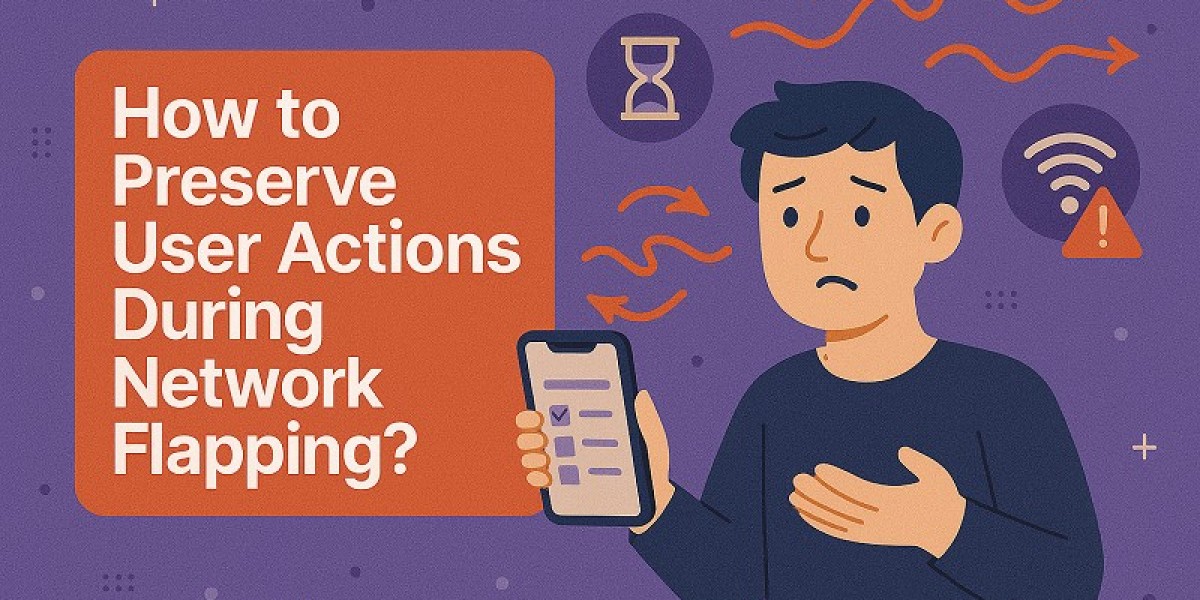

The first time it happened, I was standing on a crowded commuter train, one hand wrapped around a metal pole, the other gripping my phone as the car lurched forward. The signal flickered without warning, bars appearing and disappearing like a nervous tic. I kept tapping, trusting muscle memory more than the screen, assuming the app would sort it out later.
That assumption felt harmless in the moment. People were shifting around me, someone’s backpack brushing my shoulder, the familiar noise of wheels grinding against rails filling the space. I wasn’t thinking about networks or retries. I was thinking about getting home and finishing something before the day slipped away.
That scene comes back to me often when I think about how fragile user actions really are, especially in mobile app development Indianapolis, where real-world movement and unstable connections shape behavior more than any clean diagram ever could.
The Space Between Online and Offline
Network flapping lives in the in-between. It’s not fully offline, not fully connected, and never stable long enough to feel safe. Users don’t see it as a technical state. They feel it as uncertainty.
On that train, I didn’t know whether my last tap had gone through. The app didn’t tell me. It accepted my input with a calm confidence that felt reassuring at first. Still, a few seconds later, the screen refreshed slightly, and I felt that small tightening in my chest that comes when you’re not sure something stuck.
This is where many apps lose people without realizing it. They behave as if connectivity is binary, as if the world politely switches modes and announces the change. Real life doesn’t do that. It wavers, interrupts, and resumes mid-thought.
When Taps Become Promises
Every user action is a promise, even if no one says it out loud. When someone taps a button, types a note, or swipes a card, they are trusting the app to remember that moment. They move on with their life assuming it’s handled.
On the train, I made that promise without thinking. I assumed the app would keep up. When the signal returned briefly, then vanished again, I felt the ground shift under that trust. Nothing broke visibly. Still, something felt unfinished.
Preserving user actions during flapping networks is not about speed. It’s about honoring those promises when conditions refuse to cooperate. Once that trust cracks, people start compensating in quiet ways.
Watching Users Hedge Their Bets
I’ve noticed how people change when they stop trusting the app to remember for them. They slow down. They wait for confirmation screens longer than necessary. They repeat actions just to be sure.
I’ve seen users pause after tapping save, staring at the screen as if waiting for a nod. I’ve done it myself. That pause is not patience. It’s doubt.
On that train ride, I found myself reopening the same screen twice, checking whether my changes were still there. The app hadn’t told me anything was wrong. My behavior told me everything had changed.
The Illusion of Immediate Feedback
Many apps respond instantly to taps, even when the network is unstable. That responsiveness feels good. It creates the impression that everything is fine.
The problem comes later. When the app reconciles what happened during those unstable moments, some actions may be missing, reordered, or quietly undone. The user doesn’t see the process. They only see the outcome.
I’ve learned that instant feedback without durable intent can be misleading. It teaches users to trust the surface while the foundation is still shifting. That gap between appearance and reality is where frustration grows.
Learning to Treat Actions as Stories
At some point, I stopped thinking of user actions as isolated events. I started seeing them as small stories unfolding over time. A tap is not just a tap. It’s the beginning of a narrative that may stretch across minutes, signals, and retries.
On that train, my story was simple. I made a change. I expected it to exist later. The app’s job was not just to accept the input, but to carry that story safely until it could be resolved.
When apps drop actions during network flapping, they interrupt that story mid-sentence. Users are left wondering how it ended, or whether it ended at all.
Designing for Uncertainty Instead of Stability
The biggest shift in my thinking came when I stopped designing for stable connections. Stability is a luxury many users don’t have. Trains, elevators, parking garages, and crowded streets all create environments where the network behaves erratically.
Preserving actions means assuming the worst at the moment of interaction. It means acting as if the connection could disappear right after the tap. That assumption changes everything.
When I started approaching design this way, the app became more patient. It acknowledged actions locally before worrying about the outside world. It treated user intent as something sacred that should never be casually discarded.
The Weight of Deferred Confirmation
One of the hardest parts of this work is deciding when to tell users what’s happening. Too much information feels noisy. Too little feels dishonest.
On the train, I would have appreciated a small sign that my action was safe, even if it wasn’t fully processed yet. Not a warning. Just reassurance that the app remembered.
Deferred confirmation carries emotional weight. It asks users to trust the app over time, not just in the moment. When done well, it feels calm. When done poorly, it feels like silence.
Returning Home to Find What Stayed
That evening, I sat at my desk and opened the app again. The room was quiet, the day finally slowing down. I checked the screen where I had made those changes.
Most of them were there. One wasn’t. I stared at it longer than I should have, replaying the train ride in my head. I tried to remember exactly when I made that change, exactly where the signal dropped.
That’s the cost of losing actions. Users start doing forensic work on their own behavior. They question their memory. They retrace steps that should never need retracing.
What Preservation Really Means
Preserving user actions is not just about storing data locally or retrying requests. It’s about respecting intent across uncertainty. It’s about treating every action as something that deserves protection, even when the environment is hostile.
When apps get this right, users don’t notice. They just keep moving. When apps get it wrong, users carry the burden quietly, adjusting habits without ever filing a complaint.
I’ve learned to measure success by absence. No pauses. No repeated taps. No second-guessing. Just flow, even when the network refuses to cooperate.
Sitting With the Train Ride Afterward
I still ride that train sometimes. I still use apps while the signal flickers in and out. Each time, I notice how different apps respond to uncertainty.
Some feel calm and grounded. Others feel nervous, eager to please but unsure of themselves. The difference is not visible in features. It’s felt in behavior.
Every tap during network flapping is a moment of trust. Preserving those moments means acknowledging the world as it is, not as we wish it to be. When apps learn to do that, they stop fighting reality and start moving with it, one uncertain connection at a time.