
Pharmaceutical Manufacturing Market: Outlook 2025 and Beyond
The Pharmaceutical Manufacturing Market is entering a new era defined by digital transformation, advanced biologics production, and rising global healthcare demand. The industry is expected to witness historic expansion as companies shift toward AI-enabled systems, continuous manufacturing, and next-generation therapeutics.
View Full Research Report@ https://m2squareconsultancy.com/request-sample/pharmaceutical-manufacturing-market/221
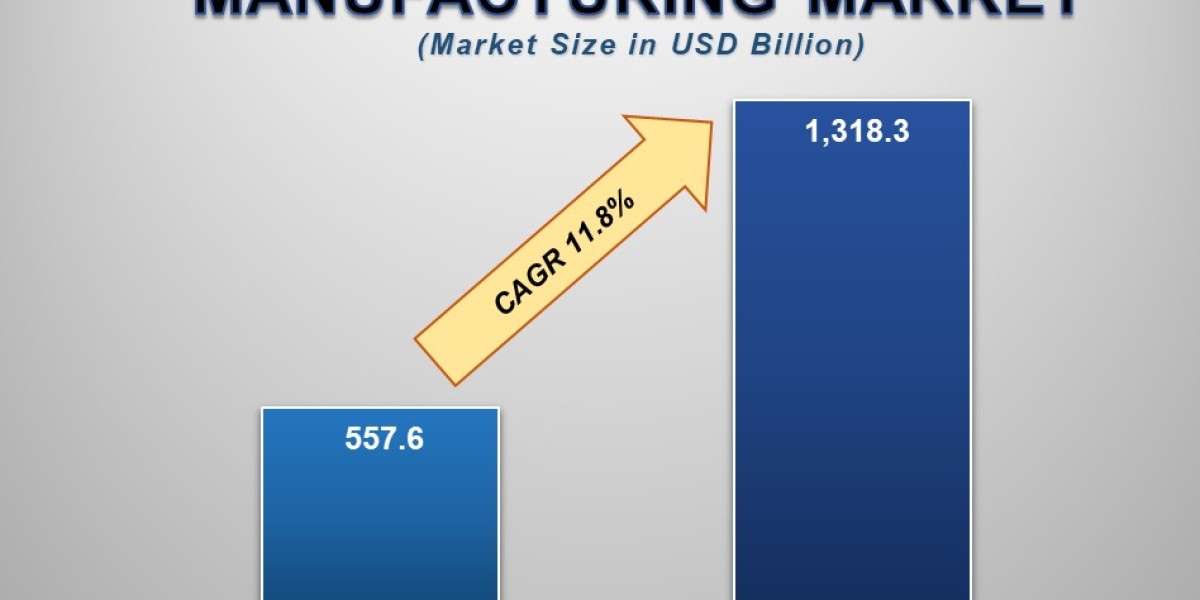
According to recent global estimates, the Pharmaceutical Manufacturing market is projected to grow from USD 557.6 Billion in 2025 to USD 1,318.3 Billion by 2033, registering an impressive CAGR of 11.8%. This growth is fueled by increasing investment in biologics, sustained demand for chronic disease treatment, and the development of personalized and precision medicines.
Market Overview
Pharmaceutical manufacturing encompasses the end-to-end process of drug production from raw material sourcing and formulation to commercialization and quality assurance. Rapid scientific advancements, new regulatory frameworks, and smart factory adoption are reshaping operations across the global supply chain.
Increasing prevalence of chronic diseases such as cancer, diabetes, autoimmune disorders, and cardiovascular conditions continues to drive large-scale drug demand. In parallel, the shift toward biologics, biosimilars, cell & gene therapy and RNA-based medicines is transforming manufacturing methods.
The industry’s modernization is supported by automation, robotics, machine learning, real-time analytics, and continuous processing, all of which are improving production efficiency, lowering costs, and ensuring higher regulatory compliance.
Market Segmentation
- By Drug Type
- Biologics
- Conventional Drugs
- Biosimilars
- Cell & Gene Therapy Products
- Vaccines
- Advanced Therapy Medicinal Products (ATMPs)
- By Formulation
- Tablets
- Capsules
- Injectables
- Topical
- Oral Liquids
- Parenterals
- Inhalation
- By Route of Administration
- Oral
- Intravenous
- Subcutaneous
- Topical
- Inhalation
- Transdermal
- By Manufacturing Type
- Batch Manufacturing
- Continuous Manufacturing
- Contract Manufacturing (CMO/CDMO)
- In-house Manufacturing
- By End User
- Pharmaceutical Companies
- Biotechnology Firms
- Research Laboratories
- Contract Manufacturing Organizations (CMOs)
- Academic & Research Institutes
- By Region
- North America
- Europe
- Asia-Pacific
- Latin America
- Middle East & Africa
Key Market Drivers
- Rising Demand for Biologics and Biosimilars
Growing preference for targeted therapies and increasing R&D investments are accelerating the adoption of biologics, monoclonal antibodies, and biosimilars.
- Expansion of Precision and Personalized Medicine
Customized therapies, including CAR-T cell therapy and gene editing technologies, require specialized manufacturing environments, propelling market growth.
- Increasing Prevalence of Chronic Diseases
Cardiovascular diseases, cancer, diabetes, and autoimmune conditions continue to rise globally, boosting long-term pharmaceutical consumption.
- Technological Advancements in Manufacturing
Automation, robotics, AI-driven analytics, and IoT-enabled manufacturing systems are improving throughput and enhancing quality control.
- Growth in Outsourced Manufacturing
CDMOs are seeing strong demand as pharmaceutical companies seek scalable and cost-efficient manufacturing partners.
- Supportive Regulatory Reforms
Regulatory agencies worldwide are encouraging continuous manufacturing and introducing faster approval pathways for innovative therapies.
Key Market Trends (2025–2033)
- Rise of Continuous Manufacturing
Companies are transitioning from batch processing to continuous systems that ensure higher efficiency, lower waste, and smoother quality checks.
- Smart Factories & Pharma 4.0
AI-based predictive maintenance, digital twins, cloud-integrated workflows, and advanced analytics are becoming standard in modern facilities.
- Growing Dominance of Biopharmaceuticals
Biologics and biosimilars are expected to represent a majority share of global pharmaceutical revenue by 2033.
- Sustainable & Eco-Friendly Manufacturing
Green chemistry, renewable energy usage, and waste-minimization techniques are shaping environmentally responsible production practices.
- Expansion of CDMOs for Specialized Products
From sterile injectables to ATMPs, CDMOs are scaling capabilities to meet growing demand for complex drug manufacturing.
- Increasing Focus on Supply Chain Resilience
Post-pandemic learnings are leading to improved localization, diversified supply chains, and greater inventory transparency.
Leading Companies in the Pharmaceutical Manufacturing Market
- Pfizer Inc.
- Novartis AG
- Johnson & Johnson
- Roche Holding AG
- Sanofi
- Merck & Co., Inc.
- Bristol-Myers Squibb
- GlaxoSmithKline plc (GSK)
- AbbVie Inc.
- AstraZeneca plc
- Boehringer Ingelheim
- Lonza Group
- Catalent, Inc.
- Thermo Fisher Scientific (Patheon)
- Samsung Biologics
These companies are investing heavily in biologics manufacturing capacity, digital infrastructures, and strategic CDMO partnerships.
Future Outlook
Between 2025 and 2033, the Pharmaceutical Manufacturing Market will continue to evolve toward high-precision, flexible production environments. Emerging technologies including AI-integrated QC systems, nanotechnology-based drug formulation, and next-generation biologics will redefine competitiveness.
As global demand for safe, accessible, and advanced therapeutics grows, manufacturers must adopt innovative technologies and expand their capabilities to stay ahead. Continuous processing, sustainable operations, and digital transformation will be central pillars driving success in the next decade.
FAQs (Questions Only)
- What is the growth forecast for the Pharmaceutical Manufacturing Market from 2025 to 2033?
- What factors are driving the increasing demand for biologics and biosimilars?
- How is continuous manufacturing transforming pharmaceutical production?
- What role will AI and automation play in future pharma facilities?
- Which regions are expected to dominate the Pharmaceutical Manufacturing Market?
- What are the major challenges associated with manufacturing biologics?
- Why are pharmaceutical companies increasingly outsourcing to CDMOs?
- How are regulatory trends influencing pharmaceutical manufacturing innovation?
- Which market segment is expected to grow the fastest during the forecast period?
- What emerging technologies will shape pharmaceutical manufacturing by 2033?
Related Report:
https://m2squareconsultancy.com/reports/pharmaceutical-supply-chain-management-market
https://m2squareconsultancy.com/reports/pharmaceutical-analytical-testing-outsourcing-market
https://m2squareconsultancy.com/reports/ophthalmic-surgical-devices-market
Conclusion
The Pharmaceutical Manufacturing Market is undergoing one of the most transformative periods in its history. As demand for biologics, precision therapies, and advanced treatment modalities accelerates, manufacturers are rapidly adopting next-generation technologies such as AI, continuous processing, and smart factory solutions. With global market value expected to surge from USD 557.6 Billion in 2025 to USD 1,318.3 Billion by 2033, the industry is positioned for sustained, long-term expansion.
About m2squareconsultancy :
We are a purpose-driven market research and consulting company passionate about turning data into direction. Founded in 2023, we bring together researchers, strategists, and data scientists who believe that intelligence isn’t just about numbers, it’s about insight that sparks progress.
Contact Us:
Email: sales@m2squareconsultancy.com
Phone (IN): +91 80978 74280
Phone (US): +1 929 447 0100