
Content
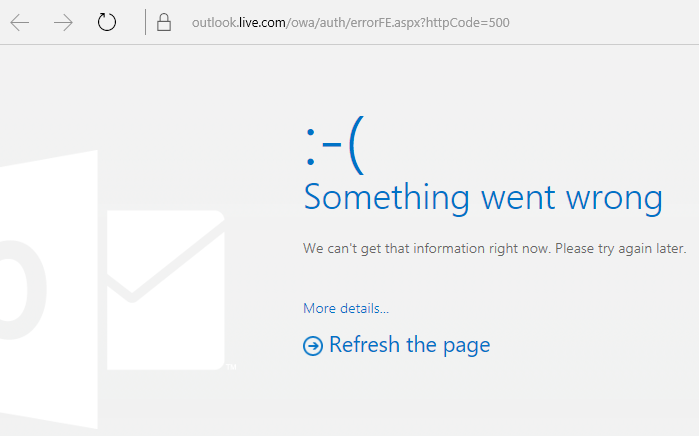
I feel like this issue is getting progressively worse as the fix used to be inbox repair tool alternative clearing the credential manager or if it was bad uninstalling the entire Office Suite, clearing all traces and reinstalling and now we are seeing nothing helping it. Have looked all over and people have all sorts of possible solutions, but nothing we found to resolve the issue and get a new issue daily and just keep going through until it eventually works. Problem doesn’t just happen on PC’s connected to the internal network, but can happen when a laptop is remote and connected via external wifi or mobile hotspot. Today was the first time in about 2 months that I had the issue. It happened right before lunch, locked my machine, went out for lunch, came back, and logged in, this time successfully.
Outlook credential prompt loop
I disabled the Zoom and Adobe PDF plugins and it stopped prompting me immediately. My client’s Outlook will only continuously ask for the password mailbox not updating on IMAP after MFA is enforced and Office.com has been logged in. It would be nice if it distinguished between your password and the app password. You may have to rebuild/restore your outlook folder/files which is a pain. I’d do that one step at a time, forgoing the restore of the cached files. Not sure if it has to do with being an onmicrosoft.com account that has no domain assigned to it.
Loop of 'Sign in to your account'.
Which to me sounds like the issue is service side, not client side. A vast community of Microsoft Office365 users that are working together to support the product and others. I’ve seen this happen when the time and or date is wrong on the machine. It’s not caused by an out of sync MFA prompt as I have personally looked at a number of cases with the user as stepped through it. In each case the fix has either been one of the above items or a combination of them. There doesn’t appear to be any pattern to the issue occurring or the problem being limited to any specific computer or user.
Resetting the Windows Credential Manager:
I have contacted my organization and everything looks alright from their end.. I went as far as getting a new device but it did not cut it. When I try to sign again it will be stuck in sign in loop with the message " Taking you to your organization sign in page" after I have logged in on my company site... When I log in to my account at first from a new device or after a while, it stays signed in and I can work peacefully for about an hour, then it automatically signs me out. Or, any suggestion on how to fix this issue, even repair corrupted OST in Outlook better. I do NOT have this issue with the other laptop, an iPad, a MacBook Pro and tablet.
- Unfortunately when the problem occurs they’ve asked us to ring straight away but of course you can never get them instantly (we’ve just been given someone’s direct number now).
- This is now the 2nd machine that presents the same issue.
- There doesn’t appear to be any pattern to the issue occurring or the problem being limited to any specific computer or user.
- I disabled the Zoom and Adobe PDF plugins and it stopped prompting me immediately.
- I’d do that one step at a time, forgoing the restore of the cached files.
- I have contacted my organization and everything looks alright from their end..
Changing Outlook Security Settings:
Hi, my office 365 account used to work with my desktop apps, I have confirmed with my admin system twice already that I have the appropriate license and everything is enabled but i keep getting stuck in this loop. We are looking at using conditional access policies where a user with a Domain joined PC is not prompted for MFA. Right now we have it set to prompt when a user is not on any of our corporate networks or they are using a mobile device. The user had Office 2015 and Office 2016 credentials and Teams credentials that we deleted. We checked with Word that the account was connected–it was and the we opened Outlook and it immediately connected. We too have been seeing this more and more, all W10 on O365, although we use Okta as our MFA.