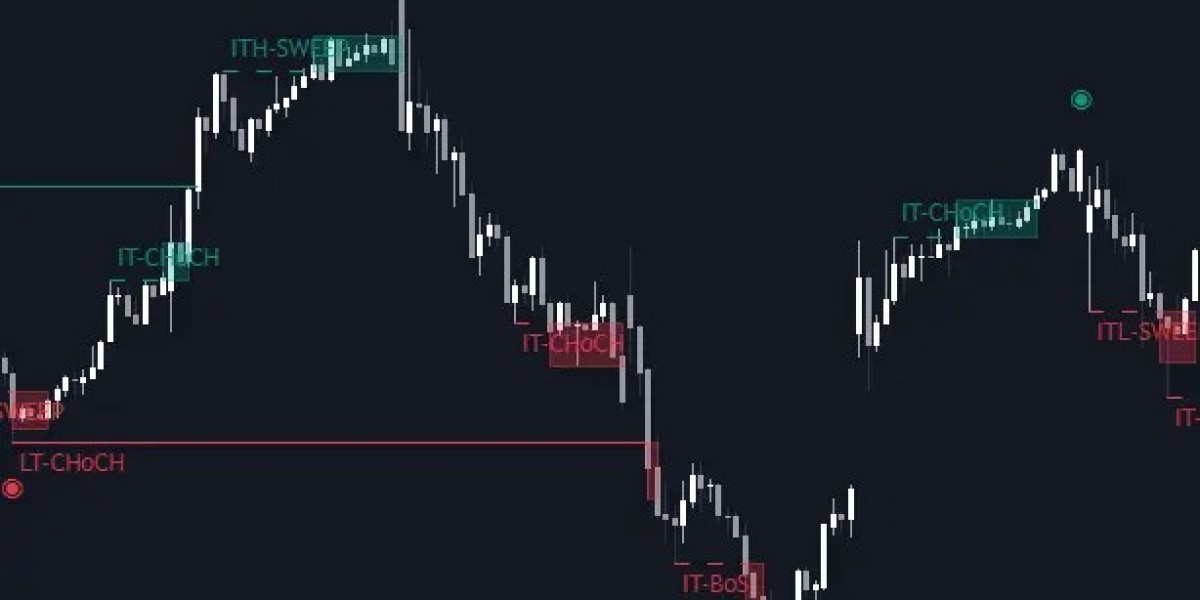

Combining LuxAlgo with RSI and MACD
Introduction
Traders looking to refine their strategies often combine multiple technical indicators to improve accuracy and reduce false signals. LuxAlgo, when integrated with RSI (Relative Strength Index) and MACD (Moving Average Convergence Divergence), creates a powerful system for identifying trends, momentum, and potential reversals. Using a luxalgo promo code provides access to premium features, enabling seamless integration and enhanced customization of LuxAlgo signals alongside these classic indicators. This article explores how to effectively combine LuxAlgo with RSI and MACD to boost trading performance and make informed decisions.
Integrating these indicators allows traders to confirm signal strength, identify market momentum, and optimize entry and exit points for crypto, forex, and stock trading.
Understanding LuxAlgo Signals
Key Components
Buy/Sell Signals: Generated algorithmically to indicate high-probability trading opportunities.
Trend Strength Indicators: Provide insight into the current market trend and momentum.
Multi-Timeframe Analysis: Confirms signals across multiple timeframes to reduce false signals.
Benefits
Enhances precision in trade selection.
Offers visual clarity for better decision-making.
Provides flexibility for different trading styles, from day trading to swing trading.
Introduction to RSI and MACD
Relative Strength Index (RSI)
Measures the speed and change of price movements.
Ranges from 0 to 100; typically, values above 70 indicate overbought conditions, while values below 30 indicate oversold conditions.
Useful for spotting potential reversals or continuation of trends.
Moving Average Convergence Divergence (MACD)
Shows the relationship between two moving averages (usually 12-period EMA and 26-period EMA).
The MACD line and signal line generate buy or sell signals through crossovers.
Histogram bars indicate momentum and strength of the trend.
Combining LuxAlgo with RSI and MACD
Step 1: Chart Setup
Open TradingView and add LuxAlgo indicators to your desired charts.
Apply RSI and MACD indicators to the same chart for confirmation.
Adjust colors and styles to differentiate between each indicator clearly.
Step 2: Confirming LuxAlgo Signals with RSI
When LuxAlgo issues a buy signal, check if RSI is rising but not overbought (below 70).
When LuxAlgo issues a sell signal, ensure RSI is falling but not oversold (above 30).
This helps avoid entering trades during extreme market conditions that may result in reversals.
Step 3: Using MACD for Momentum Confirmation
Confirm LuxAlgo buy signals when the MACD line crosses above the signal line.
Confirm sell signals when the MACD line crosses below the signal line.
Check MACD histogram for increasing momentum in the signal’s direction.
Step 4: Multi-Timeframe Confirmation
Use LuxAlgo’s multi-timeframe analysis to ensure signals align across short-term and long-term charts.
Combine RSI and MACD readings from different timeframes to strengthen confidence in entries and exits.
Mid-Content Points: Best Practices for Integration
Align Signals: Only act on trades where LuxAlgo, RSI, and MACD agree.
Avoid Overtrading: Ignore signals during consolidation or range-bound conditions.
Set Alerts: Use LuxAlgo alerts and add RSI/MACD conditions for timely notifications.
Optimize Indicator Settings: Adjust RSI period and MACD EMAs to suit your trading style.
Monitor Market Context: Consider news and volatility alongside technical indicators.
Advanced Strategies
Divergence Trading
Look for RSI divergence (price makes a new high, RSI does not) to anticipate reversals.
Use LuxAlgo signals to confirm potential entry points when divergence is detected.
MACD crossovers can further validate the trade direction.
Pullback Entries
Identify LuxAlgo buy signals during minor pullbacks in an uptrend.
Confirm with RSI trending upwards but not overbought.
Check MACD histogram for positive momentum to ensure a strong trend continuation.
Combining Multiple Assets
Apply the same LuxAlgo, RSI, and MACD integration across multiple charts for portfolio management.
Track high-probability setups efficiently across crypto, forex, or stock assets.
Common Mistakes to Avoid
Ignoring conflicting signals between LuxAlgo, RSI, and MACD.
Entering trades when RSI is in extreme zones without considering trend strength.
Relying solely on LuxAlgo signals without validating momentum with MACD.
Using default settings for all market conditions; adjust parameters for volatility.
Overcomplicating charts with excessive indicators that create visual noise.
Avoiding these mistakes ensures that the combination of LuxAlgo, RSI, and MACD leads to more accurate and reliable trades.
Practical Use Cases
Day Trading
Track crypto or forex pairs on 5-minute or 15-minute charts.
Enter trades only when LuxAlgo, RSI, and MACD align.
Set short-term profit targets and stop-loss levels to manage risk.
Swing Trading
Use daily and 4-hour charts for medium-term trends.
Confirm LuxAlgo signals with RSI and MACD across multiple timeframes.
Capture trends with strong momentum for higher probability trades.
Portfolio Management
Monitor multiple assets using dashboards with LuxAlgo, RSI, and MACD integration.
Identify the strongest trends across different markets for strategic allocation.
Quickly assess which positions are ready for entry or require caution.
Conclusion
Combining LuxAlgo with RSI and MACD enhances trading precision by integrating trend signals, momentum, and overbought/oversold conditions into one cohesive strategy. This approach allows traders to filter false signals, confirm high-probability setups, and make informed decisions across multiple timeframes. Implementing best practices such as aligning signals, monitoring momentum, and avoiding overtrading ensures optimal performance. Accessing premium features using a luxalgo promo code enables advanced customization and alerts, maximizing the effectiveness of this combined approach. By leveraging LuxAlgo with RSI and MACD, traders can improve accuracy, reduce risk, and increase confidence in their trades across crypto, forex, and stock markets.