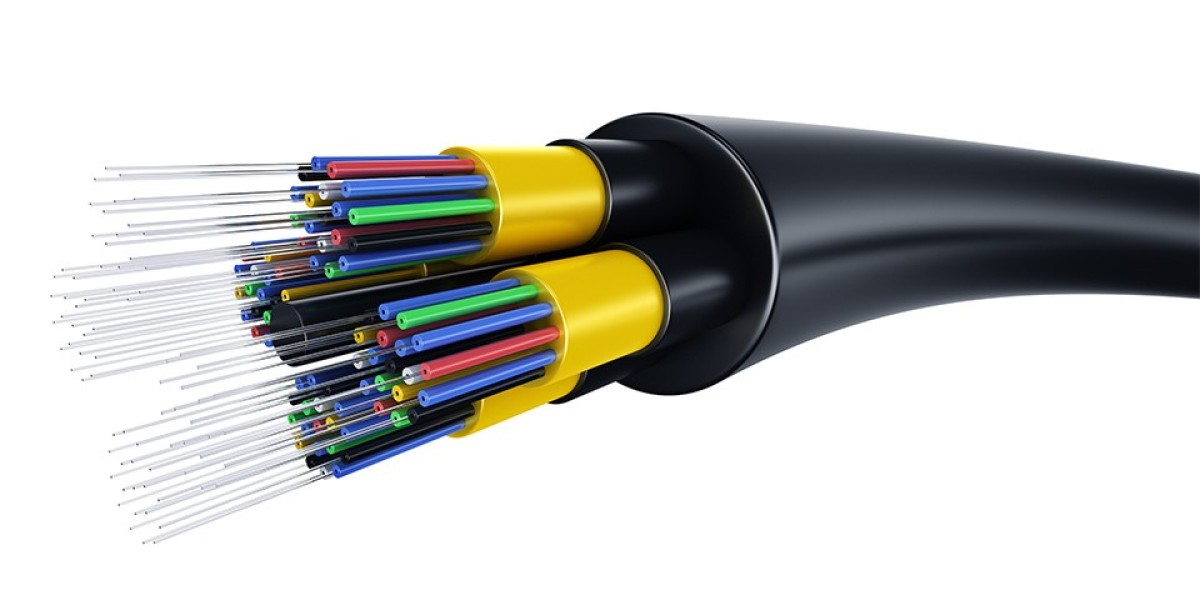

Grasping the immense scale of the global communications build-out requires a clear understanding of its core components. Quantifying the Fiber Optic Cable Market Size is a critical exercise for investors, manufacturers, and policymakers, as it provides a tangible measure of the investment being poured into the world's digital backbone. This metric, typically valued in billions of dollars, represents the total annual revenue generated from the sale of all types of fiber optic cables globally. It is a direct indicator of the pace of network expansion and modernization, reflecting the deployment of new mobile networks, the growth of cloud infrastructure, and the extension of high-speed internet to new communities. Understanding the market size and its projected growth allows stakeholders to gauge the industry's health, forecast future demand for raw materials and labor, and make strategic decisions about production capacity and regional investment priorities.
The distribution of the market size by region reveals a clear global hierarchy of investment and deployment. The Asia-Pacific (APAC) region currently represents the largest market segment by a significant margin. This dominance is propelled by China's colossal national infrastructure projects, India's "Digital India" campaign, and aggressive 5G and FTTH rollouts across countries like Japan, South Korea, and Australia. These nations are investing heavily in future-proofing their economies, creating massive demand for fiber optic cable. North America follows as the second-largest market, characterized by ongoing upgrades to existing telecom networks, significant private investment from hyperscale cloud providers building out their data center footprints, and substantial federal funding aimed at deploying broadband to rural and underserved areas. Europe also holds a major share, with strong, state-supported initiatives focused on achieving gigabit connectivity for all citizens, driving consistent demand for network densification and expansion.
Breaking down the market size by application provides further insight into where the investment is flowing. The telecommunications sector remains the dominant application, consuming the largest volume of fiber optic cable for long-haul, metropolitan, and access networks, including the crucial backhaul infrastructure for 5G. However, the fastest-growing application segment is data centers. The explosive growth of cloud computing, AI, and big data has led to the construction of massive hyperscale data centers, all of which require vast quantities of high-density fiber for internal server-to-server communication (east-west traffic) and for connecting to the global network (north-south traffic). The Fiber Optic Cable Market is likely to Reach from USD 18.41 Billion to 65.31 Billion by 2035, Growing at a CAGR of 13.5% During the Forecast Period 2025 - 2035. Other significant segments include cable television (CATV) providers upgrading their hybrid fiber-coaxial networks and the industrial sector using fiber for robust control networks.
Several key factors collectively contribute to the substantial and growing market size. Paramount among these is the unceasing global demand for more bandwidth, driven by data-intensive activities like 4K/8K video streaming, online gaming, and the proliferation of connected devices. Government investment is another critical pillar; national broadband plans and infrastructure stimulus packages worldwide are injecting billions of dollars directly into fiber deployment projects. Private investment from telecommunication carriers, cable companies, and tech giants like Google, Amazon, and Microsoft is equally crucial, as these entities race to build out their networks to gain a competitive advantage and support their expanding service portfolios. The synergy between public policy promoting universal access and private enterprise seeking to capitalize on digital service delivery creates a powerful, sustained engine for market growth.
Explore Our Latest Trending Reports:
Outbound Call Tracking Software Market Size