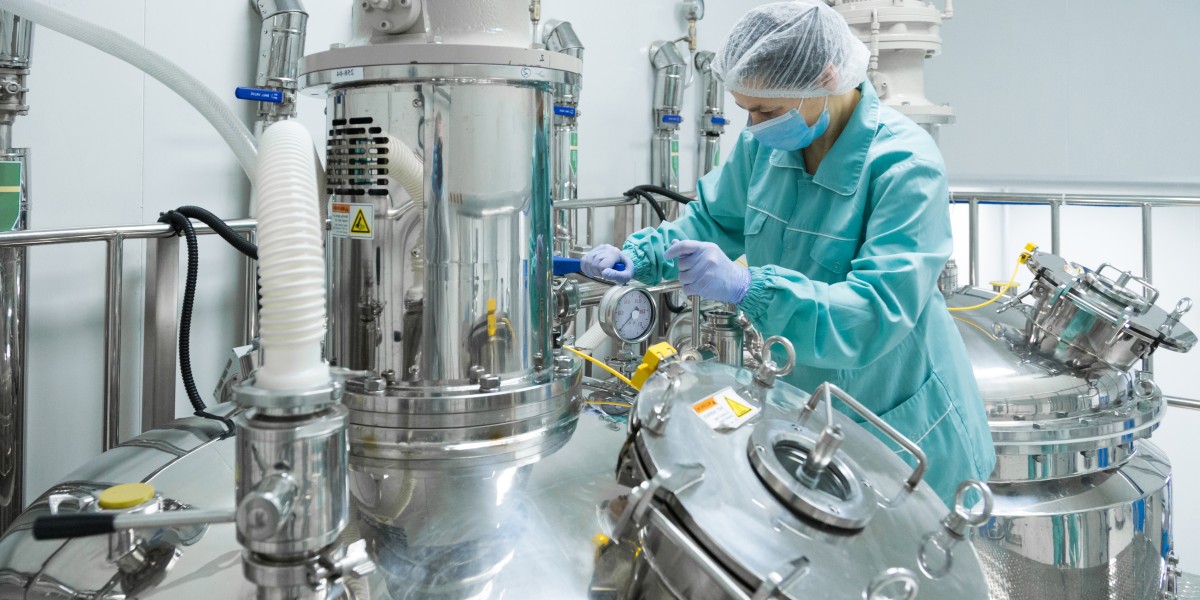

Single-Use Bioreactor Market: Comprehensive Overview, Growth Drivers, Key Segments, and Leading Companies
The Single-Use Bioreactor Market is one of the fastest-growing segments in the biopharmaceutical and biotechnology industries. According to the latest industry analysis, the global single-use bioreactor market size is expected to grow from approximately USD 3.8 billion in 2025 to USD 10.5 billion by 2033, registering a robust compound annual growth rate (CAGR) of 13.7% during the forecast period.
This impressive expansion reflects the industry-wide shift from traditional stainless-steel bioreactors to flexible, cost-effective, and contamination-resistant single-use systems. In this in-depth guide, we explore market dynamics, key growth drivers, major segments, leading companies, regional insights, and future trends that will shape the single-use bioreactor market through 2033.
For further reading, visit.https://m2squareconsultancy.com/reports/single-use-bioreactor-market
What is a Single-Use Bioreactor and Why Does It Matter?
A single-use bioreactor (SUB) is a disposable bioprocessing vessel made of plastic (usually high-grade polymer films) that eliminates the need for cleaning and sterilization between batches. These systems come pre-sterilized and ready-to-use, dramatically reducing turnaround time, cross-contamination risk, and capital expenditure.
Key advantages driving adoption include:
- Reduced cleaning validation and water-for-injection (WFI) costs
- Faster batch-to-batch changeover (often <24 hours)
- Lower risk of product contamination
- Flexibility for multi-product facilities
- Smaller facility footprint and lower upfront investment
These benefits make single-use bioreactors ideal for manufacturing monoclonal antibodies (mAbs), cell & gene therapies, vaccines, and recombinant proteins.
Key Market Drivers Fueling 13.7% CAGR Growth
Several macro and micro trends are accelerating single-use bioreactor market expansion:
- Booming Demand for Biologics & Biosimilars – The global biologics market is projected to exceed $750 billion by 2030, pushing CDMOs and pharma companies toward scalable, flexible production platforms.
- Rapid Growth in Cell & Gene Therapy – Over 30 cell and gene therapy products are already approved, with more than 2,000 clinical trials ongoing. Single-use systems are the default choice due to small batch sizes and high contamination concerns.
- Vaccine Production Surge Post-COVID – The pandemic highlighted the speed advantage of single-use platforms (e.g., Pfizer-BioNTech and Moderna vaccines relied heavily on SUBs).
- Cost & Sustainability Pressure – While plastic waste remains a concern, many suppliers now offer recyclable or biodegradable films and closed-loop recycling programs.
- Shift Toward Continuous Manufacturing & Process Intensification – Single-use bioreactors integrate seamlessly with perfusion and intensified fed-batch processes.
Single-Use Bioreactor Market Segmentation
By Product Type
- Stirred-tank single-use bioreactors (75%+ market share in 2024)
- Wave-induced motion bioreactors
- Orbitally shaken bioreactors
- Bubble column bioreactors
- Fixed-bed and fluidized-bed systems
By Cell Type
- Mammalian cells (largest and fastest-growing segment)
- Bacterial cells
- Yeast cells
- Insect cells
- Plant cells
By Application
- Monoclonal antibody production
- Vaccine manufacturing
- Cell & gene therapy
- Recombinant protein production
- Research & development
By Molecule Type
- Proteins & antibodies
- Vaccines
- Gene-modified cells
- Others
By End User
- Biopharmaceutical manufacturers
- Contract development & manufacturing organizations (CDMOs)
- Academic & research institutes
By Region
- North America (∼42% revenue share in 2024)
- Europe
- Asia-Pacific (fastest-growing region due to new facilities in China, South Korea, Singapore, and India)
- Latin America & Middle East & Africa
Top Companies Dominating the Single-Use Bioreactor Market
The market is moderately consolidated, with a mix of established life-science giants and specialized single-use technology providers:
- Sartorius AG – Market leader with the Biostat® STR and RM series; strong focus on fully integrated single-use process trains.
- Thermo Fisher Scientific – HyPerforma™ DynaDrive and S.U.B. lines; extensive global service network.
- Danaher (Cytiva) – Xcellerex™ XDR and ReadyToProcess WAVE™; dominant in wave-mixed systems.
- Merck KgaA (MilliporeSigma) – Mobius® bioreactor family (3 L to 3000 L); strong in Asia-Pacific.
- Eppendorf AG – BioBLU® single-use vessels; popular in R&D and scale-up labs.
- Getinge (Applikon Biotechnology) – Appliflex and single-use stirred-tank systems.
- PBS Biotech, OmniBRx, ABEC, Distek, and Cellexus – Emerging players gaining traction with innovative designs.
- Adva Biotechnology, PerfuseCell, and Iprasense – Niche players focusing on perfusion and process analytical technology (PAT).
Regional Insights & Growth Hotspots
- North America remains the largest market due to the presence of major biopharma hubs (Boston, San Francisco, San Diego) and early adoption of advanced therapies.
- Asia-Pacific is the fastest-growing region (CAGR >16%) driven by massive capacity expansions in China (WuXi AppTec, Boan Biotech), South Korea (Samsung Biologics), and Singapore.
- Europe maintains strong growth supported by EMA’s favorable regulatory environment and sustainability initiatives.
Challenges Facing the Single-Use Bioreactor Market
Despite strong growth, a few hurdles remain:
- Extractables & leachables (E&L) concerns
- Plastic waste and environmental scrutiny
- Limited scalability beyond 2000–3000 L for some systems
- Supply-chain disruptions for high-grade polymer films
Leading vendors are addressing these through next-generation films (fluoropolymer-free), closed-loop recycling partnerships, and hybrid stainless-steel/single-use facilities.
Future Trends to Watch
- Larger working volumes (3000 L–6000 L) becoming commercially viable
- Integration of automation, PAT, and AI-driven process control
- Biodegradable and recyclable single-use plastics
- Micro-bioreactors and high-throughput systems for cell therapy personalization
- Intensified and continuous bioprocessing as standard practice
Conclusion
The single-use bioreactor market is poised for explosive growth, rising from USD 3.8 billion in 2025 to USD 10.5 billion by 2033 at a CAGR of 13.7%. This transformation is fueled by the global demand for biologics, cell & gene therapies, and vaccines, combined with the unmatched flexibility and cost-efficiency of disposable systems.
For biopharmaceutical companies and CDMOs looking to stay competitive, investing in single-use bioreactor technology is no longer optional—it’s a strategic imperative.
Access helpful guides here.https://m2squareconsultancy.com/request-sample/single-use-bioreactor-market/146
About m2squareconsultancy :
We are a purpose-driven market research and consulting company passionate about turning data into direction. Founded in 2023, we bring together researchers, strategists, and data scientists who believe that intelligence isn’t just about numbers, it’s about insight that sparks progress.
We cater to a wide range of industries by delivering customized solutions, strategic insights, and innovative support that help organizations grow, adapt, and lead in their respective sectors. Here’s a brief overview of key industries we work with.
Contact Us:
Email: sales@m2squareconsultancy.com
Phone (IN): +91 80978 74280
Phone (US): +1 929 447 0100
More Report:
https://m2squareconsultancy.com/reports/organic-personal-care-products-market
https://m2squareconsultancy.com/reports/portable-power-station-market
https://m2squareconsultancy.com/reports/power-transformer-market
https://m2squareconsultancy.com/reports/renewable-energy-market
https://m2squareconsultancy.com/reports/artificial-sweeteners-market
https://m2squareconsultancy.com/reports/blister-packaging-market
https://m2squareconsultancy.com/reports/health-and-wellness-snacks-market
https://m2squareconsultancy.com/reports/fruit-and-vegetable-pulp-market
https://m2squareconsultancy.com/reports/dehydrated-vegetables-market
https://m2squareconsultancy.com/reports/spiritual-and-wellness-products-market
https://m2squareconsultancy.com/reports/portable-ultrasound-devices-market
https://m2squareconsultancy.com/reports/ophthalmic-lenses-market
https://m2squareconsultancy.com/reports/fecal-immunochemical-diagnostic-test-market
https://m2squareconsultancy.com/reports/sports-medicine-market
https://m2squareconsultancy.com/reports/wearable-medical-devices-market
https://m2squareconsultancy.com/reports/global-energy-drinks-market
https://m2squareconsultancy.com/reports/std-diagnostics-market
https://m2squareconsultancy.com/reports/oncology-drugs-market
https://m2squareconsultancy.com/reports/ultomiris-drug-market
https://m2squareconsultancy.com/reports/sustainable-pharmaceutical-packaging-market
https://m2squareconsultancy.com/reports/syringe-infusion-pumps-market
https://m2squareconsultancy.com/reports/local-anesthesia-drugs-market
https://m2squareconsultancy.com/reports/hospital-acquired-infections-diagnostics-market