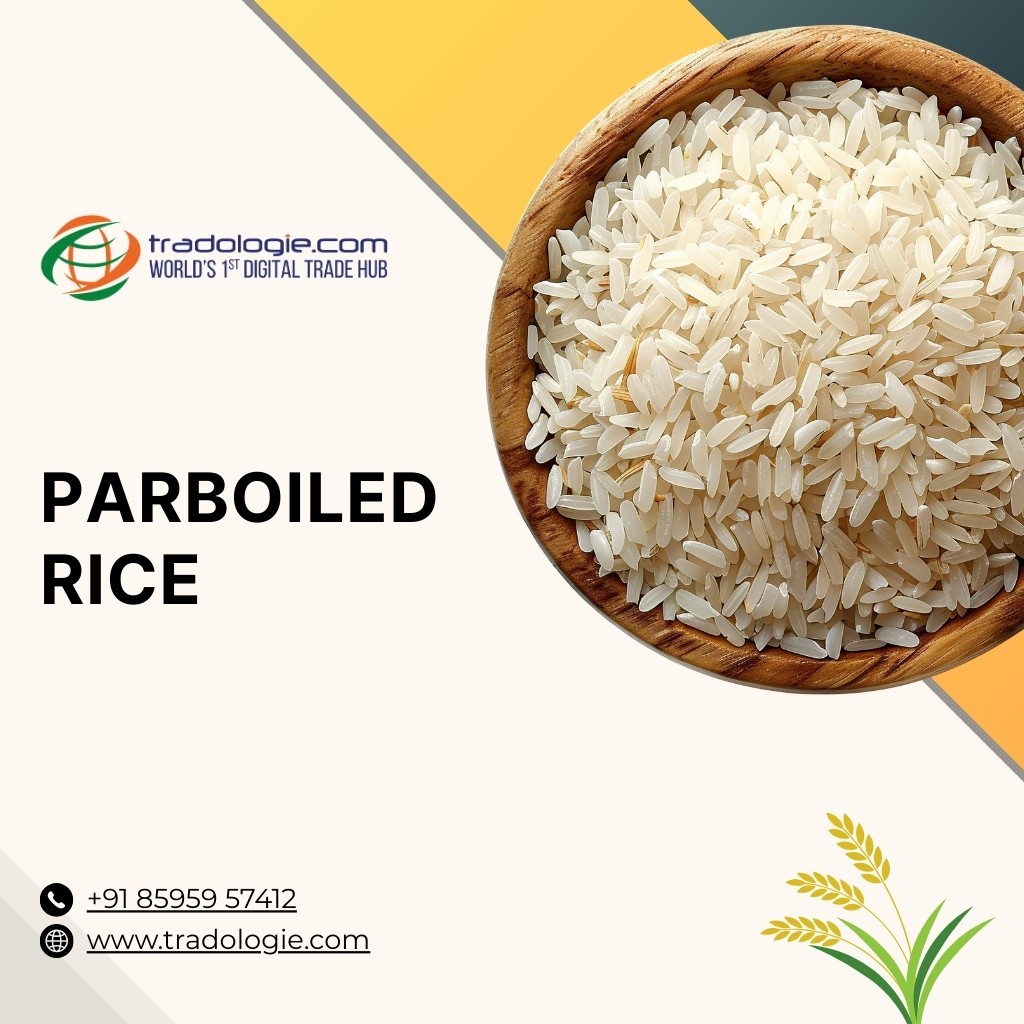
𝗣𝗮𝗿𝗯𝗼𝗶𝗹𝗲𝗱 𝗥𝗶𝗰𝗲 𝗶𝗻 𝗚𝗹𝗼𝗯𝗮𝗹 𝗧𝗿𝗮𝗱𝗲: 𝗣𝗿𝗼𝗰𝗲𝘀𝘀𝗶𝗻𝗴, 𝗗𝗲𝗺𝗮𝗻𝗱, 𝗮𝗻𝗱 𝗕𝟮𝗕 𝗦𝘂𝗽𝗽𝗹𝘆 𝗗𝘆𝗻𝗮𝗺𝗶𝗰𝘀
Parboiled rice plays a critical role in the global food supply chain, particularly in high-volume, efficiency-driven markets. Unlike raw or white rice, parboiled rice is processed at the paddy stage through a controlled soaking, steaming, and drying process before milling. This early-stage treatment changes the grain’s internal structure, resulting in stronger kernels that are less prone to breakage during milling, storage, and transportation.
𝗩𝗶𝘀𝗶𝘁:- https://www.tradologie.com/lon....g-grain-rice/parboil
Why Parboiled Rice Is Preferred in Bulk Trade
In B2B food trade, parboiled rice is valued more for performance than appearance. The parboiling process improves grain hardness and nutrient retention, leading to higher milling recovery and more consistent cooking results. These attributes make it a preferred option for buyers who prioritize yield, stability, and repeatability over visual uniformity.
Key trade advantages include:
Higher resistance to breakage during handling
Better shelf stability in varied climatic conditions
Consistent cooking quality for large-scale food preparation
Improved milling output compared to raw rice
Because of these factors, parboiled rice is widely adopted in markets where logistics efficiency and cost control are critical.
Supply Channels and Volume Movement
Parboiled rice typically moves through large-scale institutional and wholesale supply chains. These include public distribution systems, food aid programs, catering contractors, and bulk commodity traders. Such channels are designed around volume, predictability, and long-term contracts rather than retail branding.
Transactions in this segment often involve:
Containerized or bulk shipments
Standardized quality specifications
Long-term sourcing agreements
Repeat orders with consistent grade requirements
This makes parboiled rice a stable commodity within structured procurement systems.
Buyer Focus in Online and Digital Sourcing
When buyers source parboiled rice through digital B2B platforms, the discussion is highly practical. Decision-making revolves around specifications such as grain length, moisture content, broken percentage, and packaging options. Equal importance is given to the supplier’s ability to manage logistics smoothly and deliver consistent quality across multiple shipments.
Buyers commonly evaluate:
Technical specifications and compliance
Supply capacity and shipment timelines
Export readiness and documentation support
Reliability of repeat supply
These factors often outweigh pricing alone, especially for institutional and import-dependent buyers.
Export Demand Across Import-Dependent Markets
Parboiled rice exports remain steady due to strong demand from regions with limited domestic rice production or high consumption needs. Markets across Africa, the Middle East, and parts of Asia rely on parboiled rice for its durability, affordability, and suitability for mass consumption programs.
For exporters, this creates sustained, volume-driven opportunities supported by predictable demand cycles and established trade routes.
Conclusion
Parboiled rice is a cornerstone commodity in global rice trade, defined by consistency, scalability, and logistical efficiency. Its processing advantages, combined with strong institutional demand, make it a reliable product for both buyers and sellers operating in bulk and export-oriented markets. In a B2B environment where supply continuity and performance matter most, parboiled rice continues to hold a strong and dependable position.