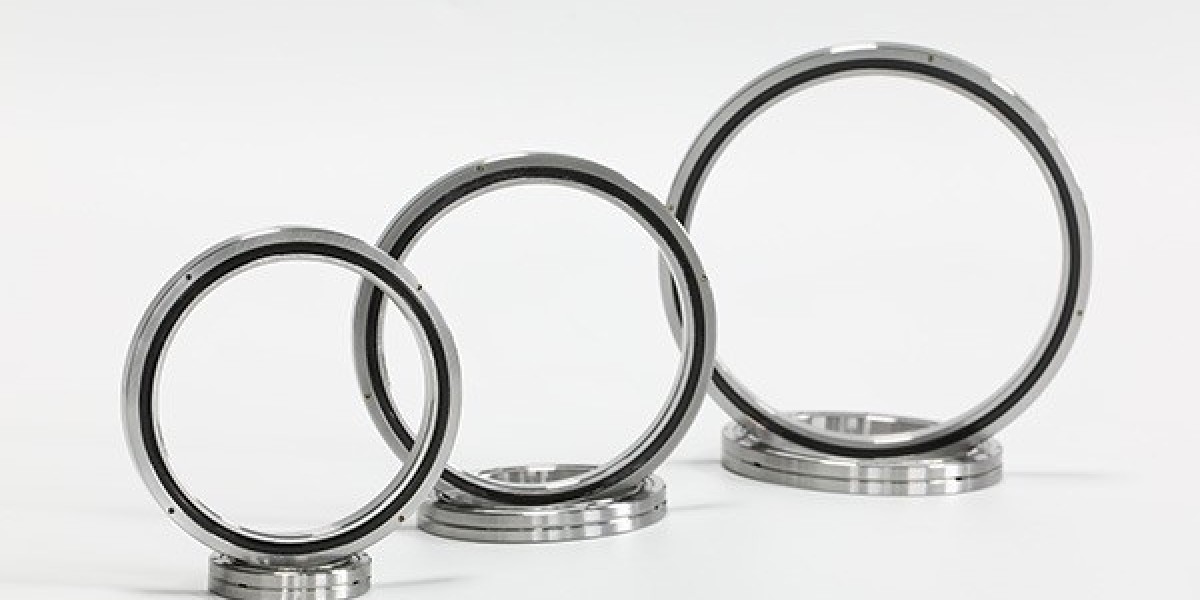

Precision machinery often demands high rigidity, accurate positioning, and smooth rotation—but achieving all three is not always easy. Many manufacturers struggle with installation difficulty, misalignment, and inconsistent accuracy when using rigid, non-flexible bearing structures. These issues increase setup time, cause vibration, and reduce overall machine performance. Choosing the right RA cross roller bearing can significantly reduce these problems while maintaining high precision.
Why Traditional Bearing Structures Create Installation Challenges
Difficult Alignment During Assembly
One-piece bearing designs often require extremely tight housing and shaft tolerances. Even small installation errors can lead to uneven load distribution, affecting rotational accuracy and bearing life.
Limited Flexibility for Maintenance
When bearings are difficult to mount or remove, maintenance becomes time-consuming. This leads to longer downtime and higher servicing costs, especially in precision equipment.
Accuracy Degradation Over Time
Misalignment and uneven stress increase internal wear, causing gradual accuracy loss, vibration, and noise during operation.
How RA Cross Roller Bearing Improves Assembly and Performance
Separable Outer Ring Design
An RA cross roller bearing features a separable outer ring structure that simplifies installation and alignment. This design allows easier mounting without sacrificing rigidity or accuracy.
Multi-Directional Load Support
With cylindrical rollers arranged orthogonally, the bearing can support radial, axial, and moment loads simultaneously. This makes it suitable for compact systems under complex force conditions.
High Rigidity with Precise Rotation
Despite its separable structure, the RA bearing maintains high rigidity. Precision-ground raceways ensure smooth rotation and stable positioning under load.
Key Design Features That Enhance Reliability
Orthogonal Roller Arrangement
The crossed roller layout distributes loads evenly across the raceway, reducing localized stress and improving fatigue resistance.
Preload Options for Zero Backlash
Preloaded RA cross roller bearings eliminate internal clearance, ensuring high stiffness and accurate motion control—critical for precision positioning systems.
Compact and Space-Saving Structure
The slim profile allows designers to reduce machine size while maintaining load capacity and rotational accuracy.
RA Cross Roller Bearing vs Integrated Bearing Designs
Integrated bearing designs offer rigidity but can complicate installation and maintenance. In contrast, an RA cross roller bearing balances precision with flexibility. Its separable outer ring simplifies assembly while delivering the rigidity and accuracy required for high-performance applications. This results in faster setup, easier servicing, and lower long-term ownership costs.
Applications That Benefit from RA Cross Roller Bearings
RA cross roller bearings are commonly used in:
CNC rotary tables and indexing units
Precision positioning stages
Industrial robot joints
Measuring and inspection equipment
Machine tool components
These applications demand precise rotation, stable load handling, and ease of assembly—key strengths of the RA bearing design.
Selecting the Right Bearing for Precision Systems
When choosing an RA cross roller bearing, engineers should consider load magnitude, moment load requirements, installation conditions, and accuracy targets. Working with an experienced bearing supplier ensures consistent quality, accurate specifications, and technical support throughout the equipment lifecycle.
Conclusion
Precision does not have to come with complexity. By selecting a high-quality RA cross roller bearing, manufacturers can reduce installation errors, maintain high rigidity, and achieve long-term positioning accuracy. For precision machinery where performance and serviceability both matter, this bearing design offers a practical and reliable solution.