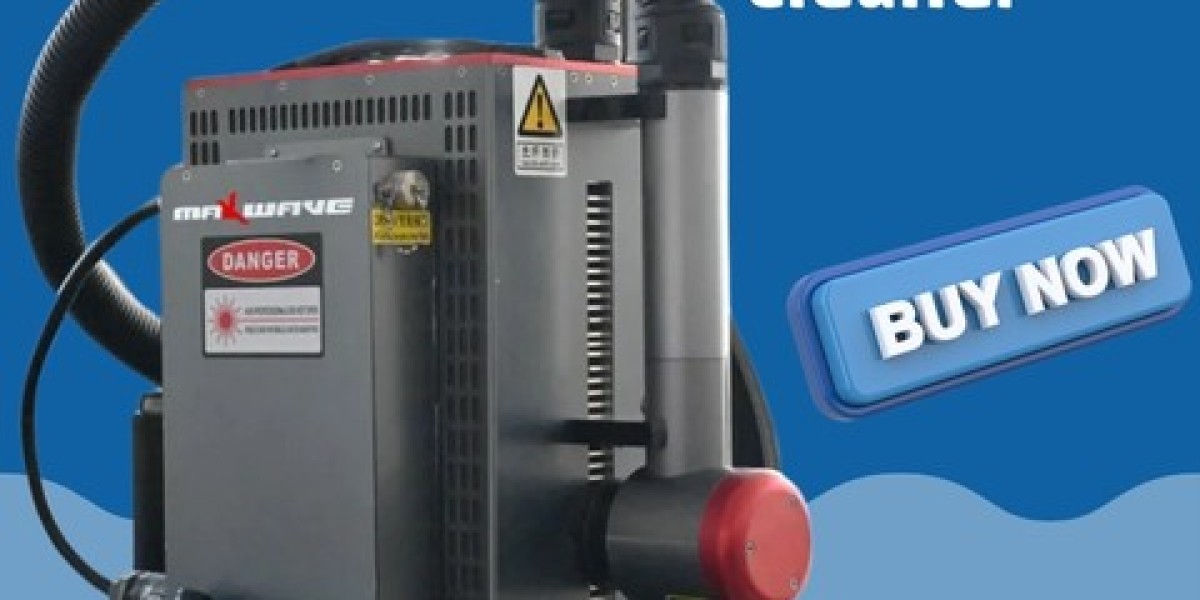

The handheld laser cleaner has emerged as a revolutionary tool in modern surface treatment, industrial maintenance, and precision cleaning. This compact device employs laser technology to deliver controlled, high-energy pulses that target unwanted substances on surfaces, providing a level of precision and effectiveness that traditional cleaning methods struggle to achieve. Unlike conventional methods, handheld laser cleaners operate without chemicals, abrasives, or physical contact, making them suitable for delicate, intricate, and hard-to-reach areas. The technology behind these devices is engineered to focus laser energy on specific spots, breaking down contaminants while preserving the underlying material, which makes it applicable across a variety of industries, including manufacturing, aerospace, automotive, and electronics.
In the industrial sector, handheld laser cleaners play an important role in preparing surfaces for coating, welding, or bonding. For example, metal surfaces often accumulate rust, oxidation, or scale, which can compromise adhesion during subsequent treatments. With the use of a handheld laser cleaner, these contaminants can be precisely removed, leaving a clean, micro-textured surface ideal for further processing. The portability and ergonomic design of handheld units allow operators to access areas that are challenging for larger, stationary systems, including corners, curves, and complex geometries. This accessibility makes handheld laser cleaners particularly valuable for maintenance teams tasked with cleaning machinery, molds, and tools without disassembling entire assemblies.
The technology behind handheld laser cleaners relies on a combination of pulse frequency, power settings, and scanning mechanisms to ensure optimal cleaning performance. Laser parameters can often be adjusted to match the type and thickness of the contaminant, allowing operators to tailor the process for different materials and conditions. The precision of the laser means that cleaning can occur at a microscopic level, removing even thin layers of oxidation, paint, or adhesives. In contrast to sandblasting or chemical stripping, this method minimizes the risk of damage to the substrate while providing a uniform, consistent result.
In addition to industrial applications, handheld laser cleaners are increasingly used in restoration and conservation projects. Historical artifacts, sculptures, and delicate metal components benefit from the non-abrasive nature of laser cleaning. The process removes corrosion, dirt, or residues without compromising the integrity of the original material, making it an ideal solution for preserving the appearance and value of cultural heritage items. Museums, restoration laboratories, and specialized workshops have adopted handheld laser cleaners as part of their conservation toolkit due to their precision, controllability, and safety.
Safety and user experience are central to the design of handheld laser cleaners. Most devices incorporate protective housings, interlock systems, and intuitive controls to ensure that operators can use the equipment efficiently and safely. Integrated cooling systems and ergonomic handles reduce operator fatigue during extended use, while digital displays provide real-time feedback on parameters such as power output, pulse frequency, and cleaning progress. These features allow users to maintain a consistent cleaning workflow, whether performing detailed work on small components or tackling larger surface areas.
Handheld laser cleaners also play a growing role in environmental sustainability. Traditional cleaning processes often involve harsh chemicals, abrasive media, or water-intensive methods, all of which can generate waste or require disposal of contaminated materials. Laser cleaning eliminates or significantly reduces the need for consumables, solvents, and water, thereby lowering environmental impact. The precision of the laser reduces material waste, while the controlled energy application minimizes energy consumption compared to large-scale industrial cleaning processes. As industries focus on greener production methods, handheld laser cleaners provide a solution that combines efficiency, performance, and environmental responsibility.
In the automotive industry, handheld laser cleaners are used to remove rust, paint, or adhesive residues from vehicle components before repair or repainting. Their ability to target specific areas without affecting surrounding surfaces ensures high-quality results and reduces preparation time. Aerospace applications also benefit from laser cleaning technology, where components such as turbine blades, landing gear parts, and engine elements must be maintained at a microscopic level. The handheld design allows technicians to perform localized cleaning in situ, avoiding the need for disassembly or costly downtime.
Electronics and precision manufacturing are additional sectors that rely on handheld laser cleaners. Circuit boards, connectors, and metal contacts can accumulate oxidation or flux residues during assembly, which can impact performance. The precise targeting and controlled energy output of handheld laser cleaners enable the removal of contaminants without damaging delicate electronic components. Similarly, in additive manufacturing and 3D printing workflows, laser cleaning ensures that parts are free of residual powders, supports, or surface irregularities, allowing for better finishing and post-processing.
The evolution of handheld laser cleaners continues to be driven by advances in laser technology, materials science, and ergonomics. Newer devices offer higher power outputs, adjustable pulse durations, and enhanced scanning patterns, which improve cleaning efficiency and adaptability. Integration with automation systems, such as robotic arms or CNC platforms, extends their reach in industrial production lines, combining handheld portability with automated precision. Ongoing research in laser wavelengths and beam shaping also contributes to expanding the range of materials and contaminants that can be effectively treated.
In addition to technical performance, training and operator proficiency play an important role in maximizing the potential of handheld laser cleaners. Proper handling ensures consistent results, protects operators from laser exposure, and maintains the longevity of the device. Many manufacturers offer training programs or instructional materials to guide users on adjusting settings, handling different surface types, and maintaining the equipment. This combination of advanced technology and informed operation makes handheld laser cleaners a reliable solution for a wide range of professional applications.
Handheld laser cleaners also enable flexibility in repair and maintenance workflows. Facilities can deploy units across multiple workstations or carry them directly to the site where cleaning is required. This mobility reduces downtime and enhances productivity by allowing teams to perform cleaning tasks without the need to move heavy equipment or disassemble complex machinery. The lightweight design and intuitive operation make handheld laser cleaners accessible to operators with varying levels of technical expertise, expanding their usability across departments and industries.
As industries continue to seek efficient, precise, and environmentally friendly cleaning solutions, handheld laser cleaners remain at the forefront of innovation. Their versatility, combined with a focus on safety, sustainability, and performance, makes them indispensable in sectors ranging from heavy industry to fine arts restoration. The technology represents a shift from traditional methods toward highly controlled, contactless cleaning processes that protect materials, improve workflow efficiency, and reduce environmental impact.
In summary, handheld laser cleaner are transforming surface cleaning and maintenance practices across numerous industries. Their precision, portability, and adaptability allow for the effective removal of contaminants, oxidation, paint, and residues on a wide range of materials. From industrial maintenance and aerospace to electronics and heritage restoration, these devices provide controlled, high-quality cleaning solutions that align with modern demands for efficiency, safety, and sustainability. The ongoing development of laser technology and ergonomic design ensures that handheld laser cleaners continue to evolve, offering new possibilities for professional cleaning and surface preparation applications worldwide.