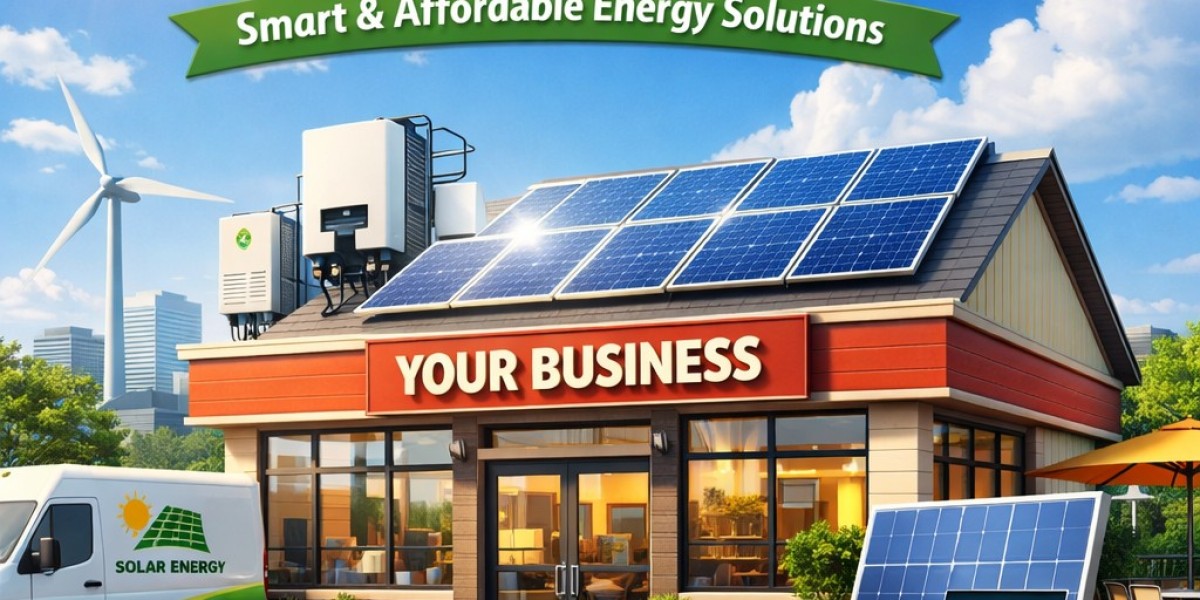

Many small businesses today want to save money and use clean energy. One of the best ways to do this is by using solar power. Solar panels take sunlight and turn it into electricity. This helps cut down electricity bills and makes businesses stronger and more independent.
In this guide, we will learn:
What solar systems are
What on-grid and off-grid solar systems mean
How they are different
Which one may be better for your business
How to choose the right solar system
This article is also helpful if you run a workshop, factory, shop, office, or warehouse. Let’s begin.
What Is a Solar Panel System?
A solar panel system is made of:
Solar panels (they catch sunlight)
An inverter (it turns solar power into usable electricity)
Batteries (only in some systems)
Wires and safety parts
A meter to measure power
When sunlight falls on the solar panels, they create power. This power can run lights, fans, computers, machines, fridges, and more.
Solar systems help small businesses:
Save money
Get steady electricity
Reduce pollution
Use less power from the grid
This is why many people are now choosing industrial solar power solutions.
What Are On-Grid and Off-Grid Solar Systems for Industries?
There are two main kinds of solar systems used in industries and factories:
1. Industrial On-Grid Solar System
An industrial on-grid solar system is connected to the main electricity line (the grid).
How it works:
Solar panels make power.
The electricity first runs your machines and equipment.
Extra power goes to the grid.
If you need more power than the panels produce, you take it from the grid.
In many places, you also get credits when you send extra electricity back to the grid. This is called net metering. It helps lower electricity bills even more.
2. Industrial Off-Grid Solar System
An industrial off-grid solar system is not connected to the grid.
How it works:
Solar panels make electricity.
The electricity is stored in batteries.
When the sun goes down, the stored power runs your equipment.
These systems are great for places where there is no grid or where power cuts happen often.
Key Differences Between Industrial On-Grid and Off-Grid Solar Systems
To understand better, let’s compare.
Feature | On-Grid Solar | Off-Grid Solar |
Connection | Connected to main power grid | Not connected to grid |
Batteries | Usually not required | Always needed |
Bills | Lower bills, credits from extra power | No electricity bill, but battery costs |
Backup | Needs grid during night or low sunlight | Works with battery backup |
Best For | Cities and towns with good power supply | Remote areas or places with many power cuts |
This clear industrial on-grid vs off-grid solar systems comparison helps business owners see which one fits their needs.
Advantages and Limitations of On-Grid vs Off-Grid Solar for Factories
Benefits of On-Grid Solar
Lower electricity bills
Extra energy can be sold or credited
Fewer parts and easier maintenance
Good for industries using a lot of power
Limitations of On-Grid Solar
Does not work during power cuts (for safety reasons)
Depends on the main grid
Net-metering rules may differ by area
Benefits of Off-Grid Solar
Works even during power cuts
Full control over your own power
No monthly electricity bills from the grid
Good for factories in remote locations
Limitations of Off-Grid Solar
Batteries are costly
Batteries need maintenance and replacement
If batteries run out, power stops
Higher upfront cost
So, the right system depends on your location, power use, and budget. This is why solar systems comparison for industry is important before making a decision.
Cost Comparison of Industrial On-Grid and Off-Grid Solar Systems
Many business owners worry first about price. Let’s make it simple.
On-Grid Solar Cost
On-grid systems usually cost less because they do not need batteries. You save money each month through lower bills and net metering credits.
They give the highest value when:
Your industry uses electricity during the day
You are in a location with steady grid power
Off-Grid Solar Cost
Off-grid systems cost more at the start because of batteries. However, they save you from buying diesel for generators and help during long power cuts.
They are useful when:
The grid is weak
Power cuts stop your work
You need full control over electricity
Even though they cost more upfront, they can still be worth it in the long run.
How to Choose the Right Solar System for Your Industrial Facility
Here are simple steps to make the best choice:
1. Check Your Power Use
Look at your electricity bills. See how much power your factory uses each month.
2. Think About Power Cuts
Do you face long or frequent power cuts?
If yes, off-grid or hybrid may be better.
3. Check Space on Your Roof or Ground
Your solar installer will tell you how many panels fit in your space.
4. Set Your Budget
Decide how much you can invest now and how soon you want savings.
5. Talk to a Solar Expert
A professional can design the best industrial solar power solution based on your needs.
Final Thoughts
Solar energy is a smart and affordable choice for small businesses and industries. Whether you choose on-grid or off-grid, solar helps reduce bills and protect your business from rising power costs.
By doing a simple industrial on-grid vs off-grid solar systems comparison, you can choose the right solution and enjoy clean, reliable energy for years.